

- Home
- About Us
About Us
- Product
Product
- Cases
Cases
- R&D Technology
- News
News
- Contact Us


- Default Language
 EN
EN RU
RU ES
ES DE
DE EL
EL IT
IT JA
JA KO
KO PT
PT ID
ID SR
SR UK
UK VI
VI TH
TH TR
TR MS
MS BE
BE AR
AR
牡丹江市Quotation Guide for Integrated Sewage Treatment Equipment in 2026: Equipment Selection & Cost Optimization Strategies
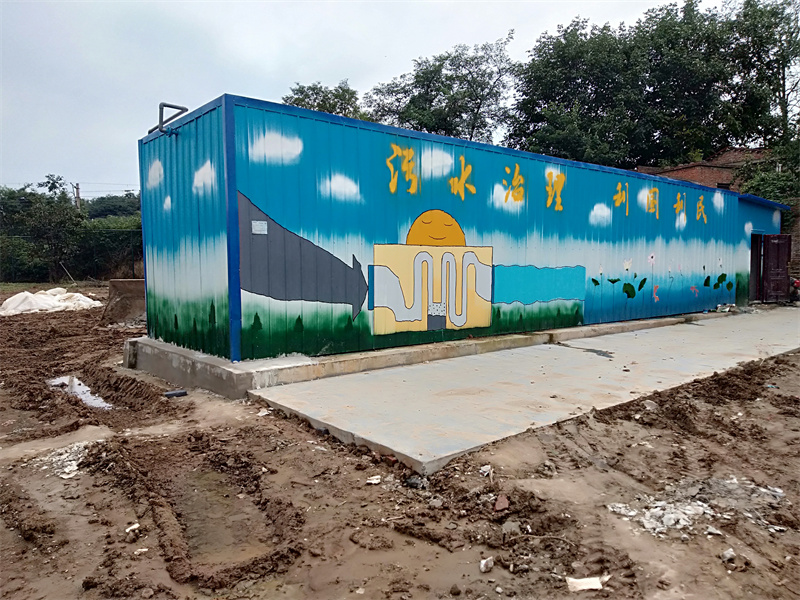
With stricter environmental supervision and the advancement of wastewater resource recovery policies, integrated sewage treatment equipment has become an essential product for pollution control across all industries. Quotations for integrated sewage treatment equipment serve not only as the core reference for procurement budgets but also directly determine treatment efficiency and long-term operating costs. Combined with the industry trends in 2026, this article provides a professional quotation guide from three aspects: model matching, cost control and quotation calculation, helping buyers achieve precise selection and optimal cost performance.
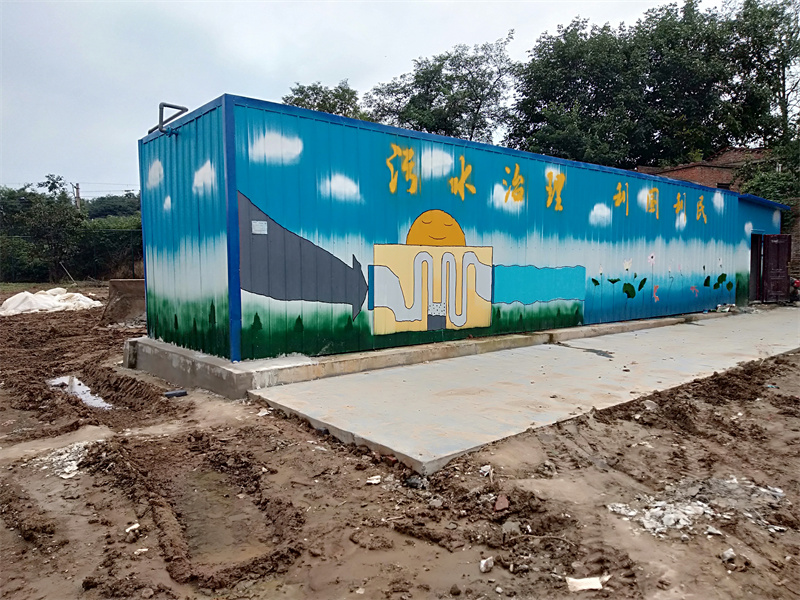
Technological upgrades have pushed up the share of mid-to-high-end equipment quotations. High-efficiency processes such as MBR and MBBR deliver superior effluent quality and easy operation. Despite higher prices, their market penetration has reached 43.6%, making them the top choice for industrial and high-standard municipal projects.
Policy support has lowered prices for small-scale decentralized rural treatment equipment. Mass production of small units with a daily capacity of 10-50 tons has intensified market competition. Their prices have dropped by 12.7% compared with three years ago, bringing the per-ton treatment cost down to 0.8-1.2 RMB.
Fluctuations in raw material prices affect quotation stability. Key raw materials including stainless steel and polymer membrane components account for 62% of total equipment costs. Price swings may cause quotation fluctuations of 5%-10%.
Rural areas / small homestays (0.5-5 tons per day): Carbon steel anti-corrosion equipment with basic A/O process is recommended, priced between 10,000 and 50,000 RMB. Simple manual control without complex intelligent systems keeps upfront investment low.
Residential communities / schools / scenic spots (10-50 tons per day): FRP or anti-corrosion carbon steel equipment with SBR or basic MBR process costs 80,000 to 300,000 RMB. Basic PLC control enables unattended operation and reduces labor expenses.
Industrial parks (50-500 tons per day): Custom processes are required according to wastewater composition. Chemical precipitation units are added for heavy metal wastewater, while an anaerobic + MBR combined process is adopted for high-concentration organic sewage, with quotations ranging from 500,000 to 2 million RMB. 304 stainless steel or reinforced FRP is selected to guarantee corrosion resistance and long service life.
Municipal large-scale projects (above 500 tons per day): Modular intelligent equipment based on AAO+MBR processes costs over 2 million RMB. Integrated smart water management systems support remote operation and energy monitoring for lower long-term operating expenses.
Related Products
Related News
- 牡丹江市New Trends in the Development of the MBR Membrane Wastewater Treatment Industry: A Professional Guide to Selecting Source Manufacturers
- 牡丹江市How to Select Wastewater Treatment Equipment for Pig Farms? In-depth Review of Trusted Industry Service Providers
- 牡丹江市Hard-to-Treat Slaughterhouse Wastewater? Tested & Recommended High-Adaptability Wastewater Treatment Solutions for 2026
- 牡丹江市How to Select Integrated Wastewater Treatment Equipment? In-depth Review of Trustworthy Source Manufacturers Recognized by Industry Insiders
- 牡丹江市How to Select Buried Integrated Wastewater Treatment Equipment? Strength Evaluation of Reliable Brands in 2026
- 牡丹江市Inventory of New Coal Mine Water Treatment Technologies! How to Select Cost-Effective Manufacturers & Avoid Common Pitfalls
- 牡丹江市Textile Printing & Dyeing Wastewater Treatment Is Tough? These Four Powerful Enterprises Easily Solve Core Industry Pain Points
- 牡丹江市Authoritative Evaluation of High-Salinity Wastewater Treatment Equipment | Top Recommended Brands of 2026
- 牡丹江市Which Supplier Offers Reliable Integrated Sewage Treatment Equipment? Multi-dimensional Actual Test Comparison & Top Recommended Brands Released
- 牡丹江市Electroplating Factory Wastewater Treatment Engineering Cases
About Us
products
Business
News
Contact Us
Service Hotline:+86-15253659088WhatsApp: +86 18706508001
Email: jly@haipuou.group
Address: No.56, Donghuan Road, Zhucheng City, Weifang City, Shandong Province, China