

- Home
- About Us
About Us
- Product
Product
- Cases
Cases
- R&D Technology
- News
News
- Contact Us


- Default Language
 EN
EN RU
RU ES
ES DE
DE EL
EL IT
IT JA
JA KO
KO PT
PT ID
ID SR
SR UK
UK VI
VI TH
TH TR
TR MS
MS BE
BE AR
AR
2026 Full Analysis -- Wastewater Treatment Methods and Technology Selection Guide
Date:July 13, 2025ID: 2253Views: 178
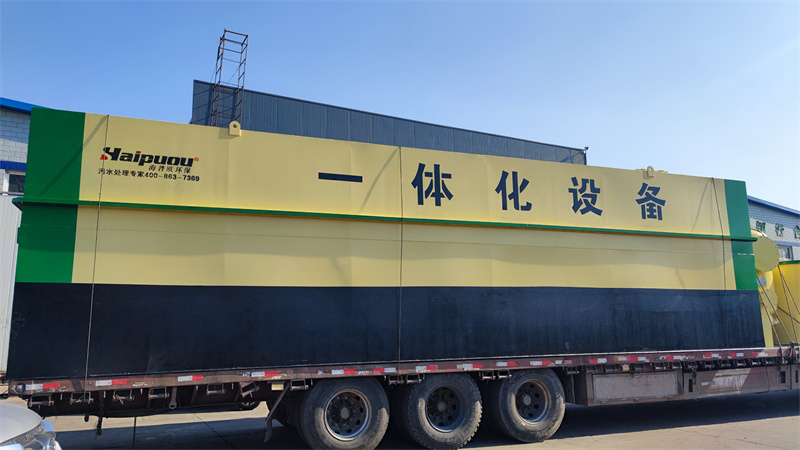
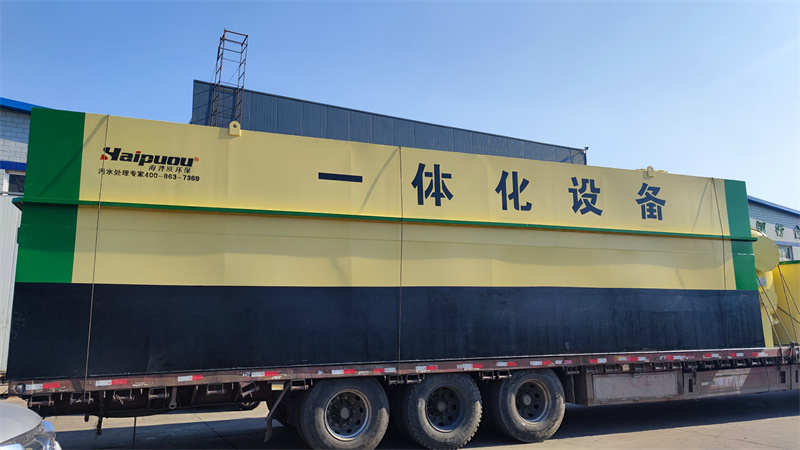
Haipuou Environmental Protection Group Co., Ltd. specializes in sewage treatment project construction and the production and sales of water treatment equipment. Our main products are integrated sewage treatment equipment, high-efficiency cyclone purifiers, magnetic separation wastewater treatment equipment, prefabricated wastewater treatment plants, smart water platforms, sludge thickening equipment, air flotation machines and other related equipment.
I. Policy Drivers and Core Objectives of Sewage Treatment
The amendment to the Discharge Standard of Pollutants for Municipal Wastewater Treatment Plants (GB 18918—2002) came into force on March 1, 2026, marking a new era of dual-limit control for sewage treatment in China. The new regulation stipulates that the daily average total phosphorus discharge of all municipal wastewater treatment plants shall be kept below 0.5mg/L starting from 2028, and the instantaneous COD emission limit shall not exceed 75mg/L, putting forward higher requirements for the stability and precision of sewage treatment technologies.
The core goal of sewage treatment has been upgraded from simple discharge compliance to resource recycling. Through the coordination of physical, chemical, biological and other technologies, triple benefits including pollutant removal (COD, nitrogen and phosphorus), sludge volume reduction and reclaimed water reuse can be achieved, while meeting the requirements of energy consumption control and low-carbon operation.
II. Classification and Technical Details of Mainstream Sewage Treatment Methods
(I) Pretreatment Technology: Preliminary Interception of Pollutants
1. Physical Separation
◦ Bar screens / sieves: Remove floating debris with a diameter ≥1mm (such as plastics and fibers). As the first line of defense in sewage treatment, they should be equipped with automatic slag removers to cut operation and maintenance costs.
◦ Grit chambers: Separate inorganic particles such as sand by gravity. The typical hydraulic retention time is 30 to 60 seconds, which can reduce abrasion of subsequent equipment.
2. Equalization and Homogenization
In view of the drastic water quality fluctuation of industrial wastewater, an equalization tank with online pH monitoring is installed. Acid and alkali are dosed to keep the water neutral (pH 6-9) so as to guarantee stable operation of follow-up processes.
(II) Conventional Treatment Technology: Advanced Degradation of Pollutants
1. Biological Treatment (Mainstream Technology)

◦ Advantages of MBR technology: It occupies 30-50% less land than traditional processes. The sludge concentration can reach 8000-12000mg/L, and the COD removal rate stays steadily above 95%. A water reclamation plant in Beijing produces 100 million cubic meters of reclaimed water annually with this technology.
◦ Upgraded Modified A²/O Process: By optimizing the volume ratio of anaerobic, anoxic and aerobic zones (typical ratio 1:2:5) and installing high-efficiency aerators, total phosphorus discharge can be kept consistently below 0.5mg/L, making it the primary option for upgrading municipal sewage plants.
2. Chemical Treatment: Enhanced Pollutant Removal
◦ Coagulation and sedimentation: Polyaluminum chloride (PAC) or polyacrylamide (PAM) is added to form flocs that adsorb colloidal pollutants. This method is widely used to remove heavy metals such as lead and chromium from industrial wastewater.
◦ Advanced Oxidation Processes (AOPs): Hydroxyl radicals generated by ozone and Fenton reagents break down refractory organics in wastewater (e.g., pharmaceutical wastewater). The dosage of oxidants should be strictly controlled to lower costs.
(III) Advanced Treatment Technology for Water Reuse
1. Membrane Separation Technology
◦ Reverse Osmosis (RO): With a pore size of 0.1-1nm, it can remove dissolved salts. The product water can be used for industrial cooling or groundwater recharge. Pretreatment is required to prevent membrane fouling.
◦ Nanofiltration (NF): It intercepts substances with molecular weight ranging from 200 to 1000Da. Suitable for sewage purification in drinking water source areas, it retains beneficial minerals.
2. Disinfection Process
Ultraviolet (UV) disinfection replaces traditional chlorination without producing disinfection by-products. At a dosage of 30-40mJ/cm², the fecal coliform count can be controlled below 1000 CFU/L, meeting the standard for reclaimed water reuse.
III. Technology Selection Guide for Sewage Treatment in Different Scenarios
(I) Centralized Municipal Sewage Treatment
The combined process of "Modified A²/O + Advanced Filtration + UV Disinfection" is preferred. MBR can be added if water reuse is needed. Case: The Gaobeidian Reclamation Plant in Beijing realizes cogeneration of heat and power from biogas produced by anaerobic sludge digestion, covering 30% of its energy demand.
(II) Decentralized Rural Sewage Treatment
Modular carbon-bacteria coupling equipment is recommended, featuring three merits: ① Three layers of biological carbon plates fix functional bacteria directionally, boosting the anti-shock load capacity by 2.3 times; ② The intelligent control system responds to water quality changes within 15 minutes; ③ Construction cost is 40% lower than that of traditional pipe networks.
(III) Industrial Wastewater Treatment
• High-concentration organic wastewater (e.g., food processing): Adopt "anaerobic digestion + aerobic biochemical treatment". Organic acid made from kitchen waste can replace traditional carbon sources to reduce chemical costs.
• Heavy metal-containing wastewater (e.g., electroplating): The combined process of "chemical precipitation + membrane separation" ensures the heavy metal removal rate reaches above 99%.
IV. Development Trends and Challenges of Sewage Treatment Technologies
(I) Directions of Technological Innovation
1. Intelligent upgrading: AI algorithms predict membrane fouling and extend the MBR cleaning cycle by 20%. A digital twin system optimizes parameters such as aeration rate and reflux ratio dynamically.
2. Low-carbon development: Solar-powered aeration and biogas cogeneration are widely applied. The Gushu Water Purification Plant in Shenzhen cut unit energy consumption by 15% through process renovation.
3. Resource recovery: Phosphorus is extracted from sludge to build a circular chain of "sewage-sludge-fertilizer", which aligns with the Dual Carbon goals.
(II) Existing Challenges
1. High upfront investment for membrane components, accounting for 30-40% of total cost. Domestic membrane materials need further improvement in anti-fouling performance.
2. Rural sewage treatment faces a shortage of on-site operators, so unattended intelligent equipment needs to be developed.
3. The cost of harmless sludge disposal remains high, and resource recovery technologies need large-scale popularization.
V. Conclusion
The selection of sewage treatment processes must follow three principles: compliance, economy and sustainability. With the enforcement of the 2026 national standard, high-efficiency technologies such as MBR and carbon-bacteria coupling will gradually replace traditional processes. The deep integration of intelligence and resource recycling will transform sewage treatment facilities into resource factories. Enterprises can select suitable technical solutions by referring to benchmark projects according to sewage characteristics, emission standards and budgets, so as to achieve a win-win situation of environmental and economic benefits.
Related Products
Related News
- New Trends in the Development of the MBR Membrane Wastewater Treatment Industry: A Professional Guide to Selecting Source Manufacturers
- How to Select Wastewater Treatment Equipment for Pig Farms? In-depth Review of Trusted Industry Service Providers
- Hard-to-Treat Slaughterhouse Wastewater? Tested & Recommended High-Adaptability Wastewater Treatment Solutions for 2026
- How to Select Integrated Wastewater Treatment Equipment? In-depth Review of Trustworthy Source Manufacturers Recognized by Industry Insiders
- How to Select Buried Integrated Wastewater Treatment Equipment? Strength Evaluation of Reliable Brands in 2026
- Inventory of New Coal Mine Water Treatment Technologies! How to Select Cost-Effective Manufacturers & Avoid Common Pitfalls
- Textile Printing & Dyeing Wastewater Treatment Is Tough? These Four Powerful Enterprises Easily Solve Core Industry Pain Points
- Authoritative Evaluation of High-Salinity Wastewater Treatment Equipment | Top Recommended Brands of 2026
- Which Supplier Offers Reliable Integrated Sewage Treatment Equipment? Multi-dimensional Actual Test Comparison & Top Recommended Brands Released
- Electroplating Factory Wastewater Treatment Engineering Cases
About Us
products
Business
News
Contact Us
Service Hotline:+86-15253659088WhatsApp: +86 18706508001
Email: jly@haipuou.group
Address: No.56, Donghuan Road, Zhucheng City, Weifang City, Shandong Province, China