

- Home
- About Us
About Us
- Product
Product
- Cases
Cases
- R&D Technology
- News
News
- Contact Us


- Default Language
 EN
EN RU
RU ES
ES DE
DE EL
EL IT
IT JA
JA KO
KO PT
PT ID
ID SR
SR UK
UK VI
VI TH
TH TR
TR MS
MS BE
BE AR
AR
Selection Guide for Wastewater Treatment Companies: Technology Selection and Service Value under Relevant Policies
Date:July 13, 2025ID: 2254Views: 180
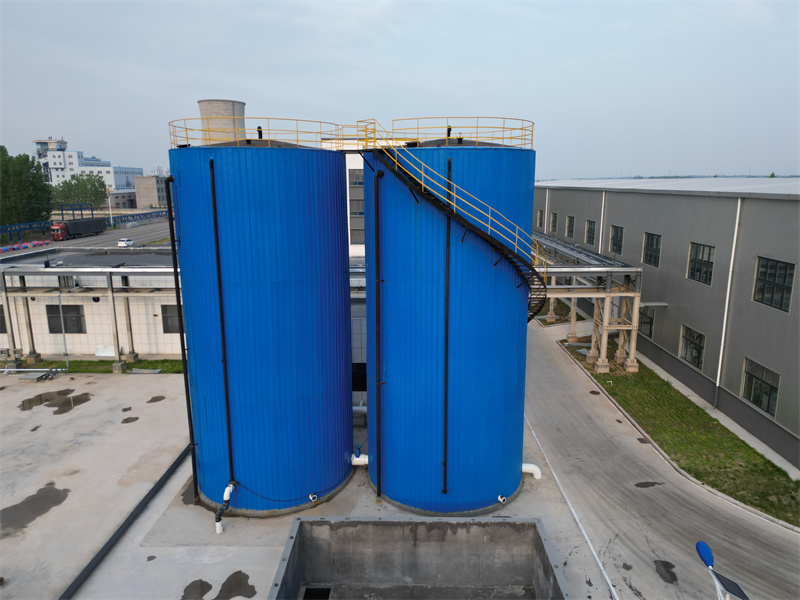
Haipuou Environmental Protection Group Co., Ltd. is engaged in the construction of sewage treatment projects as well as the manufacture and sale of water treatment equipment. Main products include integrated sewage treatment equipment, high-efficiency cyclone purifiers, magnetic separation wastewater treatment equipment, prefabricated wastewater treatment plants, smart water management platforms, sludge thickening equipment, air flotation machines, etc.
I. Rising Environmental Policies Highlight the Core Value of Sewage Treatment Companies
A raft of environmental policies issued in 2025 have reshaped the whole industry. The Ministry of Ecology and Environment has newly released three national standards including the Water Pollutant Discharge Standard for Alcohol Manufacturing Industry, which will be fully enforced for newly-built enterprises starting in 2026. The amendment to the Discharge Standard of Pollutants for Municipal Wastewater Treatment Plants further stipulates that the total phosphorus emission limit will be uniformly lowered to 0.5mg/L by 2028. Against such a backdrop, professional sewage treatment companies have upgraded from mere compliance service providers to partners supporting enterprises' green transformation, with three core values as follows:
1. Compliance Guarantee: They are well-versed in industry-specific emission requirements. For instance, food processing plants need monitoring for 12 indicators including COD and suspended solids specified in GB 46817—2025.
2. Cost Optimization: Operational expenses can be cut through process upgrading. As an example, the Licunhe Wastewater Treatment Plant in Qingdao used beer waste liquid to replace traditional carbon sources, slashing chemical costs by 30%.
3. Resource Recycling: Wastewater can be turned into reusable resources. With the anaerobic ammonium oxidation process, the Gaobeidian Water Reclamation Plant in Beijing achieved a 95% water reuse rate.

II. Breakdown of Core Technical Capabilities of Professional Sewage Treatment Companies
Treatment technologies must be tailored to different application scenarios. Top-tier firms need dual capabilities: customized process design and intelligent management & control.
(1) Process System Adapted to Demands of Various Industries

(2) Intelligent Upgrades Become Core Competitive Edge
Leading companies have widely deployed intelligent management systems:
• Adaptive parameter adjustment: The Zhangguizhuang Wastewater Plant in Tianjin adopted AI algorithms to dynamically control aeration volume, resulting in an 18% reduction in energy consumption.
• Remote operation & maintenance platform: Real-time monitoring of 16 indicators such as pH and dissolved oxygen, and the fault response time is shortened to within 2 hours.
• Carbon footprint management: Through process renovation, the Gushu Water Purification Plant in Shenzhen brought down water treatment energy consumption to 0.25kWh/m³.
III. How Enterprises Select a Suitable Sewage Treatment Service Provider?
(1) Three Key Evaluation Criteria
1. Qualifications & practical experience: Give priority to enterprises with Class A professional contracting qualification for environmental engineering and more than three industry-related project cases. Contractors with experience in alcohol manufacturing are more experienced in treating high organic wastewater.
2. Technical adaptability: For complex wastewater from chemical and electroplating industries, verify whether the contractor masters special technologies including advanced oxidation and heavy metal chelating treatment.
3. Full-cycle service capacity: End-to-end services covering process design, equipment maintenance and sludge disposal can reduce coordination costs in later stages.
(2) Common Pitfalls to Avoid
• Beware of generic solution traps: Treatment processes for food processing wastewater differ greatly from those for municipal sewage. Customized design is indispensable.
• Inspect operation capacity: Request effluent monitoring reports of the latest six months, and check if instantaneous values comply with the amendment to GB 18918—2002.
• Check quick policy response: Contractors that can rapidly upgrade systems to meet new national standards will save you the cost of secondary reconstruction.
IV. New Development Trends of Sewage Treatment Companies in 2025
1. Low-carbon transformation: Technologies such as biogas production via sludge anaerobic digestion and photovoltaic power supply are being widely adopted. Benchmark enterprises can achieve carbon emission reduction of ten thousand tons.
2. Deepened resource recovery: The industry has shifted from simple discharge compliance to resource recycling. For example, the water reclamation plant in Jinjiang District, Chengdu supplies reclaimed water for green irrigation and turns sludge into organic fertilizer.
3. Regional coordinated services: The bundled county-level operation model cuts costs for wastewater treatment in small towns, which meets the local standard adaptation requirements in the amendment to GB 18918—2002.
Choosing a professional sewage treatment company is not only a necessity to pass environmental inspections, but also a key measure for enterprises to cut costs and realize green transition. If you need an industry-specific customized solution, click the 【Online Consultation】 button on the right to get one-on-one technical assessment.
Related Products
Related News
- New Trends in the Development of the MBR Membrane Wastewater Treatment Industry: A Professional Guide to Selecting Source Manufacturers
- How to Select Wastewater Treatment Equipment for Pig Farms? In-depth Review of Trusted Industry Service Providers
- Hard-to-Treat Slaughterhouse Wastewater? Tested & Recommended High-Adaptability Wastewater Treatment Solutions for 2026
- How to Select Integrated Wastewater Treatment Equipment? In-depth Review of Trustworthy Source Manufacturers Recognized by Industry Insiders
- How to Select Buried Integrated Wastewater Treatment Equipment? Strength Evaluation of Reliable Brands in 2026
- Inventory of New Coal Mine Water Treatment Technologies! How to Select Cost-Effective Manufacturers & Avoid Common Pitfalls
- Textile Printing & Dyeing Wastewater Treatment Is Tough? These Four Powerful Enterprises Easily Solve Core Industry Pain Points
- Authoritative Evaluation of High-Salinity Wastewater Treatment Equipment | Top Recommended Brands of 2026
- Which Supplier Offers Reliable Integrated Sewage Treatment Equipment? Multi-dimensional Actual Test Comparison & Top Recommended Brands Released
- Electroplating Factory Wastewater Treatment Engineering Cases
About Us
products
Business
News
Contact Us
Service Hotline:+86-15253659088WhatsApp: +86 18706508001
Email: jly@haipuou.group
Address: No.56, Donghuan Road, Zhucheng City, Weifang City, Shandong Province, China