

- Home
- About Us
About Us
- Product
Product
- Cases
Cases
- R&D Technology
- News
News
- Contact Us


- Default Language
 EN
EN RU
RU ES
ES DE
DE EL
EL IT
IT JA
JA KO
KO PT
PT ID
ID SR
SR UK
UK VI
VI TH
TH TR
TR MS
MS BE
BE AR
AR
Comprehensive Analysis of Price Influencing Factors and Market Conditions of Micro Sewage Treatment Equipment
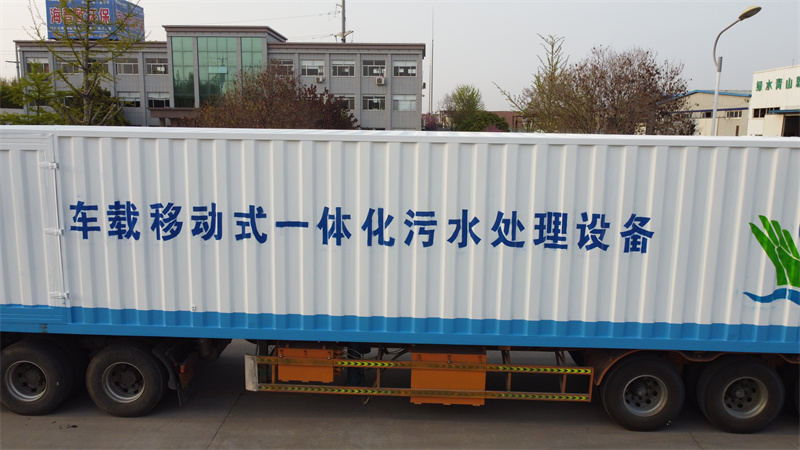
Against stricter environmental policies and surging demand for decentralized sewage treatment, miniature sewage treatment equipment has been widely adopted for rural domestic sewage, wastewater from small factories, and sewage from scenic homestays, thanks to its small footprint, flexible installation and high treatment efficiency. However, buyers frequently face wide price gaps and difficulties in proper model selection. This article thoroughly analyzes the price composition of miniature sewage treatment equipment from the perspectives of technical principles, core configurations and market supply & demand, offering professional purchasing guidance for enterprises and individual users.
I. Price Range and Five Key Factors Affecting Miniature Sewage Treatment Equipment
Currently, miniature sewage treatment equipment with a daily capacity of 0.5-5 cubic meters is generally priced between 12,000 and 80,000 RMB. Quotations are determined by the five major factors below, which buyers need to evaluate comprehensively according to actual needs:
1. Treatment Capacity: Baseline of Equipment Cost
Daily treatment volume is the core pricing benchmark, with significant cost gaps between different sizes:
Small-sized units (0.5-1m³/d): Designed for single rural households and small homestays, consisting of an integrated filter tank and small aeration system, priced from 12,000 to 25,000 RMB;
Medium-sized units (1-3m³/d): Suitable for small factories with 5-20 employees and centralized village sewage treatment, equipped with anaerobic tank, aerobic tank and disinfection module, ranging from 25,000 to 50,000 RMB;
Large-sized units (3-5m³/d): Mostly used for small township sewage stations, with extra sludge treatment system and intelligent control system, costing 50,000 to 80,000 RMB.
2. Process Technology: Determines Treatment Effect and Total Cost
Customized processes are required for different types of sewage, leading to obvious price differences:
AO (Anoxic-Oxic) process: Ideal for biodegradable domestic sewage with lower equipment cost, 15%-20% cheaper than conventional activated sludge process;
MBR (Membrane Bioreactor) process: Produces Grade I A effluent, perfect for scenic areas and clinics with strict water quality requirements. High-cost membrane elements push up the price by 30%-50% compared with AO equipment;
Ecological treatment (constructed wetland + filter tank): Applied in environmentally sensitive zones with low long-term maintenance cost. However, the large land occupation raises the cost of auxiliary facilities by 10%-15% versus integrated equipment.
3. Material and Configuration: Decide Equipment Service Life
Tank materials and core components directly affect quotations and durability:
Material difference: Fiberglass tanks are corrosion-resistant and lightweight, costing 20%-30% more than carbon steel tanks; 304 stainless steel for high-salinity wastewater scenarios is 40%-60% more expensive than fiberglass;
Core spare parts: Equipment fitted with imported aerators and sludge pumps costs 25%-40% higher than domestic alternatives, yet service life can be extended by 3-5 years. Units equipped with intelligent online monitoring sensors (COD, ammonia nitrogen) will incur an extra cost of 8,000 to 15,000 RMB.
4. Installation and After-Sales Service: Affect Overall Procurement Budget
Installation, commissioning and after-sales services account for 10%-20% of the total expenditure:
Local suppliers: Vendors within a 50-kilometer radius cut transportation and installation costs by 8%-12% compared with out-of-town suppliers;
Remote regions: Extra fees of 3,000 to 10,000 RMB will be charged for transportation, hoisting and on-site reconstruction in mountainous and plateau areas;
Warranty service: Suppliers offering 1-year free maintenance plus a 3-year warranty usually set prices 5%-8% higher than those only providing basic installation, yet greatly reduce long-term breakdown repair costs.
II. 2024 Market Trend and Professional Purchasing Advice
1. Market Price Trend
Policy-driven price reduction: Driven by the National Rural Sewage Governance "Thousand-County Demonstration" Project, bulk procurement prices have dropped by 5%-10% year-on-year. With local government subsidies, users’ actual expenditure can be cut by 15%-25%;
Technological iteration: Mature domestic membrane production has brought down MBR equipment prices by 20% since 2022, narrowing the cost gap with AO process units;
Regional price gap: Fierce market competition in East and South China keeps average equipment prices 8%-15% lower than North and Northwest China. Extra thermal insulation for northern winter use adds another 5%-10% cost.
2. Key Purchasing Tips
Confirm water quality indicators first: Test sewage pollutants including COD, ammonia nitrogen and suspended solids to avoid over-specification. For domestic sewage, MBR is unnecessary and you can save 30% of the budget;
Compare quotations from at least three suppliers: Ask for equipment parameters, process flow charts and project cases, and verify material inspection reports and environmental certifications such as CCEP;
Evaluate full-lifecycle cost: Choose low-power equipment (power consumption below 0.5kW/h) with easy maintenance. Although upfront cost may rise by 5%-10%, annual maintenance expenditure can be reduced by 20%-30%;
Apply for policy subsidies: Rural households and micro-enterprises can consult local ecological and environmental bureaus for pollution control special subsidies, which can cover 30%-50% of the total equipment cost in some regions.
III. Answers to Common Misunderstandings to Avoid Price Traps
Is ultra-low-price equipment more cost-effective?
Be cautious of 0.5m³/d units priced below 10,000 RMB. Most cut corners by only installing sedimentation tanks without aeration systems, resulting in unqualified effluent. Later reconstruction will lead to higher total expenditure.
Are imported products always superior?
Core components from leading domestic brands (OriginWater, WELLE) have reached mature production. Their performance is close to imported equipment, while prices are 30%-40% lower with faster 24-hour on-site after-sales response.
Ignore long-term maintenance cost?
Some cheap equipment suffers frequent clogging and high power consumption, with annual maintenance cost reaching 15%-20% of the equipment value. In contrast, units equipped with automatic backwashing systems and low-energy motors only incur 5%-8% annual maintenance cost.
Conclusion
When selecting miniature sewage treatment equipment, buyers need to balance upfront investment and long-term benefits. Choose well-supported suppliers with matching technology according to sewage characteristics, treatment capacity, discharge standards and local policies. It is recommended to commission a third-party institution to conduct water quality testing before purchase, and inspect 1 to 2 local running projects on-site to confirm stable effluent quality before signing contracts, so as to guarantee compliant operation and controlled costs.
Related Products
Related News
- New Trends in the Development of the MBR Membrane Wastewater Treatment Industry: A Professional Guide to Selecting Source Manufacturers
- How to Select Wastewater Treatment Equipment for Pig Farms? In-depth Review of Trusted Industry Service Providers
- Hard-to-Treat Slaughterhouse Wastewater? Tested & Recommended High-Adaptability Wastewater Treatment Solutions for 2026
- How to Select Integrated Wastewater Treatment Equipment? In-depth Review of Trustworthy Source Manufacturers Recognized by Industry Insiders
- How to Select Buried Integrated Wastewater Treatment Equipment? Strength Evaluation of Reliable Brands in 2026
- Inventory of New Coal Mine Water Treatment Technologies! How to Select Cost-Effective Manufacturers & Avoid Common Pitfalls
- Textile Printing & Dyeing Wastewater Treatment Is Tough? These Four Powerful Enterprises Easily Solve Core Industry Pain Points
- Authoritative Evaluation of High-Salinity Wastewater Treatment Equipment | Top Recommended Brands of 2026
- Which Supplier Offers Reliable Integrated Sewage Treatment Equipment? Multi-dimensional Actual Test Comparison & Top Recommended Brands Released
- Electroplating Factory Wastewater Treatment Engineering Cases
About Us
products
Business
News
Contact Us
Service Hotline:+86-15253659088WhatsApp: +86 18706508001
Email: jly@haipuou.group
Address: No.56, Donghuan Road, Zhucheng City, Weifang City, Shandong Province, China