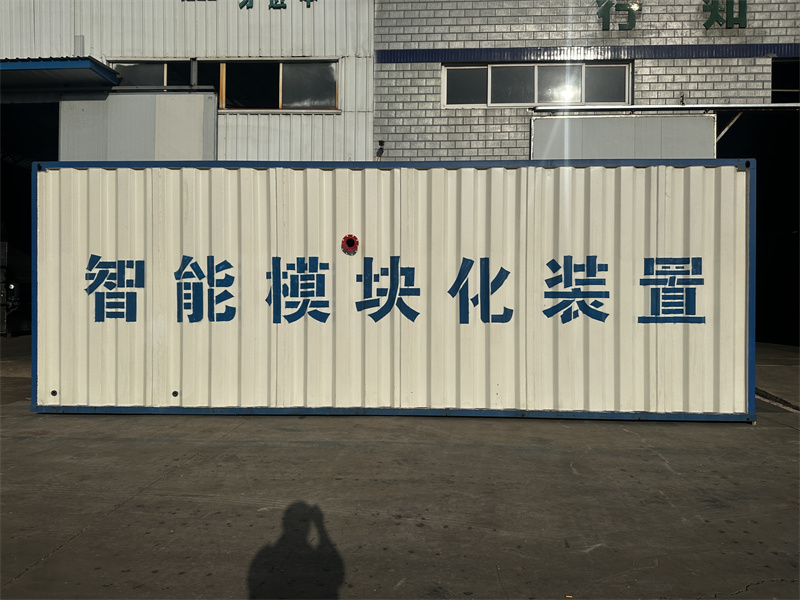
With the accelerated development of urban and rural environmental infrastructure, integrated domestic sewage treatment equipment has become core facilities to solve decentralized wastewater problems thanks to its integrated and intelligent features. The equipment condenses the whole traditional sewage treatment process into one modular unit, forming a closed-loop system from sewage collection to standard discharge or water reuse. It perfectly meets the wastewater treatment demands of rural areas, residential communities, scenic spots and other sites. Its mature technology and flexible application are driving the sewage treatment industry toward high efficiency and low carbon emissions.
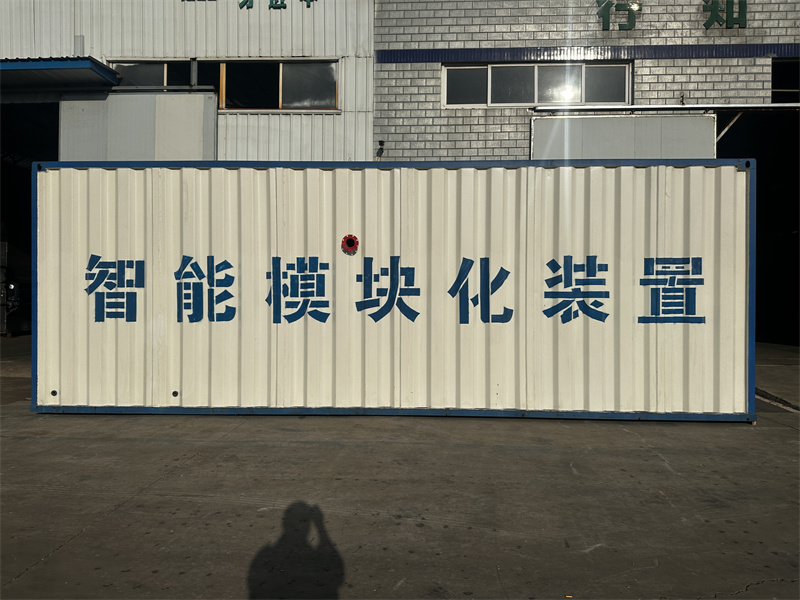
I. Core Technical Principles: Synergistic Advantages of Integrated Processes
The core competitiveness of integrated domestic sewage treatment equipment lies in the design of "multi-unit coordination and modular integration". Centered on biological treatment, combined with physical separation and disinfection procedures, it forms a high-efficiency purification system.
1. Main Treatment Processes
Three mainstream processes are widely adopted: A/O (anaerobic-aerobic), A²/O (anaerobic-anoxic-aerobic) and MBR (Membrane Bioreactor). For the A/O process, the synergy of anaerobic hydrolysis and aerobic nitrification by microorganisms achieves a BOD₅ removal rate of 60%-80% and ammonia nitrogen removal rate of 70%-90%, which fits ordinary domestic sewage. The A²/O process adds an anaerobic section. Based on phosphorus release and absorption of polyphosphate accumulating organisms, it realizes 60%-80% total nitrogen removal and 80%-95% total phosphorus removal to meet advanced nitrogen and phosphorus removal requirements. The MBR process uses 0.03-0.4μm membrane modules to strengthen solid-liquid separation, raising the activated sludge concentration to 8-12g/L. The turbidity of outlet water is less than 0.5NTU, reaching the standard for direct reuse.
2. Full-process Treatment Modules
The equipment consists of five key modules. In the pretreatment module, mechanical screens trap suspended solids larger than 5mm, while grit chambers and regulating tanks stabilize water quality and water volume fluctuations. The core degradation module uses high-concentration microbial flora to decompose organic pollutants. The advanced purification module adopts coagulating sedimentation or activated carbon adsorption to eliminate residual contaminants. The disinfection module kills more than 99.9% of coliform bacteria by UV or chlorine dioxide disinfection. The intelligent control module is equipped with a PLC system, which monitors real-time parameters including pH, COD and DO and automatically adjusts operating conditions.
II. Core Advantages: Breakthroughs Compared with Traditional Processes
Integrated domestic sewage treatment equipment has achieved all-round improvements in land occupation, construction cost and operation efficiency, making it the top choice for decentralized sewage treatment.
High space utilization: Adopting compact modular design, it only occupies 0.3-0.6 square meters per cubic meter of daily treatment capacity, over 50% less than traditional processes. It can be buried underground, and the ground surface can be greened or used for other purposes, which is suitable for residential districts and villages with limited land.
Efficient construction and operation: Prefabricated in factories, installation and commissioning only take 1-3 months on site, much shorter than the 6-12 month construction cycle of conventional sewage treatment plants. It features high automation for unattended operation. Some models support remote monitoring via mobile APP, cutting labor costs by 60% with an operation cost of only 0.8-1.5 RMB per cubic meter.
Stable treatment performance: The high-concentration sludge design improves resistance to load impact, coping with COD fluctuations of ±40%. The effluent steadily meets Grade A standard of GB 18918 and even Class IV surface water quality standard. The sludge yield is only 0.1kgDS/kgBOD5, and sludge discharge is only required once every 90 days, greatly lowering sludge disposal expenses.
Wide adaptability: The treatment capacity of a single set ranges from 1m³/d to 500m³/d, and parallel connection of multiple units can expand the capacity up to 50,000m³/d. It satisfies decentralized treatment for single villages and small communities, as well as centralized treatment for industrial parks. Materials include anti-corrosion carbon steel, FRP and PP. Thermal insulation layers can be equipped for northern regions to adapt to low temperatures down to -20℃.
III. Scenario-based Application: From Decentralized Treatment to Emergency Response
The modular design enables integrated domestic sewage treatment equipment to meet differentiated demands of various projects, and it has been widely used in urban and rural wastewater treatment projects.
1. Urban and Rural Decentralized Sewage Treatment
Small-scale equipment (5-50m³/d) with A/O and sedimentation processes effectively solves the problem of scattered sewage discharge in villages. In a village project in Zhejiang Province, the COD of treated sewage dropped from 300mg/L to 50mg/L, and the effluent can be directly used for farmland irrigation. For urban residential quarters and public buildings, buried equipment can be integrated into landscape without affecting living conditions, while handling domestic sewage in a centralized way.
2. Specialized Treatment for Special Scenarios
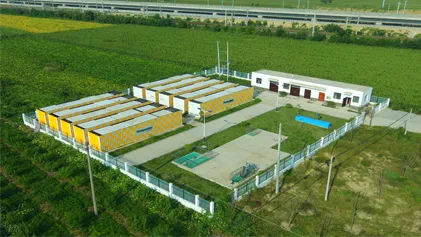
For medical wastewater, the MBR plus enhanced disinfection process ensures a disinfection contact time of more than 1.5 hours, with fecal coliform less than 100MPN/L, complying with GB 18466 standard for medical wastewater. Containerized equipment is adopted in tourist scenic spots and can be put into use within 48 hours, avoiding ecological damage caused by construction while rapidly treating sewage generated by tourists. For temporary construction and emergency events, vehicle-mounted equipment can start operation within 4 hours. Such equipment was used in the earthquake-stricken area of Sichuan to make sewage from temporary resettlement sites meet discharge standards within 48 hours.
3. Water Reuse Projects
In industrial supporting projects, food processing and light chemical industries use integrated equipment to treat mixed domestic and production wastewater. The treated water is reused for workshop cleaning and landscape irrigation, achieving a water-saving rate above 70%. In an industrial park project in Jiangsu Province, the water reuse system saves 120,000 tons of water per year, cutting water costs by 500,000 RMB and achieving both environmental and economic benefits.
IV. Scientific Selection, Operation and Maintenance Guidelines
1. Three Core Parameters for Equipment Selection
Water quality matching comes first. Conventional biological equipment is selected when influent BOD₅≤200mg/L; advanced oxidation equipment is required if COD>500mg/L; MBR membrane equipment is preferred for water reuse requirements. Capacity selection shall be determined by daily treatment volume and peak load: small 5-50m³/d units fit villages, while multiple parallel units are adopted for industrial parks. For environmental adaptation, FRP is selected for corrosive conditions, buried type for land shortage, and mobile type for emergency projects.
2. Key Points of Daily Operation and Maintenance
Daily monitoring of influent quality and operating parameters is required. Screen residues shall be cleared every week, and the uniformity of the aeration system shall be inspected monthly. For core units, active microbial agents are supplemented in biological tanks every quarter, and MLSS shall be kept at 2000-4000mg/L. Chemical cleaning of MBR membrane modules is carried out every 3 to 6 months. For abnormal conditions, cold-resistant microbial agents are added in low-temperature environments, and the automatic acid-base regulating system keeps pH stable.
V. Technological Development Trend: Low-carbon and Resource-oriented Upgrading
Nowadays, integrated domestic sewage treatment equipment is developing toward low carbon, resource recovery and intellectualization. For low-carbon development, biogas produced by sludge fermentation realizes energy self-sufficiency, with carbon emission intensity below 0.2kgCO₂/m³. In terms of resource utilization, the phosphorus recovery module achieves over 85% phosphorus recovery, and sludge after low-temperature drying can be made into bio-fertilizer. Digital twin technology is introduced for intelligent upgrading. Combined with BIM models and real-time data, fault diagnosis time is shortened from 4 hours to 20 minutes, improving operation efficiency by 80%.
With high efficiency, flexibility and low cost, integrated domestic sewage treatment equipment solves the "last mile" problem of urban and rural sewage treatment. It can realize compliant discharge for decentralized village sewage, as well as centralized domestic and industrial sewage through proper selection and configuration. With continuous technological upgrading, the equipment will play a greater role in sewage resource recovery and the dual-carbon goals, promoting the sustainable development of environmental governance.




 EN
EN RU
RU ES
ES DE
DE EL
EL IT
IT JA
JA KO
KO PT
PT ID
ID SR
SR UK
UK VI
VI TH
TH TR
TR MS
MS BE
BE AR
AR