


- Home
- About Us
About Us
- Product
Product
- Cases
Cases
- R&D Technology
- News
News
- Contact Us


- Default Language
 EN
EN RU
RU ES
ES DE
DE EL
EL IT
IT JA
JA KO
KO PT
PT ID
ID SR
SR UK
UK VI
VI TH
TH TR
TR MS
MS BE
BE AR
AR
Core Breakthroughs, Application Scenarios and Industry Changes of New Sewage Treatment Technologies in 2025
Date:July 13, 2025ID: 2159Views: 136
What is the development trend of new sewage treatment technologies?
Haipuou Environmental Protection Group Co., Ltd. specializes in the construction of sewage treatment projects and the production and sales of water treatment equipment. Our main products include integrated sewage treatment equipment, high-efficiency cyclone purifiers, magnetic separation sewage treatment equipment, prefabricated sewage treatment plants, smart water management platforms, sludge thickening equipment and air flotation machines.
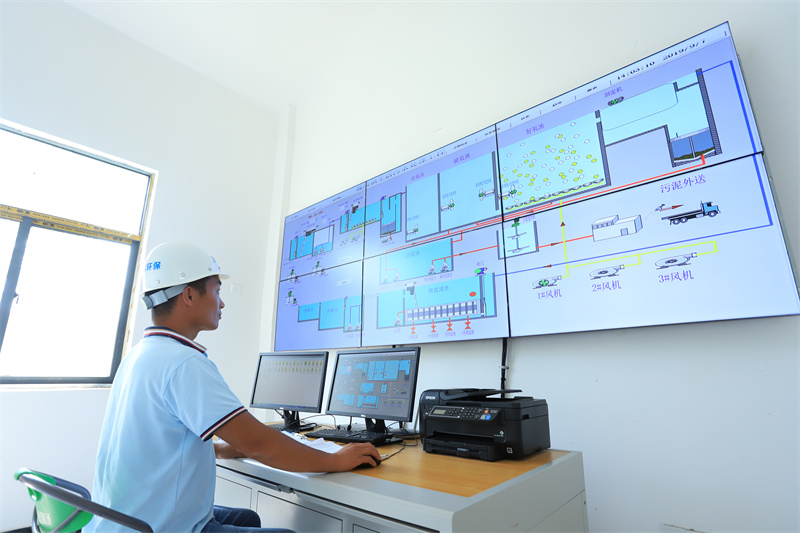
With the tightening of environmental standards and growing demand for water resource recycling, conventional sewage treatment processes such as AO and MBR have gradually shown limitations in treatment efficiency, energy consumption control and precise pollutant removal. In recent years, a host of new sewage treatment technologies have emerged, shifting from passive pollutant removal to proactive resource recovery. These technologies not only tackle difficult industrial wastewater, but also realize the recycling of energy and resources contained in sewage. This paper systematically sorts out five mainstream new sewage treatment technologies in 2025, analyzes their technical principles, core advantages and typical application scenarios, discusses their transformative impacts on the whole industry, and provides reference for industrial enterprises, industrial parks and environmental practitioners.
I. Five Core New Sewage Treatment Technologies in 2025: Principles and Advantages
R&D of new sewage treatment technologies focuses on high efficiency, low energy consumption, resource recovery and intelligent management. The following five technologies have been widely industrialized and become key solutions for complex water pollution problems.
1. Advanced Oxidation Processes (AOPs): Breakthrough for Refractory Industrial Wastewater
Technical Principle: Highly oxidative hydroxyl radicals (・OH, oxidation potential: 2.8V) are generated to rapidly decompose refractory organics such as benzene, phenols and pesticide residues that cannot be degraded by conventional processes, achieving deep removal of COD and chroma. Ozone-UV synergistic oxidation, electrocatalytic oxidation and photocatalytic oxidation are mainstream technologies in 2025. Without chemical dosing and under mild reaction conditions, electrocatalytic oxidation accounts for more than 40% of total applications.
Core Advantages:
High degradation efficiency: The removal rate for high-concentration refractory wastewater (COD>5000mg/L) reaches 80%-95%, far exceeding the 30%-50% of traditional AO processes;
Strong adaptability: It treats wastewater from chemical, pharmaceutical, printing and dyeing and other industries, unaffected by pH value and temperature;
Zero secondary pollution: Organics are completely decomposed into CO₂ and H₂O without generating sludge or hazardous waste.
Application Scenarios: High-salinity wastewater from chemical industrial parks, antibiotic wastewater from pharmaceutical plants, high-chroma dyeing wastewater. For example, after adopting electrocatalytic oxidation, a dyestuff factory reduced wastewater COD from 8000mg/L to below 500mg/L to meet discharge standards, while cutting operating cost to 1.2 RMB per ton, compared with 2.5 RMB per ton of traditional processes.
2. Coupled Membrane Separation Technology: Near-Zero Liquid Discharge and Resource Recovery
Technical Principle: Breaking the limits of single membrane processes such as MBR, coupled combinations including Ultrafiltration (UF) + Nanofiltration (NF) + Reverse Osmosis (RO) and Membrane Distillation (MD) + Forward Osmosis (FO) realize graded recovery of water, salt and useful substances in wastewater. In 2025, anti-fouling nanofiltration membranes have a service life extended to 3-5 years (vs 1-2 years for conventional membranes), with energy consumption reduced by 25%.
Core Advantages:
Premium effluent quality: RO permeate can be directly reused for production make-up water and green irrigation to achieve near-zero liquid discharge;
Resource recovery: NF membrane intercepts heavy metal ions and organic pollutants. After RO concentrated brine is treated by membrane distillation, the salt recovery rate exceeds 90% for industrial salt production;
Small footprint: Modular design cuts land occupation by 60% compared with conventional biochemical processes.
Application Scenarios: Desulfurization wastewater from power plants, high-salinity coal chemical wastewater, ultra-pure water preparation for electronics factories. A coal chemical plant adopted the UF+NF+RO + membrane distillation process, achieving a 95% wastewater reuse rate. It saved 1.2 million tons of fresh water annually and recovered 8,000 tons of industrial salt, creating economic benefits over 5 million RMB per year.
3. ANAMMOX Technology: Revolutionary Low-Energy Nitrogen Removal
Technical Principle: Under anaerobic conditions, anaerobic ammonium oxidation bacteria convert ammonium nitrogen (NH₄⁺-N) directly into nitrogen gas (N₂) without oxygen aeration or organic carbon sources, subverting the traditional nitrification-denitrification process which requires massive aeration and carbon dosing. Granulated ANAMMOX bacteria technology matured in 2025. The bacteria cultivation cycle is shortened from 6 months to 2 months, and the treatment load is tripled.
Core Advantages:
Ultra-low energy consumption: No aeration needed, power consumption is only 1/5 of conventional processes;
Low operating cost: No carbon source such as methanol is required, cutting cost by 60%-70%;
Low sludge yield: Slow microbial proliferation reduces sludge output by 80%.
Application Scenarios: Sludge digested liquid from municipal sewage plants, landfill leachate, high-ammonia wastewater from livestock farms. A municipal wastewater treatment plant adopted ANAMMOX to treat digested liquid with 2000mg/L ammonia nitrogen. The nitrogen removal cost dropped from 3.5 RMB/ton to 0.8 RMB/ton, saving 2 million RMB annually.
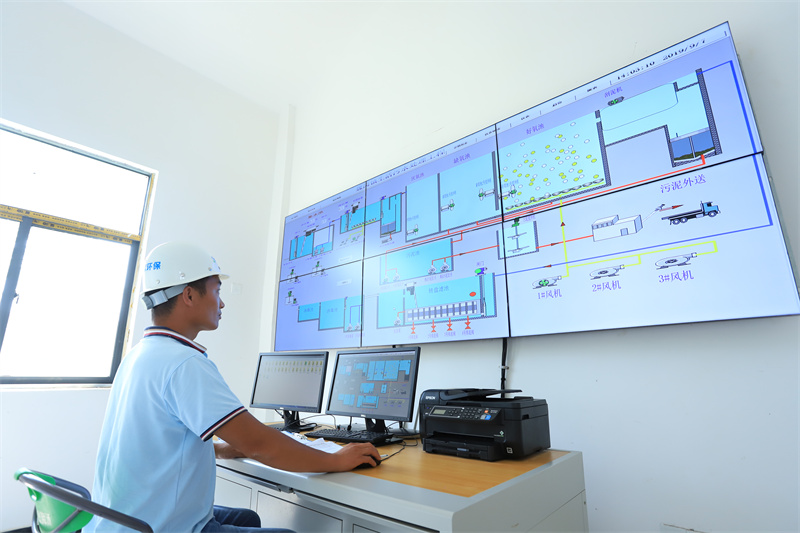
4. AI + Sewage Treatment: Full-Process Intelligent Operation & Maintenance
Technical Principle: Sensors collect real-time water quality data (COD, NH₄⁺-N, DO) and equipment operating parameters (pump power, blower air volume). Combined with AI algorithms including LSTM neural network and random forest, the system realizes predictive maintenance, dynamic process adjustment and early warning of water quality anomalies. In 2025, AI plus digital twin technology was widely popularized. A virtual model of the sewage plant is built to simulate treatment performance under different working conditions and optimize operating parameters.
Core Advantages:
High O&M efficiency: The accuracy of fault early warning exceeds 90%, cutting unplanned downtime by 50%;
Energy optimization: AI automatically adjusts blower air volume and pump speed to reduce energy consumption by 15%-20%;
Lower labor cost: Few-attended operation cuts staffing by 30%-40%.
Application Scenarios: Large municipal sewage plants, industrial park wastewater stations. After deploying the AI O&M system, a provincial capital city’s 500,000-ton/day sewage plant cut daily power consumption from 8,000 kWh to 6,500 kWh, saving 1.2 million RMB in electricity fees each year, while raising the compliance rate of effluent quality from 95% to 99.8%.
5. Bioelectrochemical System (BES): Dual Benefits of Wastewater Treatment and Power Generation
Technical Principle: Microbial metabolism on electrode surfaces converts chemical energy of organics in sewage into electric energy via Microbial Fuel Cells (MFC), while degrading pollutants simultaneously. Stacked BES achieved technological breakthroughs in 2025, with power output raised to 0.8-1.2W/m² per unit, covering 30%-40% of auxiliary power demand (lighting, sensor power supply) of sewage plants.
Core Advantages:
Resource recycling: Power is generated during sewage treatment to realize dual values of environmental protection and energy saving;
Suitable for low-concentration wastewater: It maintains high treatment efficiency for sewage with COD<500mg/L;
Zero secondary pollution: Microbial metabolites are only CO₂ and H₂O with full environmental friendliness.
Application Scenarios: Decentralized domestic sewage treatment in rural communities, low-concentration industrial wastewater. A rural community adopted BES technology for 50-ton/day domestic sewage treatment. Daily power generation reached 12 kWh to satisfy public lighting demand, lowering sewage treatment cost to 0.5 RMB/ton versus 1.2 RMB/ton of conventional processes.
II. Selection Guide for New Sewage Treatment Technologies: Matching Demands from Three Dimensions
Enterprises shall comprehensively evaluate water quality characteristics, treatment targets and budget to avoid blind technology selection. The three core selection criteria are listed below.
1. Selection Based on Water Quality: Targeted Pollution Control

2. Selection Based on Treatment Targets: Compliance Discharge or Resource Recycling
Target 1: Standard discharge (Grade I A, Class IV surface water):
Prioritize combined processes of advanced oxidation plus conventional biochemical treatment to balance efficiency and cost. For instance, chemical wastewater is pretreated by electrocatalytic oxidation to break down refractory organics before AO treatment, cutting operating cost by 40% compared with standalone advanced oxidation.
Target 2: Water Reuse (production make-up water, green irrigation):
Coupled membrane separation technology (UF+RO) is mandatory to guarantee reuse water quality. Electronics factories can produce ultra-pure water with resistivity up to 18MΩ·cm via this process.
Target 3: Resource Recovery (salt, electric power, organic fertilizer):
For saline wastewater: Adopt membrane distillation and crystallization to recover industrial salt;
For high-strength organic wastewater (distillery wastewater): BES plus anaerobic digestion for power and biogas co-production;
For livestock breeding wastewater: ANAMMOX plus biogas residue dewatering to produce organic fertilizer.
3. Selection Based on Budget: Balance Upfront Investment and Long-Term Returns

Note: The payback period includes resource benefits such as electricity savings and salt sales. Adjust according to local electricity prices and resource market prices.
III. Industrialized Project Cases of New Sewage Treatment Technologies
Case 1: High-Salinity Refractory Wastewater Treatment Project for a Chemical Industrial Park
Project Background: Wastewater from chemical enterprises contains benzene and phenols with COD of 6000-8000mg/L and salinity of 8%. The conventional AO process still left COD above 1000mg/L and failed discharge standards.
Technical Scheme: Electrocatalytic Oxidation (pretreatment) + UF+NF+RO (deep treatment) + Membrane Distillation (concentrated brine treatment)
Treatment Performance: COD reduced to below 50mg/L, salinity down to 0.5%, wastewater reuse rate reached 92%. The recovered industrial salt has a purity of 98%, with annual sales volume of 1,200 tons and 600,000 RMB profit.
Economic Indicators: Total upfront investment: 18 million RMB for 500-ton/day capacity; annual operating cost: 3 million RMB; annual benefits from water saving and salt sales: 2.8 million RMB; payback period: about 6 years.
Case 2: Upgrading and Reconstruction Project of a County Municipal Sewage Plant
Project Background: The original AO process needed to be upgraded from Grade B to Grade I A, with requirements on energy and O&M cost reduction.
Technical Scheme: ANAMMOX retrofitting for nitrogen removal unit + AI O&M system for blower and pump optimization
Treatment Performance: Ammonia nitrogen dropped from 15mg/L to below 5mg/L, COD reduced from 60mg/L to below 30mg/L, fully meeting Grade I A standard.
Economic Indicators: Retrofit investment: 8 million RMB for 100,000-ton/day capacity; annual power consumption cut from 12 million kWh to 9 million kWh (720,000 RMB saved on electricity bills); staffing reduced from 25 to 18 people (560,000 RMB saved on labor cost annually); payback period: 3.5 years.
IV. Future Development Trends: Three Directions Leading the Industry
1. Accelerated Technology Integration: Shift from Single Process to Multi-Technology Synergy
Combined processes such as Advanced Oxidation + BES + Membrane Separation and AI + Digital Twin + ANAMMOX will become mainstream. For example, AI automatically adjusts chemical dosage for advanced oxidation and electrode voltage of BES to realize full-process optimization, lifting treatment efficiency by 20%-30% while cutting energy consumption by another 15%.
2. Deepened Resource Recovery: From Wastewater Treatment to Resource Extraction
Sewage will be transformed from waste into a resource bank. Apart from water and salt recovery, phosphorus and nitrogen will be extracted to produce fertilizer, and organic pollutants will be converted into biodiesel. It is predicted that large-scale sewage plants will achieve zero liquid discharge and energy self-sufficiency by 2030, with resource benefits accounting for over 30% of total operating revenue.
3. Popularization of Decentralized Technologies: Solve Sewage Treatment Problems in Rural and Remote Areas
Miniature and modular technologies including portable BES equipment and integrated AI-MBR units will be widely adopted for rural villages and scenic spots. Land occupation will be reduced to 1/10 of conventional processes, installation time shortened from 1 month to 1 week, and unattended operation will be realized. Sewage governance will evolve from centralized treatment to a combined centralized-decentralized model.
V. Conclusion
New sewage treatment technologies have moved from theoretical research to large-scale industrial application. In 2025, advanced oxidation, coupled membrane separation, ANAMMOX, AI intelligent O&M and bioelectrochemical systems not only tackle complex wastewater that cannot be treated by conventional processes, but also drive the whole industry to shift from passive pollution control to proactive resource recycling. When selecting new technologies, enterprises shall avoid blind pursuit of cutting-edge equipment. A precise match based on water quality, treatment targets and budget, plus long-term O&M planning and resource benefit evaluation, will help achieve multiple goals including qualified discharge, cost control and water recycling.
If you need customized technical schemes for specific industries (chemical, pharmaceutical, municipal) or particular water quality conditions, please provide detailed water analysis reports, treatment capacity and discharge targets. We will offer professional technology selection plans and connect you with qualified equipment manufacturers to guarantee smooth project implementation.
Related Products
Related News
- New Trends in the Development of the MBR Membrane Wastewater Treatment Industry: A Professional Guide to Selecting Source Manufacturers
- How to Select Wastewater Treatment Equipment for Pig Farms? In-depth Review of Trusted Industry Service Providers
- Hard-to-Treat Slaughterhouse Wastewater? Tested & Recommended High-Adaptability Wastewater Treatment Solutions for 2026
- How to Select Integrated Wastewater Treatment Equipment? In-depth Review of Trustworthy Source Manufacturers Recognized by Industry Insiders
- How to Select Buried Integrated Wastewater Treatment Equipment? Strength Evaluation of Reliable Brands in 2026
- Inventory of New Coal Mine Water Treatment Technologies! How to Select Cost-Effective Manufacturers & Avoid Common Pitfalls
- Textile Printing & Dyeing Wastewater Treatment Is Tough? These Four Powerful Enterprises Easily Solve Core Industry Pain Points
- Authoritative Evaluation of High-Salinity Wastewater Treatment Equipment | Top Recommended Brands of 2026
- Which Supplier Offers Reliable Integrated Sewage Treatment Equipment? Multi-dimensional Actual Test Comparison & Top Recommended Brands Released
- Electroplating Factory Wastewater Treatment Engineering Cases
About Us
products
Business
News
Contact Us
Service Hotline:+86-15253659088WhatsApp: +86 18706508001
Email: jly@haipuou.group
Address: No.56, Donghuan Road, Zhucheng City, Weifang City, Shandong Province, China