


- Home
- About Us
About Us
- Product
Product
- Cases
Cases
- R&D Technology
- News
News
- Contact Us


- Default Language
 EN
EN RU
RU ES
ES DE
DE EL
EL IT
IT JA
JA KO
KO PT
PT ID
ID SR
SR UK
UK VI
VI TH
TH TR
TR MS
MS BE
BE AR
AR
FAQs, Scenario Adaptation and Industry Development Trend of Hotel Sewage Treatment Equipment
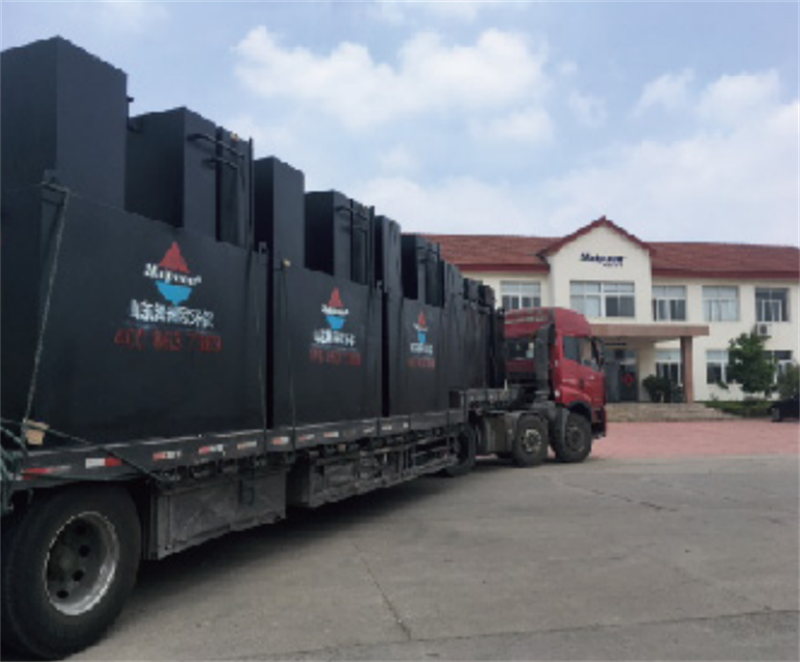
In hotel operation, the application of sewage treatment equipment often faces the dilemma of "difficult problems to solve and difficult scene adaptation". At the same time, the rapid iteration of industry technology also makes hotel managers confused about the direction of equipment upgrading. This article provides professional solutions for the high-frequency problems of hotel sewage treatment equipment, gives customized adaptation suggestions combined with different hotel scenarios, and interprets the latest development trends of the industry, helping hotel managers fully master the key points of equipment application and achieve efficient and compliant operation.
I. Common Problems and Professional Solutions of Hotel Sewage Treatment Equipment
Hotel sewage treatment equipment in long-term operation is prone to failures caused by water quality fluctuations, improper operation, equipment aging and other problems. If not solved in a timely manner, the treatment efficiency will decline and the water quality will exceed the standard. The following are 6 types of high-frequency problems and corresponding professional solutions:
1. Problem 1: Excessive equipment running noise affects the rest of hotel guests
Common reasons: ① No vibration damping measures were installed during the installation of water pumps and aeration blowers, so vibration was transmitted to walls or the ground during operation; ② No silencer was installed at the air inlet of the blower, or the silencer was aging and failed; ③ The pipe connections were loose, and water hammer noise was generated by water flow impact.
Solutions: ① Install spring shock absorbers (damping efficiency ≥90%) at the base of water pumps and blowers, and use flexible joints (such as rubber soft joints) at the connection between equipment and pipelines to reduce vibration transmission; ② Install impedance composite silencers at the air inlet of the blower with noise reduction ≥25dB, and install silencing elbows at the air outlet; ③ Check all pipe connections, re-tighten flange bolts, and install flow buffer devices at pipe diameter mutation points (such as DN100 changing to DN80) to avoid noise caused by water flow impact. After rectification, the equipment operation noise can be controlled ≤60dB, which meets the requirements of GB22337-2008 Environmental Noise Emission Standard for Social Living Environments, namely ≤55dB during daytime and ≤45dB at night in hotel areas.
2. Problem 2: The concentrations of COD and ammonia nitrogen in effluent exceed the standard, making discharge non-compliant
Common reasons: ① The influent water quality fluctuates greatly (a large amount of grease and food residues enter the equipment during catering peak hours), exceeding the biological treatment capacity; ② The activity of activated sludge in the biological reaction tank is insufficient (such as too low DO concentration, abnormal pH value); ③ The aeration system breaks down (clogged aerators, insufficient air volume of blowers), leading to incomplete degradation of organic matter.
Solutions: ① Add a catering wastewater pretreatment unit (such as integrated oil separation and lifting equipment) at the front end of the water inlet of the equipment, adopt the "air flotation + oil scraping" process to remove more than 90% of grease and prevent grease from inhibiting microbial activity; ② Detect the DO concentration in the biological reaction tank. If DO ≤1mg/L, clean the aerators or replace the blowers to keep DO at 2-4mg/L; if pH value <6.5, add sodium carbonate solution (concentration 10%) for adjustment; if pH value >8.5, add dilute sulfuric acid solution (concentration 5%) to keep microorganisms in the optimal living environment (pH 6.5-8.5); ③ If the activity of activated sludge is still insufficient, add biological activators (such as Bacillus and photosynthetic bacteria) to improve the sludge degradation capacity. Normally, the concentrations of COD and ammonia nitrogen can return to the qualified range within 3-5 days.
3. Problem 3: Excessive energy consumption during equipment operation brings heavy pressure on operating costs
Common reasons: ① Water pumps and blowers keep running at full load without adjusting according to sewage volume; ② The equipment is not equipped with a frequency conversion control system to adjust operating parameters in real time according to water quality and water volume; ③ Pipe blockages increase the pump head and raise energy consumption.
Solutions: ① Install frequency converters for water pumps and blowers to automatically adjust the rotating speed according to the real-time monitored influent flow. For example, when the sewage volume is reduced by 30%, the blower rotating speed is lowered by 25%, cutting energy consumption by about 40%; ② Integrate an intelligent energy management system into the equipment control cabinet, set the "peak-valley electricity consumption" mode (full-load operation during off-peak hours from 23:00 to 7:00, and on-demand adjustment during peak hours from 8:00 to 22:00) to further reduce electricity expenses; ③ Clean the Y-type filter of the water inlet pipe every week, and flush the pipeline with a high-pressure water gun (pressure ≥0.8MPa) every quarter to avoid higher energy consumption caused by pipe blockages. After reconstruction, the annual energy consumption cost of the equipment can be reduced by 30%-35%.
4. Problem 4: Odor accumulates inside the equipment and spreads to public areas of the hotel
Common reasons: ① The sludge residence time in the biological reaction tank is too long, resulting in anaerobic fermentation and generating hydrogen sulfide (rotten egg smell), ammonia and other odors; ② The cover plate of the equipment is not tightly sealed, leading to odor leakage; ③ The ventilation system breaks down and the odor cannot be discharged timely.
Solutions: ① Shorten the sludge residence time of the biological reaction tank from 15 days to 8-10 days, discharge sludge regularly (once a week, with the sludge discharge volume accounting for 5% of the tank volume) to avoid anaerobic fermentation of sludge; ② Replace the original ordinary cover plate of the equipment with sealed thermal insulation cover plate, use oil-resistant rubber sealing strips for the joint between cover plate and tank body, and reserve maintenance openings (with sealed doors) on the cover plate; ③ Optimize the ventilation system, install a negative pressure exhaust device in the equipment room (air volume ≥10 air changes per hour), lead the exhaust pipe to the hotel roof (more than 3m above the roof), or connect it to the hotel deodorization system (such as activated carbon adsorption tower) to remove odor before discharge. After rectification, the odor concentration in the equipment room can be controlled ≤0.5mg/m³, meeting the requirements of GB14554-93 Odor Pollutant Emission Standard.
5. Problem 5: Water pumps are frequently clogged and damaged, leading to high maintenance costs
Common reasons: ① The mesh aperture of the filter screen at the water inlet is too large to intercept impurities such as hair and fibers; ② A large number of hard particles (sand, small stones) in the sewage enter the water pump and wear the impeller; ③ The water pump is not maintained regularly, resulting in insufficient bearing lubrication and impeller scaling.
Solutions: ① Change the mesh aperture of the Y-type filter at the water inlet from 5mm to 2mm, and add a hair catcher (stainless steel filter screen with 1mm aperture) at the front end of the filter to intercept impurities doubly; ② Lay grid nets (grid spacing 3mm) in the water inlet channel of the equipment, and arrange special personnel to clean impurities on the grid every day; ③ Formulate a regular maintenance plan for water pumps: check bearing lubrication every month and add lithium base grease (Model 2#); disassemble the water pump every quarter and clean the impeller with a high-pressure water gun to remove scaling; replace the impeller timely if it is severely worn (wear loss >10%). With the above measures, the pump clogging frequency can be reduced by 80%, and the service life can be extended to 5-8 years.
6. Problem 6: Unstable equipment operation and reduced treatment efficiency in winter (hotels in northern regions)
Common reasons: ① The equipment is not thermally insulated, and the sewage temperature is too low (<10℃), which greatly reduces microbial activity (the optimal living temperature for microorganisms is 15-30℃); ② Pipes are frozen and blocked, so sewage cannot flow normally; ③ The air intake temperature of the blower is too low, resulting in reduced aeration volume.
Solutions: ① Wrap the equipment tank and pipelines with polyurethane thermal insulation layer plus color steel plate protective layer (thermal insulation thickness ≥80mm), install electric heating rods in the biological reaction tank (power calculated according to tank volume; generally a 10m³ tank is equipped with a 2kW heating rod) to keep the sewage temperature above 15℃; ② Install automatic drain valves at the lowest point of the pipeline (automatically open when the temperature is lower than 5℃) to prevent pipeline water from freezing; ③ Install air heating devices (electric heating, heating temperature 10-15℃) at the air inlet of the blower to ensure stable aeration volume. After reconstruction, the equipment treatment efficiency in winter can remain above 90%, basically consistent with that in normal temperature seasons.
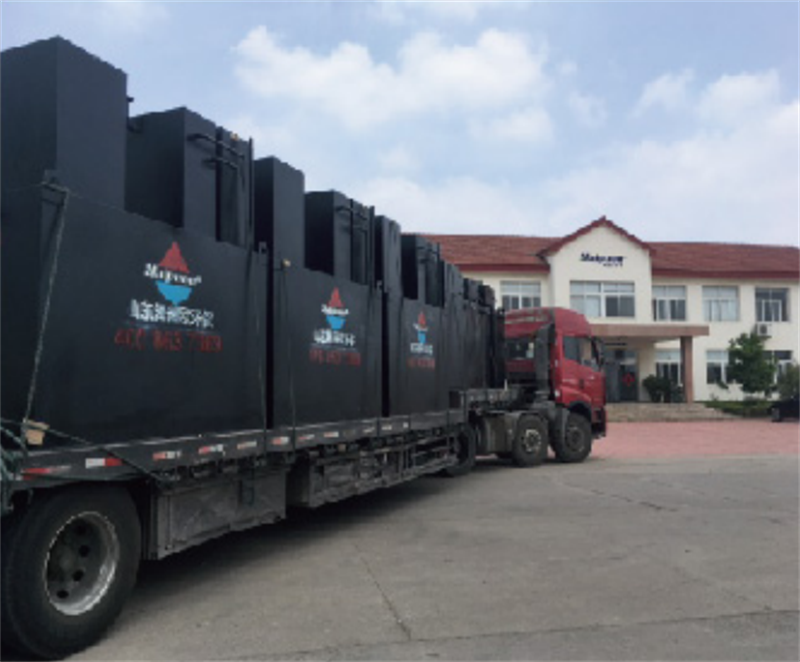
II. Customized Matching Schemes for Hotel Sewage Treatment Equipment under Different Scenarios
Differences in hotel type, location and scale lead to diversified demands for sewage treatment equipment. Targeted customized schemes are provided for four typical hotel scenarios to guarantee perfect matching between equipment and actual demands:
1. Scenario 1: Star hotels in urban core areas (150-300 rooms, covered by municipal pipe networks)
Core demands: small land occupation, low noise, stable operation, meeting municipal pipe access standards (COD≤500mg/L, SS≤400mg/L).
Matching scheme: Adopt buried integrated sewage treatment equipment (Process: Bar screen + oil separation + anoxic + aerobic + sedimentation + disinfection). The fully buried design only exposes maintenance openings, covering merely 1/3 land area of traditional equipment. For example, a 50-ton/day unit occupies about 40㎡ without affecting hotel landscapes. Variable-frequency blowers and silent water pumps are equipped to keep running noise ≤55dB. A PLC intelligent control system is integrated to remotely monitor equipment operation and cut manual intervention. Meanwhile, add a catering wastewater oil separation unit at the front end to prevent grease from entering the biological reaction tank and ensure stable treatment efficiency.
2. Scenario 2: Scenic resort hotels (50-150 rooms, no municipal pipe network, sewage discharged into natural water bodies)
Core demands: high effluent quality (meeting Grade I A of GB18918-2002 Pollutant Discharge Standard for Urban Sewage Treatment Plants; quasi-Class IV surface water standard required by some scenic areas), water resource recycling, low carbon and environmental protection.
Matching scheme: Adopt MBR membrane integrated sewage treatment equipment plus reclaimed water reuse system (Process: Bar screen + oil separation + MBR membrane bioreactor + UV disinfection + activated carbon filtration). The MBR membrane intercepts more than 99% of suspended solids and microorganisms, with effluent turbidity ≤1NTU, COD≤50mg/L and ammonia nitrogen≤8mg/L to meet Grade I A standard. If quasi-Class IV surface water is required, add an advanced oxidation unit (UV-ozone) to further reduce COD to ≤30mg/L. The treated reclaimed water can be used for hotel greening irrigation (60%), parking lot flushing (20%) and toilet flushing (20%), with a water reuse rate above 80%, saving 30,000 to 50,000 tons of tap water every year. In addition, the equipment is fitted with a solar power supply system for lighting and control systems to reduce fossil energy consumption.
3. Scenario 3: Small budget chain hotels (20-50 rooms, limited budget and narrow site)
Core demands: low investment cost, simple operation, convenient maintenance, meeting basic discharge standards for pipe access.
Matching scheme: Select small integrated biological treatment equipment (Process: Bar screen + simple oil separation + biological contact oxidation + sedimentation + disinfection). The highly integrated 5-15 ton/day unit only occupies 10-20㎡ and can be installed in the backyard or basement corner of the hotel. The total investment is about 50,000 to 100,000 RMB, only 1/3 to 1/2 of large-scale equipment. It adopts one-key startup without professional operators; staff only need to check running status and clean screen impurities every day. The maintenance cycle is long (once a month) with low annual maintenance cost (≤5000 RMB), perfectly suitable for small hotels with tight budgets.
4. Scenario 4: High-altitude hotels (Tibet, Qinghai, altitude>3000m)
Core demands: adapt to low air pressure and low temperature, keep stable operation without efficiency loss caused by harsh environments.
Matching scheme: Customize special sewage treatment equipment for high altitude with optimized components: ① Aeration system: plateau blowers that work stably below 5000m altitude without air volume and air pressure loss under low air pressure, guaranteeing qualified DO concentration in the biological tank; ② Heating system: install electric heat tracing insulation layers (20W/m) on tank bodies and pipelines together with temperature control systems to keep sewage temperature above 12℃; ③ Electrical system: adopt plateau electrical components (contactors, circuit breakers) to avoid insulation degradation under low air pressure; ④ Process adjustment: expand the volume of the biological reaction tank by 20% compared with plain areas and prolong sewage retention time to achieve full organic pollutant degradation. After upgrading, the treatment efficiency can reach over 95% of the plain level.
III. Development Trend of Hotel Sewage Treatment Equipment: Intelligence, Low Carbon and Resource Recovery Become Mainstream
With stricter environmental policies and accelerated technological innovation, the hotel sewage treatment equipment industry is developing toward intelligence, low carbon and resource recovery. Four major trends will emerge in the next 3 to 5 years:
1. Intelligence: AI + IoT technology is widely applied to realize unattended operation
In the future, hotel sewage treatment equipment will be universally equipped with AI intelligent control systems. Water quality sensors, flow sensors and energy consumption sensors collect real-time operating data. AI algorithms automatically analyze data, predict potential faults (such as aerator blockage and pump wear 7 days in advance) and generate maintenance plans. Meanwhile, the AI system dynamically adjusts operating parameters according to hotel occupancy and catering passenger flow: increase aeration volume in peak seasons and reduce pump rotating speed in off-seasons to realize on-demand operation. Moreover, the equipment will be connected to the hotel intelligent management platform. Managers can view water quality data, energy consumption statistics and maintenance records online for one-stop management, greatly cutting labor costs.
2. Low Carbon: Transform from energy-consuming equipment to energy-saving equipment to help hotels achieve dual-carbon goals
In response to the national carbon peaking and carbon neutrality policy, manufacturers will focus on low-carbon energy-saving technologies: ① PV + energy storage power supply: 30%-50% of electricity comes from solar energy to reduce dependence on grid power; ② Low-energy membrane components: cut the energy consumption of MBR membranes from 0.5kWh/m³ down to below 0.3kWh/m³ to lower power consumption in advanced treatment; ③ Sewage heat recovery: recycle heat from sewage via heat exchangers for hotel heating and hot water supply to realize energy recycling. It is estimated that low-carbon sewage treatment equipment will account for more than 60% of the market by 2026, with running energy consumption reduced by over 40%.
3. Resource Recovery: Upgrade from sewage purification to resource recycling to create extra benefits
Future equipment will not only satisfy compliant discharge, but also focus on resource recovery: ① Advanced water reuse: treated reclaimed water will meet GB/T 18921-2019 Reuse of Urban Sewage — Landscape Water Quality Standard for artificial lakes and fountains to improve water recycling rate further; ② Sludge resource utilization: convert sludge into organic fertilizer that meets NY525-2021 Organic Fertilizer Standard through high-temperature aerobic composting for hotel greening or external sales, realizing zero sludge landfilling; ③ Energy recovery: adopt anaerobic fermentation for high-concentration catering wastewater to produce biogas for kitchen fuel or power generation, turning waste into energy. Resource recovery technology will turn sewage treatment from a cost center into a profit center for hotels.
4. Modular Design: Adapt flexibly to hotel renovation and shorten construction cycle
Since most hotel renovation projects must be carried out without interrupting daily business, modular equipment will dominate the market. The whole system consists of independent modules (pretreatment, biochemical treatment, disinfection, water reuse). Each module can be manufactured, transported and installed separately. Renovation only needs module replacement instead of overall reconstruction. Standard interfaces allow users to add or upgrade modules (MBR membrane unit, advanced oxidation unit) later when expanding guest rooms or upgrading discharge standards. The installation cycle of modular equipment can be shortened to 7-10 days, compared with 30-45 days for traditional integrated equipment, minimizing disruption to hotel operation.
IV. Conclusion: Grasp Industry Trends, Select Suitable Equipment and Realize Sustainable Hotel Development
Sewage treatment equipment has evolved from a compliance necessity into an important tool for improving operational benefits and building a green brand. For common operational faults, hotels must carry out professional rectification to avoid business interruption caused by equipment breakdown. During model selection, make customized plans according to actual scenarios (downtown hotels, scenic hotels, high-altitude projects) to ensure perfect adaptability. Besides, keep up with intelligent, low-carbon and resource recycling trends and upgrade equipment properly to lay a solid foundation for long-term sustainable development. With continuous technological innovation, hotel sewage treatment equipment will create greater environmental and economic benefits and become core support for green hotel operation.
Related Products
Related News
- New Trends in the Development of the MBR Membrane Wastewater Treatment Industry: A Professional Guide to Selecting Source Manufacturers
- How to Select Wastewater Treatment Equipment for Pig Farms? In-depth Review of Trusted Industry Service Providers
- Hard-to-Treat Slaughterhouse Wastewater? Tested & Recommended High-Adaptability Wastewater Treatment Solutions for 2026
- How to Select Integrated Wastewater Treatment Equipment? In-depth Review of Trustworthy Source Manufacturers Recognized by Industry Insiders
- How to Select Buried Integrated Wastewater Treatment Equipment? Strength Evaluation of Reliable Brands in 2026
- Inventory of New Coal Mine Water Treatment Technologies! How to Select Cost-Effective Manufacturers & Avoid Common Pitfalls
- Textile Printing & Dyeing Wastewater Treatment Is Tough? These Four Powerful Enterprises Easily Solve Core Industry Pain Points
- Authoritative Evaluation of High-Salinity Wastewater Treatment Equipment | Top Recommended Brands of 2026
- Which Supplier Offers Reliable Integrated Sewage Treatment Equipment? Multi-dimensional Actual Test Comparison & Top Recommended Brands Released
- Electroplating Factory Wastewater Treatment Engineering Cases
About Us
products
Business
News
Contact Us
Service Hotline:+86-15253659088WhatsApp: +86 18706508001
Email: jly@haipuou.group
Address: No.56, Donghuan Road, Zhucheng City, Weifang City, Shandong Province, China