

- Home
- About Us
About Us
- Product
Product
- Cases
Cases
- R&D Technology
- News
News
- Contact Us


- Default Language
 EN
EN RU
RU ES
ES DE
DE EL
EL IT
IT JA
JA KO
KO PT
PT ID
ID SR
SR UK
UK VI
VI TH
TH TR
TR MS
MS BE
BE AR
AR
延边朝鲜族自治州Full-Spectrum Wastewater Treatment Solutions Aligned with New Environmental Policies: Technological Innovations & Practical Cases to Resolve Industrial Pain Points
Date:July 13, 2025ID: 2279Views: 1027
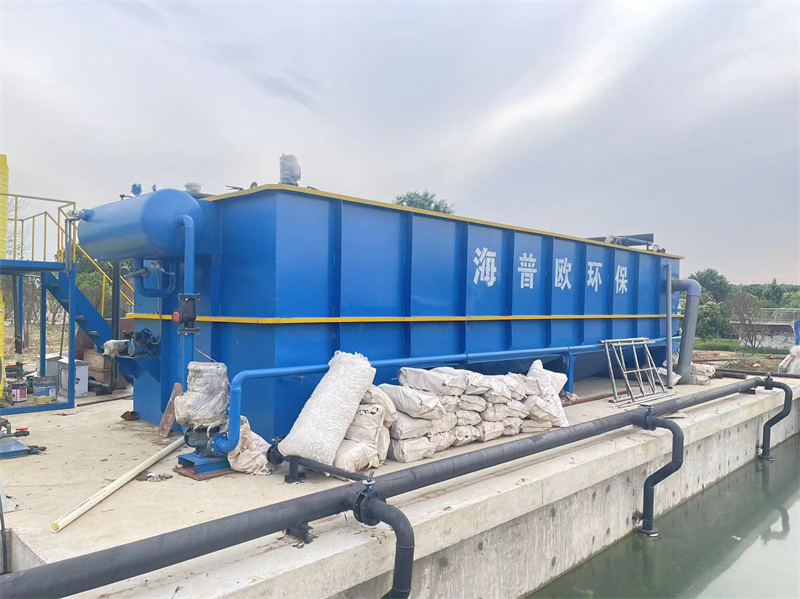
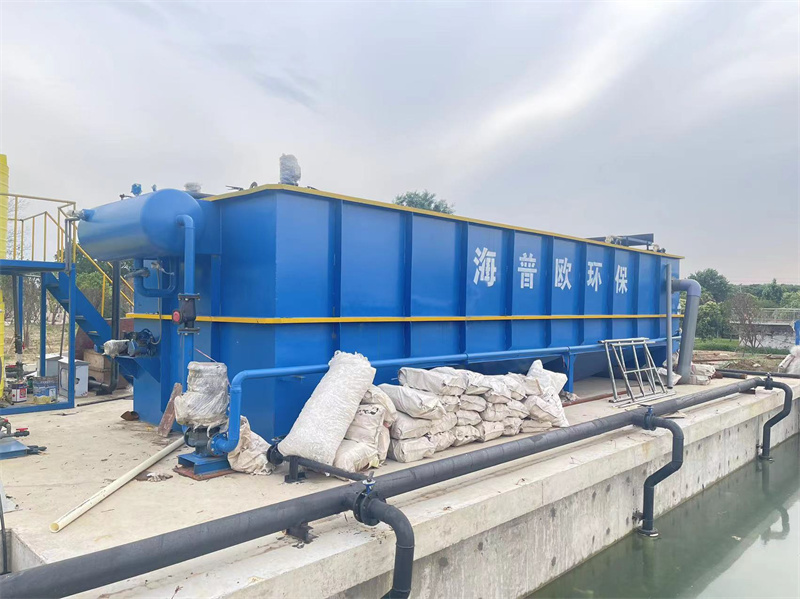
Haipuou Environmental Protection Group Co., Ltd. specializes in the construction of wastewater treatment projects, as well as the manufacturing and sales of water treatment equipment. Our core product portfolio includes integrated wastewater treatment equipment, high-efficiency cyclone purifiers, magnetic separation wastewater treatment systems, prefabricated wastewater treatment plants, smart water management platforms, sludge thickening equipment, dissolved air flotation (DAF) machines and other supporting facilities.
I. Industry Pain Points Drive Technical Upgrading: Core Challenges & Breakthrough Solutions for Wastewater Treatment
At present, the wastewater treatment sector faces three major core pain points: low treatment efficiency for high-concentration refractory wastewater, excessive treatment costs for small and medium-sized enterprises (SMEs), and high risks of secondary pollution from traditional processes. Statistics show that refractory wastewater with COD > 10000 mg/L from chemical, pharmaceutical and other industries accounts for 35% of total industrial wastewater volume, while conventional biological treatment technologies achieve a removal rate of less than 30%. Restricted by capital, only 40% of SMEs can meet the Class 1-A standard specified in the latest GB 18918-2002 Discharge Standard of Pollutants for Municipal Wastewater Treatment Plant.
High-frequency search terms such as "low-cost wastewater treatment solutions", "refractory wastewater treatment technologies" and "new environmental policy requirements for wastewater treatment" essentially reflect market demand for comprehensive solutions featuring technical feasibility, controllable costs and policy compliance. This paper analyzes implementable wastewater treatment approaches from three dimensions: technical innovation, cost optimization and policy adaptation, and delivers practical guidelines for enterprises of all scales and various industries.
II. Innovative Wastewater Treatment Technologies: From Separate Purification to Integrated "Purification + Resource Recovery"
(1) Specialized Technologies for Refractory Wastewater: Targeted Solutions for High-Pollution Problems
1. Upgraded Catalytic Oxidation Technology
Novel heterogeneous catalytic ozonation technology adopts supported catalysts such as TiO₂/Al₂O₃ to accelerate ozone decomposition and generate hydroxyl radicals (·OH). It boosts the degradation efficiency of benzene and heterocyclic organics to over 85%, cutting treatment costs by 20%~30% compared with traditional Fenton oxidation, and is suitable for pesticide and dye wastewater.
2. Electro-Catalytic Oxidation Technology
Three-dimensional electrode electro-catalytic reactors expand reaction areas via particle electrodes, attaining a COD removal rate of 60%~90% with energy consumption only 50% of traditional two-dimensional electrodes. No chemical agents are required to avoid secondary pollution, matching electroplating and electronic wastewater treatment.
(2) Resource Recovery Technologies: Turning Waste into Valuable Assets to Improve Economic Benefits
1. Water Resource Reclamation
Combined membrane distillation (MD) and reverse osmosis (RO) processes target high-salinity, high-organic wastewater such as coal chemical concentrated brine, lifting the water recovery rate from 60% (single RO) to over 85%. The produced water with low TDS can be directly reused as industrial process water.
2. Pollutant Recovery
For electroplating wastewater, the combined process of selective chelating resin and electrolytic deposition recovers heavy metals (Cu²⁺, Ni²⁺) with purity up to 99.5%, and the annual recovery value can offset 30%~50% of overall treatment costs. Nanofiltration membrane salt separation technology applied to printing and dyeing wastewater recovers sodium sulfate with purity > 98% for cyclic reuse.
(3) Intelligent Control Technologies: Core Support for Cost Reduction & Efficiency Improvement
1. Online Monitoring & Automatic Regulation
IoT-based water quality sensors (pH, COD, DO, etc.) transmit real-time data, and AI algorithms automatically adjust aeration intensity and chemical dosing volume, reducing system energy consumption by 15%~25% and reagent consumption by 10%~18%.
2. Digital Twin System
A digital twin model of the wastewater treatment plant is built to simulate operational status under variable influent loads and predict potential equipment faults in advance, slashing equipment maintenance costs by 20% and raising the stable operation rate above 98%.
III. Cost Optimization Schemes: Wastewater Treatment Selection Strategies for Enterprises of Different Scales
(1) Large-Scale Enterprises: Large-Scale Treatment + Resource Recovery
Recommended combined process: Pretreatment → Anaerobic Digestion → Aerobic Treatment → Advanced Treatment → Resource Recovery:
• Biogas generated during anaerobic digestion can be purified for boiler fuel or injected into natural gas pipelines, realizing annual CO₂ emission reduction of 1000~5000 tons;
• The dual-membrane UF+RO process is adopted for advanced treatment with a water reuse rate of 70%~80%, cutting annual freshwater expenses by over one million RMB.
(2) Small & Medium-Sized Enterprises: Integrated Equipment + Low-Cost Processes
1. Integrated MBR Equipment
Integrates sedimentation, biodegradation and membrane filtration, occupying only 1/3 land area of traditional processes with an installation cycle shortened to 7~15 days. The treatment cost ranges from 0.8 to 1.5 RMB per ton of water, suitable for food processing and small chemical manufacturers.
2. Combined Low-Cost Processes
For domestic sewage, the constructed wetland + ecological filter process cuts capital investment by 40% compared with conventional activated sludge processes, with an operating cost of merely 0.3~0.5 RMB per ton of water, ideal for decentralized treatment in towns and industrial parks.
(3) High-Salinity / High-COD Wastewater: Specialized Processes for Cost Cutting
• High-salinity wastewater (TDS > 50000 mg/L) adopts evaporation crystallization + salt separation process with a salt recovery rate of 90%, eliminating hazardous waste disposal of salt residues;
• High-COD wastewater (COD > 50000 mg/L) uses EGSB anaerobic granular sludge reactor + advanced oxidation, reducing treatment costs by 30%~40% versus traditional technologies.
IV. Policy Adaptation: Key Points for Wastewater Treatment Compliance, Emission Reduction & Efficiency Gains
(1) Core Requirements of the Latest Environmental Policies
1. The 14th Five-Year Plan for Municipal Wastewater Treatment and Resource Utilization stipulates that the urban wastewater treatment rate shall reach 98% and county-level rate 95% by 2025, with the reclaimed water utilization rate exceeding 35%;
2. Integrated pollutant discharge permit management mandates real-time monitoring and online data uploading of key indicators including COD, ammonia nitrogen and total phosphorus. Penalties for illegal discharge range from 100,000 to 1,000,000 RMB per violation.
(2) Synergistic Strategies for Compliance & Carbon Mitigation
1. Prioritize resource recovery technologies to satisfy emission reduction targets while lowering overall costs via reclaimed water and heavy metal recycling;
2. Small enterprises may join centralized industrial park wastewater treatment plants to share facilities, lowering independent construction investment while guaranteeing compliant discharge.
V. New Industrial Development Trends in 2025: Green & Low-Carbon Transformation
1. Low-Carbon Treatment Technologies: The ANAMMOX process cuts energy consumption by 60% and sludge yield by 80% compared with traditional nitrification-denitrification, emerging as the mainstream nitrogen removal technology;
2. Application of Green Chemicals: Bio-flocculants and biodegradable demulsifiers gradually replace traditional chemical agents to mitigate secondary pollution risks;
3. SEO Optimization Tips: Enterprise official websites can create content combining engineering cases and policy interpretations around long-tail keywords such as "low-carbon wastewater treatment technology", "wastewater discharge permit compliance" and "high-salinity wastewater resource recovery solutions" to boost search rankings.
VI. Conclusion
Wastewater treatment has shifted from passive discharge compliance to active resource recycling and low-carbon operation, with technological innovation serving as the core driving force to resolve industrial pain points. Whether large-scale resource recovery projects for big enterprises or low-cost treatment facilities for SMEs, process selection must match actual water quality characteristics, treatment scale and regulatory requirements. With continuously tightened environmental policies and iterative technological upgrades, integrated "purification + resource recovery + low-carbon" solutions will become a vital pathway for enterprises to achieve sustainable development.
Related Products
Related News
- 延边朝鲜族自治州New Trends in the Development of the MBR Membrane Wastewater Treatment Industry: A Professional Guide to Selecting Source Manufacturers
- 延边朝鲜族自治州How to Select Wastewater Treatment Equipment for Pig Farms? In-depth Review of Trusted Industry Service Providers
- 延边朝鲜族自治州Hard-to-Treat Slaughterhouse Wastewater? Tested & Recommended High-Adaptability Wastewater Treatment Solutions for 2026
- 延边朝鲜族自治州How to Select Integrated Wastewater Treatment Equipment? In-depth Review of Trustworthy Source Manufacturers Recognized by Industry Insiders
- 延边朝鲜族自治州How to Select Buried Integrated Wastewater Treatment Equipment? Strength Evaluation of Reliable Brands in 2026
- 延边朝鲜族自治州Inventory of New Coal Mine Water Treatment Technologies! How to Select Cost-Effective Manufacturers & Avoid Common Pitfalls
- 延边朝鲜族自治州Textile Printing & Dyeing Wastewater Treatment Is Tough? These Four Powerful Enterprises Easily Solve Core Industry Pain Points
- 延边朝鲜族自治州Authoritative Evaluation of High-Salinity Wastewater Treatment Equipment | Top Recommended Brands of 2026
- 延边朝鲜族自治州Which Supplier Offers Reliable Integrated Sewage Treatment Equipment? Multi-dimensional Actual Test Comparison & Top Recommended Brands Released
- 延边朝鲜族自治州Electroplating Factory Wastewater Treatment Engineering Cases
About Us
products
Business
News
Contact Us
Service Hotline:+86-15253659088WhatsApp: +86 18706508001
Email: jly@haipuou.group
Address: No.56, Donghuan Road, Zhucheng City, Weifang City, Shandong Province, China