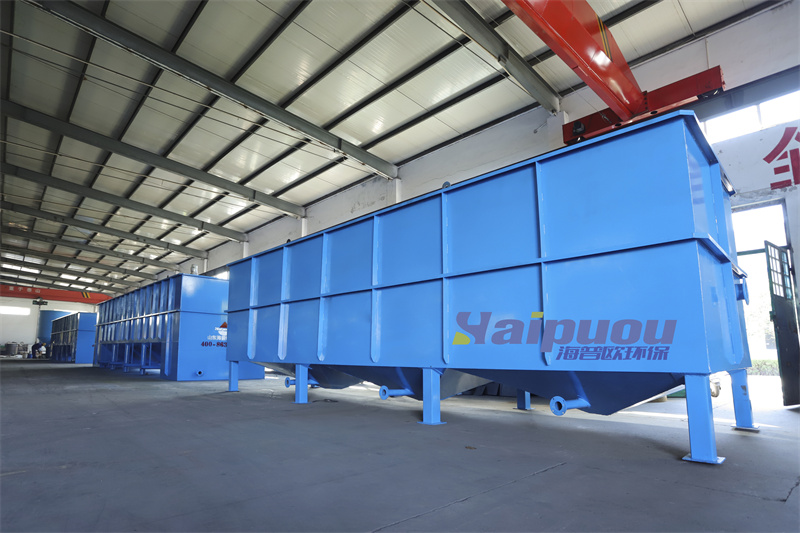
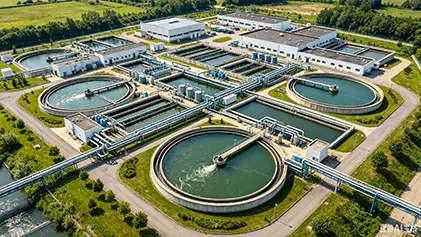
Driven by stricter environmental policies and the "Dual Carbon" goal, sewage treatment has evolved from a basic environmental compliance requirement for enterprises into a core competitive edge for sustainable development. As the key carrier of integrated pollution control solutions, packaged sewage treatment equipment features modular design and full-process controllability. It effectively addresses the drawbacks of traditional sewage treatment processes, such as scattered facilities and complicated operation and maintenance, and is widely applied in industrial production, municipal construction, emergency treatment and other diverse scenarios. This article comprehensively interprets the core value of packaged sewage treatment equipment from the perspectives of technical principles, selection criteria, practical cases and future trends.
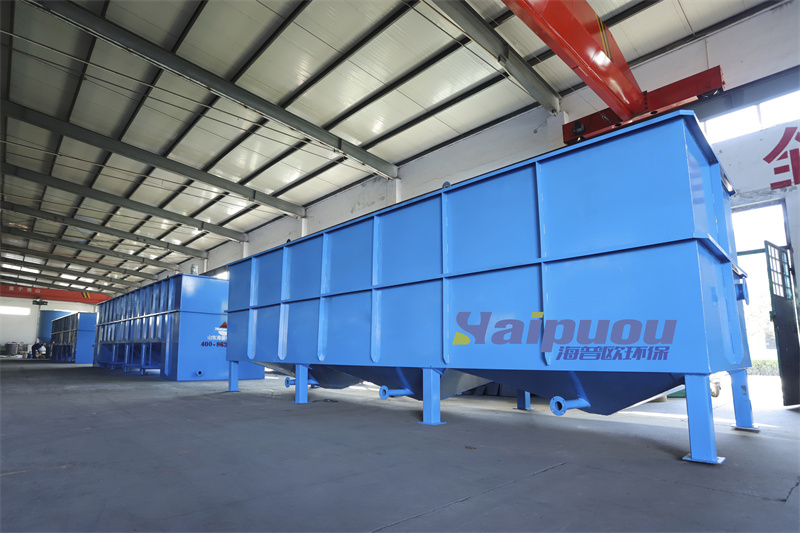
I. Core Technical Framework and Upgrade Direction of Packaged Sewage Treatment Equipment
Packaged sewage treatment equipment is not a simple combination of individual machines, but a coordinated system composed of pretreatment, core treatment, advanced treatment and intelligent control systems. Its technological development shows three major trends:
(1) Collaborative Design of Three-stage Treatment Units
1. Pretreatment Unit: As the first line of defense for pollutant interception, it achieves preliminary purification through a combination of bar screens, grit chambers and regulating tanks. For membrane treatment systems, the clearance of bar screens shall be controlled within 5mm to prevent membrane clogging. Mixers with power of 0.05-0.1kW/m³ are installed in regulating tanks to stabilize water quality.
2. Core Treatment Unit: Customized process combinations are adopted according to water quality, which is the core link for pollutant degradation. For high-salinity and high-COD wastewater, the process of evaporative crystallization + advanced oxidation + membrane separation is used for salt recovery; for low-concentration sewage, MBR membrane bioreactors are adopted to realize water reuse. The mixed liquor suspended solids (MLSS) can reach 8000-12000mg/L, delivering far stronger shock resistance than traditional equipment.
3. Advanced Treatment Unit: To improve water quality, ultrafiltration (UF) and reverse osmosis (RO) membrane modules can intercept more than 99% of pollutants. The UV disinfection dosage shall be no less than 30mJ/cm² to kill microorganisms, and the dosage shall be increased to 60mJ/cm² for medical wastewater.
(2) Three Technical Upgrades Reshape Industry Value
1. Precise Process Control: Breaking the limitation of single technology, the innovative process of chemical chelation + resin adsorption is applied for heavy metal-containing wastewater, with a pollutant removal rate exceeding 99% and recyclable precious metals. Two-stage DTRO membrane technology is adopted for landfill leachate to reduce the volume of concentrated liquid.
2. Intelligent Operation & Maintenance: IoT sensors monitor more than 10 water quality indicators in real time. AI algorithms automatically adjust chemical dosage and aeration intensity, cutting energy consumption by 20%-30% compared with manual control. The remote operation system supports fault early warning via mobile phones.
3. Low-carbon Operation: High-efficiency aeration equipment raises oxygen utilization rate above 35%. The sludge anaerobic digestion module converts biomass into biogas for self-use, and low-carbon materials are selected to reduce carbon emissions throughout the whole life cycle.
II. Scenario-based Matching: Equipment Selection Guide for Various Industries
There is no one-size-fits-all packaged sewage treatment equipment. The selection must be tailored to water quality, treatment capacity and site conditions. The following three sets of solutions have been verified by practical projects:
(1) Industrial Wastewater Treatment: Poison Resistance and Shock Resistance Are Core Requirements
Wastewater from chemical industry, electroplating and other sectors features high COD and heavy metal content. A combined solution of pretreatment + enhanced treatment + advanced reuse is required. In a chemical industrial park project in Guangxi, for wastewater with COD>10000mg/L, a Fenton reactor + poison-resistant MBR + NF-RO double-membrane system was deployed. The TDS of effluent is lower than 100mg/L for direct recycling, and the operating cost is controlled within 3.2 RMB per ton of water.
(2) Municipal Sewage Treatment: High Efficiency and Low Energy Consumption Are Priorities
For large-volume projects (daily capacity>100,000m³), packaged equipment adopting the AAO process is preferred, with a water treatment cost of only 0.8-1.2 RMB per ton. Containerized MBR equipment is recommended for small and medium-scale projects, occupying 50% less land than traditional processes. In the Daxin Project in Shenyang, this set of equipment treats 2,100 tons of leachate per day, and the effluent meets Grade A discharge standard.
(3) Emergency Treatment: Rapid Deployment Is a Must
Mobile equipment is needed for sudden pollution incidents and existing sewage renovation. The containerized DTRO equipment developed by Jiarong Technology can be put into operation merely with leveled ground, water and power supply. A project in Columbia achieves a daily leachate treatment capacity of 100 tons, becoming a benchmark for overseas equipment export.
III. Avoid Selection Pitfalls: Four-dimensional Inspection from Technical Parameters to Compliance
Enterprises tend to focus merely on low prices. A complete evaluation system including parameter matching, scenario adaptation, cost control and compliance should be established:
1. Parameter Inspection: For biological treatment equipment, pay attention to MLSS and HRT (HRT shall be 24-36 hours when COD>2000mg/L). For membrane equipment, check the rejection rate and flux attenuation rate (the annual attenuation rate of high-quality membranes shall not exceed 5%).
2. Cost Calculation: Besides procurement cost, operation expenses (chemical and power consumption) and replacement cost (the service life of membrane components is generally 3-5 years) shall be included.
3. Compliance Verification: Ensure the treatment performance meets industry-specific standards. For instance, electroplating wastewater shall comply with GB21900-2008, and landfill leachate shall follow GB16889-2008.
IV. Future Trend: In-depth Integration of Resource Recovery and Intelligent Technology
With the popularization of resource recycling, packaged sewage treatment equipment is transforming from discharge equipment into resource production facilities. Starting from 2026, three technological directions will dominate the market: first, stepwise water reuse systems (sewage → reclaimed water → pure water) with a water recovery rate above 85%; second, pollutant recycling technologies such as extracting lithium iron phosphate raw materials from high-concentration wastewater; third, digital twin operation & maintenance to optimize the whole life cycle of equipment through virtual-real mapping.
Conclusion
Technological upgrading and scenario-based application of packaged sewage treatment equipment are reshaping the value model of environmental governance. When selecting equipment, enterprises should break the mindset of simple pollution treatment and conduct evaluation from three dimensions: process compatibility, economic operation and resource recovery potential, so as to achieve a win-win result of environmental investment and economic returns. In the future, with the deep integration of intelligent and low-carbon technologies, packaged treatment equipment will become the core driving force for turning sewage into recyclable resources.





 EN
EN RU
RU ES
ES DE
DE EL
EL IT
IT JA
JA KO
KO PT
PT ID
ID SR
SR UK
UK VI
VI TH
TH TR
TR MS
MS BE
BE AR
AR