


- Home
- About Us
About Us
- Product
Product
- Cases
Cases
- R&D Technology
- News
News
- Contact Us


- Default Language
 EN
EN RU
RU ES
ES DE
DE EL
EL IT
IT JA
JA KO
KO PT
PT ID
ID SR
SR UK
UK VI
VI TH
TH TR
TR MS
MS BE
BE AR
AR
Fully Automatic Sewage Lifting Equipment, an Intelligent Solution to Sewage Discharge Problems
Date:July 13, 2025ID: 2233Views: 1220
Haipuou Environmental Protection Group Co., Ltd. specializes in the construction of sewage treatment projects and the production and sales of water treatment equipment. Main products include integrated sewage treatment equipment, high-efficiency cyclone purifiers, magnetic separation sewage treatment equipment, prefabricated sewage treatment plants, smart water management platforms, sludge thickening equipment, air flotation equipment, etc.
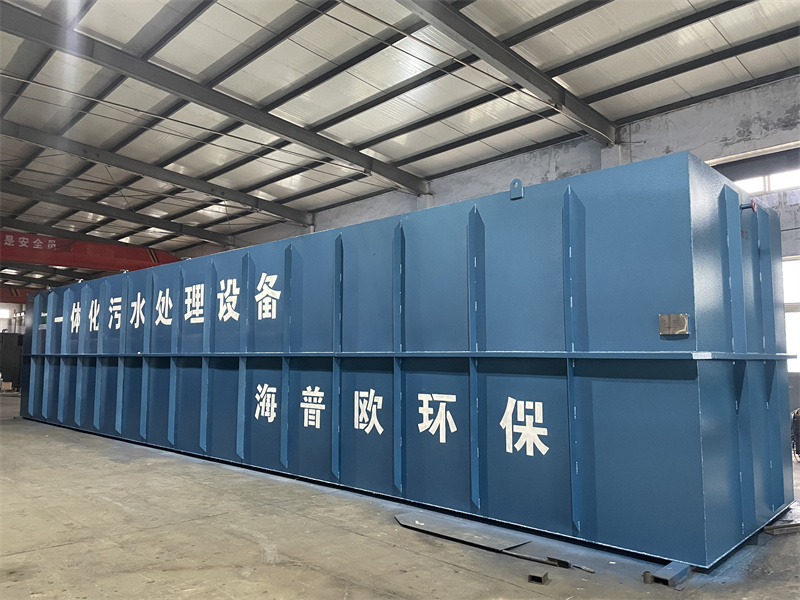
In the water supply and drainage systems of modern buildings, sewage discharge has long been a major problem for low-lying areas such as basements, underground shopping malls and ground-floor villas. Traditional gravity drainage is greatly limited by terrain and elevation, and suffers from frequent clogging, odor leakage and complicated maintenance.
The fully automatic sewage lifting equipment breaks the limits of traditional drainage modes. Featuring intelligence, high efficiency and integrated structure, it has become the top choice for sewage treatment in low-level areas, and is widely used in residential, commercial and industrial sectors.
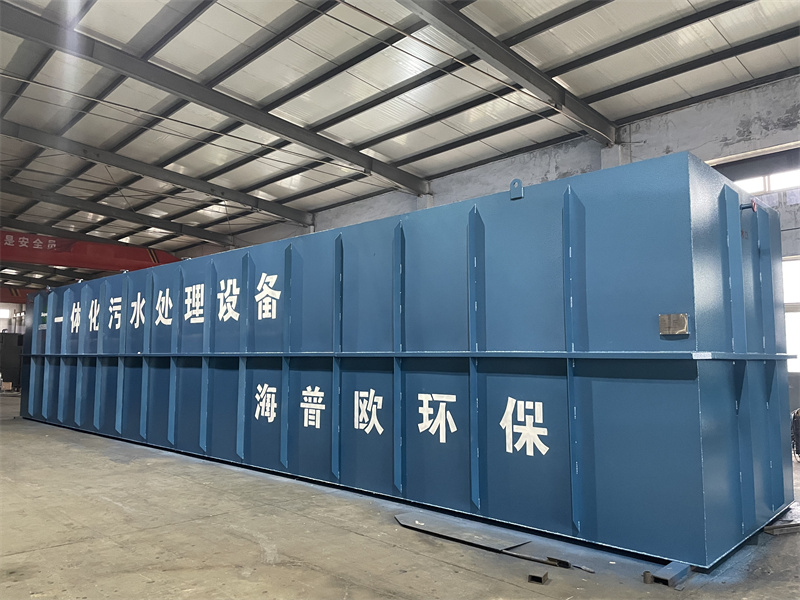
I. Definition and Working Principle of Fully Automatic Sewage Lifting Equipment
Fully automatic sewage lifting equipment is an integrated unit assembled with a collection tank, sewage pumps, control system, cutting mechanism and check valves. It does not rely on gravity. The built-in pump sucks domestic wastewater from low-level areas (toilet sewage, kitchen wastewater, laundry water, etc.) into the tank. After solid waste is shredded by the cutter, the sewage is pressurized and pumped upward into the municipal sewer network or wastewater treatment system. The whole process runs automatically with no manual operation.
Its working process consists of three stages:
1. Sewage Collection: Low-level sewage flows naturally into the collection tank. A built-in liquid level sensor monitors the water level in real time.
2. Automatic Startup: When the water level hits the preset starting value, the control system turns on the sewage pump, and the cutting device shreds hair, fibers and solid debris to prevent pump blockage.
3. Pressurized Discharge: The shredded sewage is pumped through dedicated pipelines to the designated discharge point. The machine shuts down automatically once the water level drops to the preset stop value and waits for the next cycle.
II. Core Advantages of Fully Automatic Sewage Lifting Equipment
1. Fully automatic operation, unattended running
Equipped with an intelligent control system and high-precision liquid level sensors, the equipment can complete the whole start-run-stop cycle according to water volume without human monitoring. High-end models support remote monitoring. Users can check operating status and fault alerts in real time via mobile APP or computer, greatly cutting labor maintenance costs.
2. Integrated structure, space-saving and easy installation
All core components are sealed inside a compact cabinet with small size and light weight. No separate pump house is required. Installation only requires connecting the water inlet, outlet and power supply, with short construction periods. It fits narrow spaces such as basements and equipment rooms without occupying usable area.
3. Efficient drainage with excellent anti-clogging and deodorizing performance
The sewage pump adopts a non-clog impeller paired with a front cutting device to crush solid waste effectively and avoid blockages in pumps and pipelines. Meanwhile, the fully sealed water tank is fitted with airtight sealing parts and a ventilation system to stop odor diffusion and maintain a clean surrounding environment.
4. Stable operation, energy conservation and long service life
The pump is driven by a high-efficiency low-noise motor that meets national energy-saving standards. Key parts are made of high-strength anti-corrosion materials resistant to acid and alkali in sewage to extend service life. In addition, multiple protection functions including overload, dry-running and short-circuit protection prevent equipment damage caused by abnormal working conditions and guarantee stable operation.
5. Wide application for various sewage treatment scenarios
This equipment can efficiently treat sewage from villa basements, underground shopping malls, hotel lower floors, as well as lightly polluted industrial wastewater such as food processing and mechanical cleaning wastewater. The lifting head ranges from several meters to tens of meters, and the flow rate can be customized to match different project scales.
III. Main Application Scenarios
1. Civil Construction
Sewage drainage for toilets, kitchens and laundries in villa ground floors and basements;
Wastewater treatment for underground parking garages, storage rooms and equipment rooms in high-rise residential buildings;
Sewage lifting for low floors of hotels, apartments and nursing homes.
2. Commercial Construction
Domestic sewage and catering wastewater treatment for underground shopping malls, supermarkets and food zones;
Sewage discharge for basement offices, meeting rooms and restrooms in office buildings;
Wastewater lifting for underground supporting facilities of large commercial complexes, including parking lots and machine rooms.
3. Industry and Public Infrastructure
Treatment of lightly polluted production wastewater from factory workshops and warehouse lower floors;
Rainwater and sewage drainage for subway stations, underground passages and tunnels;
Sewage lifting for low-level areas of hospitals, schools, stadiums and other public buildings.
IV. Key Points for Equipment Selection & Installation
1. Selection Criteria
Confirm sewage type: Select equipment with corresponding anti-corrosion and anti-clogging performance according to water quality (domestic sewage or lightly polluted industrial wastewater);
Calculate flow rate and lifting head: Match pump parameters based on water output (m³/h) and lifting height (meters) to avoid insufficient capacity or energy waste;
Check core configurations: Prioritize units with powerful cutting performance, high-efficiency motors and intelligent control systems, as well as multi-layer safety protection;
Consider installation environment: Choose proper size and protection grade according to space size and ventilation conditions.
2. Installation and Maintenance Notes
The installation site must be flat and dry, away from open flames and flammable materials, with reserved maintenance space;
All pipelines must be tightly sealed to prevent water and air leakage. Pipelines should maintain the designed gradient to avoid sewage backflow;
Before startup, clear sundries inside the tank and check motor wiring; power on only after all inspections pass;
Regularly clean sediment in the collection tank, inspect wear on cutters and impellers, and replace worn spare parts timely;
Carry out routine maintenance strictly following the operation manual to extend service life.
V. Future Development Trends
Driven by stricter environmental policies and intelligent technology, fully automatic sewage lifting equipment is developing in the following directions:
Intelligent upgrading: Integrate IoT technology to realize remote control, fault prediction and data analysis for higher operation efficiency;
Energy-saving improvement: Adopt high-efficiency motors and pump structures to cut power consumption. Some models support solar power supply for eco-friendly operation;
Material and process upgrading: New wear-resistant and anti-corrosion materials plus optimized cutter structures improve adaptability to complex sewage;
Higher integration: Combine sewage lifting with disinfection and filtration to meet higher sewage discharge standards.
With high efficiency, intelligence and convenient operation, fully automatic sewage lifting equipment thoroughly solves the drainage difficulty of low-lying areas and has become an indispensable part of modern building water supply and drainage systems.
Users shall select equipment with proper parameters and configurations based on actual conditions, and conduct standardized installation and maintenance to achieve optimal performance.
With continuous technological innovation, this equipment will play a bigger role in environmental governance and building water supply projects, delivering stable and high-quality sewage treatment solutions.
Related Products
Related News
- New Trends in the Development of the MBR Membrane Wastewater Treatment Industry: A Professional Guide to Selecting Source Manufacturers
- How to Select Wastewater Treatment Equipment for Pig Farms? In-depth Review of Trusted Industry Service Providers
- Hard-to-Treat Slaughterhouse Wastewater? Tested & Recommended High-Adaptability Wastewater Treatment Solutions for 2026
- How to Select Integrated Wastewater Treatment Equipment? In-depth Review of Trustworthy Source Manufacturers Recognized by Industry Insiders
- How to Select Buried Integrated Wastewater Treatment Equipment? Strength Evaluation of Reliable Brands in 2026
- Inventory of New Coal Mine Water Treatment Technologies! How to Select Cost-Effective Manufacturers & Avoid Common Pitfalls
- Textile Printing & Dyeing Wastewater Treatment Is Tough? These Four Powerful Enterprises Easily Solve Core Industry Pain Points
- Authoritative Evaluation of High-Salinity Wastewater Treatment Equipment | Top Recommended Brands of 2026
- Which Supplier Offers Reliable Integrated Sewage Treatment Equipment? Multi-dimensional Actual Test Comparison & Top Recommended Brands Released
- Electroplating Factory Wastewater Treatment Engineering Cases
About Us
products
Business
News
Contact Us
Service Hotline:+86-15253659088WhatsApp: +86 18706508001
Email: jly@haipuou.group
Address: No.56, Donghuan Road, Zhucheng City, Weifang City, Shandong Province, China