


- Home
- About Us
About Us
- Product
Product
- Cases
Cases
- R&D Technology
- News
News
- Contact Us


- Default Language
 EN
EN RU
RU ES
ES DE
DE EL
EL IT
IT JA
JA KO
KO PT
PT ID
ID SR
SR UK
UK VI
VI TH
TH TR
TR MS
MS BE
BE AR
AR
晋城市Industrial Wastewater Treatment Equipment, Core Environmental Protection Facilities Empowering Enterprise Green Production
Date:July 13, 2025ID: 2228Views: 1324
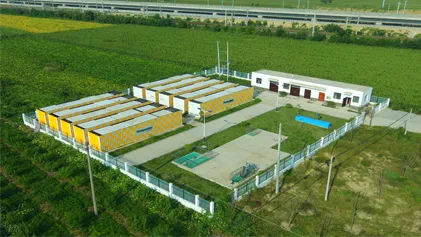
Haipuou Environmental Protection Group Co., Ltd. specializes in the construction of sewage treatment projects as well as the production and sales of water treatment equipment.Our main products include integrated sewage treatment equipment, high-efficiency cyclone purifiers, magnetic separation sewage treatment equipment, prefabricated sewage treatment plants, smart water management platforms, sludge thickening equipment, air flotation equipment, etc.
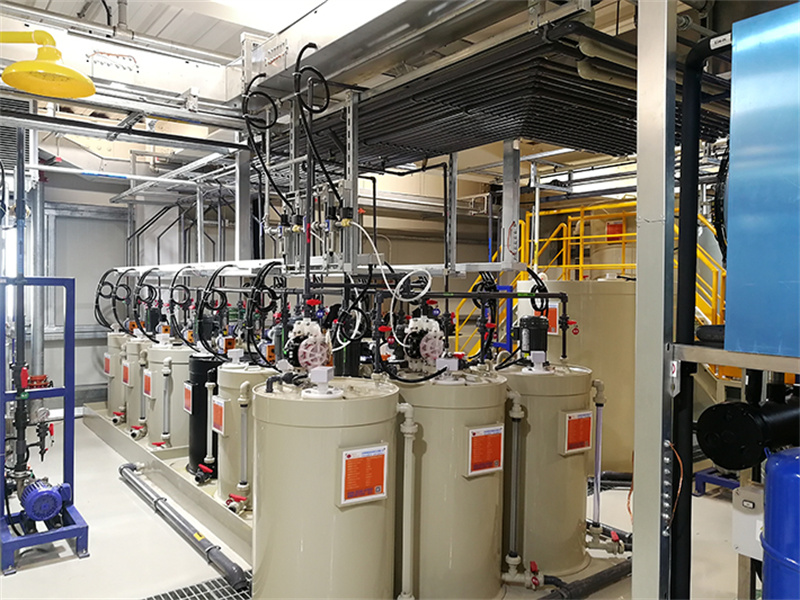
Against the backdrop of rapid industrial expansion, wastewater discharge has become a prominent issue that hinders enterprises from achieving sustainable development. As core environmental facilities for industrial wastewater treatment, industrial sewage treatment equipment can purify wastewater effectively and cut down environmental pollution. It also helps factories meet discharge standards and build a good corporate reputation. This paper elaborates on the significance, classifications, working principles, selection standards and industry trends of industrial wastewater treatment equipment, offering practical references for enterprises to make proper purchases.
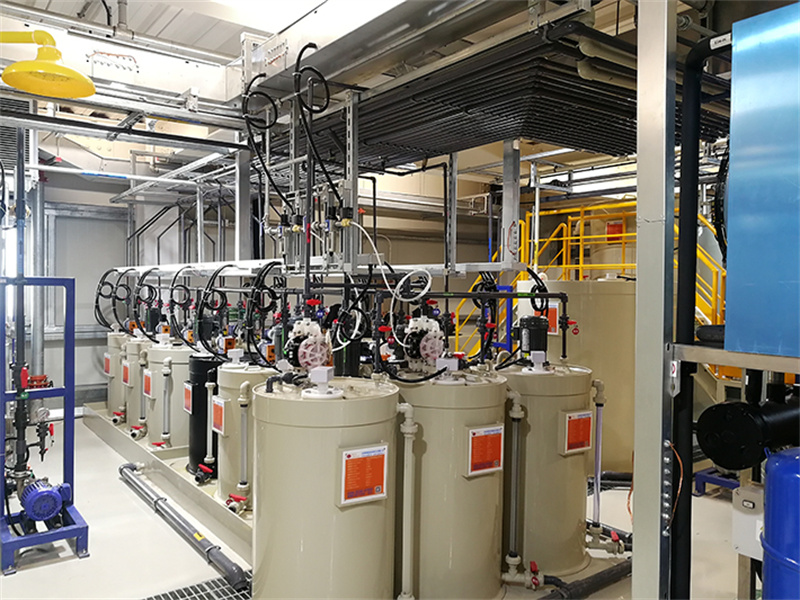
I. The Significance of Industrial Sewage Treatment Equipment
Industrial manufacturing produces massive wastewater loaded with organic substances, heavy metals, suspended solids and other contaminants. Direct discharge will severely contaminate soil, water bodies and the atmosphere, disrupting ecological balance and endangering public health. With physical, chemical and biological treatment technologies, the equipment removes or transforms pollutants into harmless substances, making effluent meet national and local discharge criteria. On one hand, enterprises can comply with environmental laws and avoid penalties or production shutdowns caused by pollution violations. On the other hand, water waste can be reduced through water recycling, effectively cutting production costs.
II. Main Types and Working Principles of Industrial Sewage Treatment Equipment
(I) Physical Treatment Equipment
Physical facilities separate suspended solids, colloids and other pollutants via physical interception. Common types include bar screens, grit chambers, sedimentation tanks and filtering equipment.
Bar screen: As the first process of sewage treatment, bar screens trap large solid waste such as branches, plastic bags and fibers to prevent blockage of follow-up units. It intercepts solid particles larger than the gaps between bars.
Grit chamber: It mainly removes inorganic particles including sand and gravel. When wastewater flows into the chamber, the flow velocity drops, and sand sinks to the bottom under gravity before being discharged by sand scrapers.
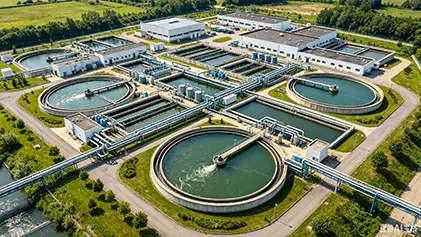
Sedimentation tank: It is used to separate suspended solids and colloids. Based on water flow direction and tank structure, it is divided into horizontal-flow, vertical-flow and radial-flow types. Suspended particles sink and form sludge, while the upper clean water flows out through the overflow outlet.
Filtering equipment: Sand filters, activated carbon filters and other devices further trap tiny suspended solids and organic matter through filter media. Quartz sand serves as the filter medium in sand filters, while activated carbon absorbs odors, pigments and part of organic pollutants.
(II) Chemical Treatment Equipment
Chemical treatment equipment purifies water by dosing chemical agents to trigger chemical reactions and form easily separable substances. Typical facilities include neutralization tanks, coagulation tanks and redox reactors.
Neutralization tank: It deals with acidic or alkaline wastewater. Acid or alkaline chemicals are added to adjust the pH value to nearly neutral for subsequent treatment.
Coagulation tank: Coagulants and flocculants are added to aggregate colloids and suspended particles into large flocs, which can then be separated in sedimentation tanks or filters. Common coagulants are aluminum sulfate and ferric chloride, and polyacrylamide is widely used as flocculant.
Redox equipment: It converts toxic substances into harmless matter through redox reactions. For cyanide-containing wastewater, oxidants such as sodium hypochlorite can decompose cyanide into carbon dioxide and nitrogen.
(III) Biological Treatment Equipment
Biological treatment equipment decomposes organic pollutants into inorganic substances with microbial metabolism to purify sewage. It falls into aerobic and anaerobic equipment according to microbial survival conditions.
Aerobic biological treatment equipment: Activated sludge process and biofilm process are mainstream options. In the activated sludge process, air is pumped into the aeration tank to fully mix sewage and activated sludge; microbes break down organic pollutants under aerobic conditions. The biofilm process forms microbial films on carrier materials. Microbes attached to the films metabolize organic matter in sewage and realize water purification.
Anaerobic biological treatment equipment: Anaerobic reactors are typical products. Under oxygen-free conditions, anaerobic microbes decompose organic matter into methane, carbon dioxide and other gases, realizing wastewater treatment and energy recovery. Such equipment is suitable for high-concentration organic wastewater from food processing, brewing and other industries.
III. Key Criteria for Selecting Industrial Sewage Treatment Equipment
Enterprises need to take multiple factors into comprehensive consideration to guarantee stable treatment effect, reliable operation and economic benefits.
(1) Wastewater Quality and Flow Rate
Wastewater quality varies greatly across industries. Chemical wastewater contains high-concentration organic matter and heavy metals, while papermaking wastewater carries massive suspended solids and lignin. Enterprises should first conduct water quality testing to confirm pollutant types, concentrations, pH and other indicators. Meanwhile, average daily discharge and peak water flow should be measured to define the required treatment capacity.
(2) Treatment Requirements and Discharge Standards
Enterprises must comply with national and local environmental regulations to set effluent quality standards. Many regions impose strict limits on COD, ammonia nitrogen, total phosphorus and other indicators of industrial wastewater, so the selected equipment must meet these strict requirements.
(3) Equipment Reliability and Stability
Industrial sewage equipment needs continuous long-term operation, so reliability is critical. Buyers should prioritize high-quality products with stable performance, and check operating parameters, service life and maintenance cycles. Besides, evaluate the manufacturer’s after-sales service to ensure timely maintenance and replacement in case of malfunctions.
(4) Operating Cost and Initial Investment
Operating costs include electricity, water, chemical agents and labor costs, while capital investment covers equipment procurement, installation, commissioning and land occupation. Enterprises need to balance investment and daily expenses to choose cost-effective equipment. For high-concentration organic wastewater, anaerobic reactors have low operating costs but high upfront investment; aerobic equipment requires less initial capital yet has higher running costs.
(5) Land Occupation and Installation Conditions
Floor space and installation conditions are also important factors. Compact equipment is a good choice for factories with limited land. Easy-to-install and maintain units are preferred for narrow construction sites.
IV. Development Trends of Industrial Sewage Treatment Equipment
With growing environmental awareness and increasingly strict regulations, the industry is developing toward intelligence, high efficiency, energy conservation and modularization.
(1) Intelligent Upgrade
IoT, big data and artificial intelligence enable remote monitoring, automatic control and intelligent fault diagnosis. Sensors collect real-time equipment parameters and water quality data and upload them to cloud platforms. Managers can check operating status anytime via mobile phones or computers and solve problems promptly. In addition, the intelligent control system automatically adjusts operating parameters according to fluctuating water quality and flow, improving treatment effect and operational efficiency.
(2) Higher Treatment Efficiency
New high-efficiency technologies and equipment are developed to raise pollutant removal rates. New membrane separation technology and advanced oxidation processes can effectively remove refractory organic matter and heavy metals, achieving higher effluent quality.
(3) Energy Conservation
Energy consumption reduction has become a key development direction. Energy-saving motors, optimized operation procedures and waste energy recovery can cut power use. For anaerobic reactors, recovered methane gas can be reused as fuel to realize energy self-sufficiency.
(4) Modular Design
Modular equipment can be freely combined and expanded according to project demands. Modular units feature easy installation, small footprint and simple maintenance, satisfying the sewage treatment needs of enterprises of all sizes.
V. Conclusion
Industrial sewage treatment equipment serves as a solid guarantee for enterprises to realize green production, playing an important role in environmental protection, resource conservation and competitiveness improvement. When selecting equipment, enterprises should take wastewater quality, water volume and treatment requirements into consideration, and comprehensively evaluate reliability, stability, operating cost and investment to pick the most suitable facilities. Driven by technological innovation, sewage treatment equipment will keep developing in intelligent, high-efficiency, energy-saving and modular directions, providing strong support for enterprises’ sustainable development.
Related Products
Related News
- 晋城市New Trends in the Development of the MBR Membrane Wastewater Treatment Industry: A Professional Guide to Selecting Source Manufacturers
- 晋城市How to Select Wastewater Treatment Equipment for Pig Farms? In-depth Review of Trusted Industry Service Providers
- 晋城市Hard-to-Treat Slaughterhouse Wastewater? Tested & Recommended High-Adaptability Wastewater Treatment Solutions for 2026
- 晋城市How to Select Integrated Wastewater Treatment Equipment? In-depth Review of Trustworthy Source Manufacturers Recognized by Industry Insiders
- 晋城市How to Select Buried Integrated Wastewater Treatment Equipment? Strength Evaluation of Reliable Brands in 2026
- 晋城市Inventory of New Coal Mine Water Treatment Technologies! How to Select Cost-Effective Manufacturers & Avoid Common Pitfalls
- 晋城市Textile Printing & Dyeing Wastewater Treatment Is Tough? These Four Powerful Enterprises Easily Solve Core Industry Pain Points
- 晋城市Authoritative Evaluation of High-Salinity Wastewater Treatment Equipment | Top Recommended Brands of 2026
- 晋城市Which Supplier Offers Reliable Integrated Sewage Treatment Equipment? Multi-dimensional Actual Test Comparison & Top Recommended Brands Released
- 晋城市Electroplating Factory Wastewater Treatment Engineering Cases
About Us
products
Business
News
Contact Us
Service Hotline:+86-15253659088WhatsApp: +86 18706508001
Email: jly@haipuou.group
Address: No.56, Donghuan Road, Zhucheng City, Weifang City, Shandong Province, China