

- Home
- About Us
About Us
- Product
Product
- Cases
Cases
- R&D Technology
- News
News
- Contact Us


- Default Language
 EN
EN RU
RU ES
ES DE
DE EL
EL IT
IT JA
JA KO
KO PT
PT ID
ID SR
SR UK
UK VI
VI TH
TH TR
TR MS
MS BE
BE AR
AR
防城港市Integrated Solutions for Complete Domestic Sewage Treatment Equipment Help Realize Standard-compliant Sewage Discharge
Date:July 13, 2025ID: 2239Views: 1135
Haipuou Environmental Protection Group Co., Ltd. specializes in the construction of sewage treatment projects and the production and sales of water treatment equipment. Main products include integrated sewage treatment equipment, high-efficiency cyclone purifiers, magnetic separation sewage treatment equipment, prefabricated sewage treatment plants, smart water management platforms, sludge thickening equipment, air flotation equipment, etc.
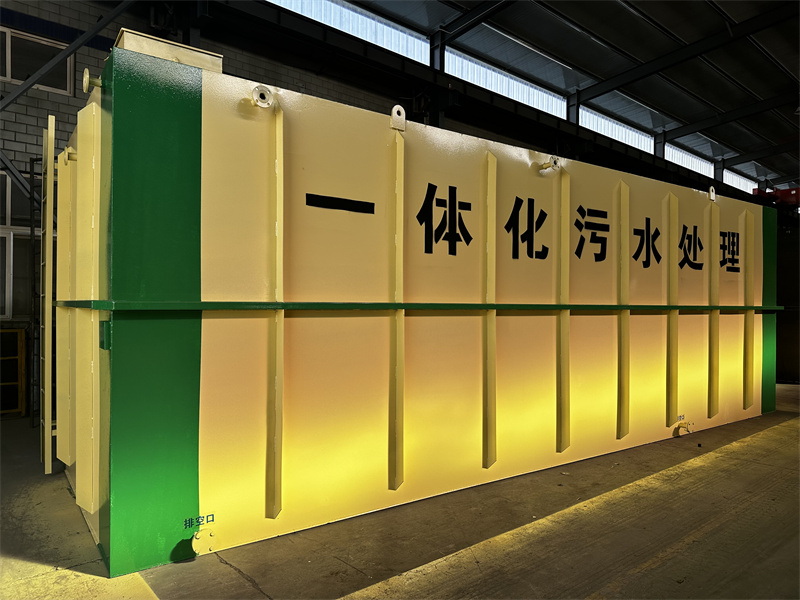
Driven by accelerated urbanization and stricter environmental protection requirements, the efficient treatment of domestic sewage has become a key task for urban ecological construction and rural revitalization. As integrated and intelligent core sewage treatment equipment, complete domestic sewage treatment units feature small land occupation, high treatment efficiency and low operation and maintenance costs. They have been widely used in residential communities, hotels, villages, tourist scenic spots and other scenarios, delivering stable and reliable integrated solutions to meet sewage discharge standards.
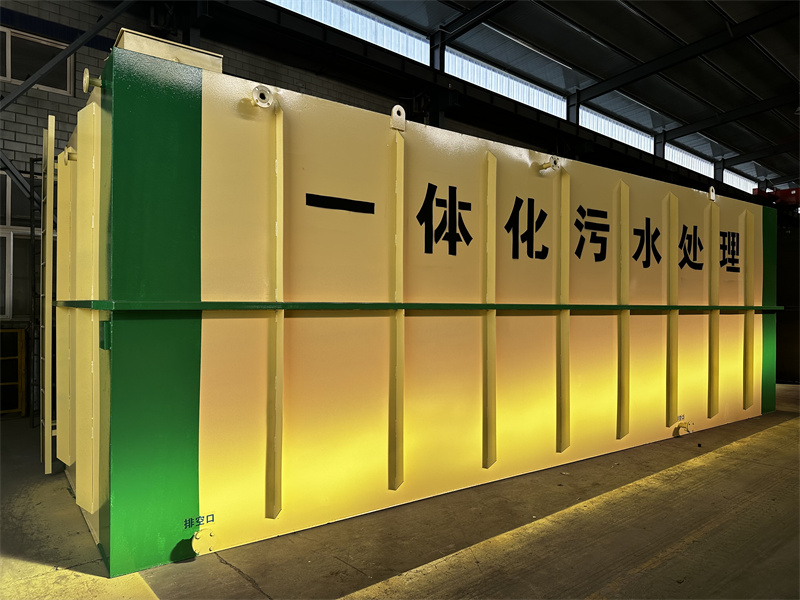
I. Core Technology and Working Principle of Complete Domestic Sewage Treatment Equipment
The complete domestic sewage treatment equipment is a modular unit that highly integrates traditional treatment units including bar screen, regulating tank, biochemical reactor, sedimentation tank and disinfection tank. Its core technical route follows physical pretreatment + biodegradation + advanced purification.
First, the mechanical bar screen intercepts suspended solids and large debris to prevent pipeline blockage. Next, sewage flows into the regulating tank to balance water volume and water quality and stabilize subsequent operating conditions. Inside the biochemical tank, combined anaerobic and aerobic processes use microbial metabolism to break down organic pollutants such as COD, BOD and ammonia nitrogen for high-efficiency pollutant removal.
After solid-liquid separation in the sedimentation tank, the supernatant enters the disinfection tank and is sterilized by ultraviolet light or chlorine dioxide. The final effluent can meet Grade A standard of the Discharge Standard of Pollutants for Municipal Wastewater Treatment Plants (GB18918-2002) or local emission standards. The treated water can be directly discharged or reused for greening irrigation and road flushing.
According to treatment capacity and application scenarios, the equipment is divided into buried type, skid-mounted type and integrated pumping stations. Buried equipment is installed underground without occupying surface space, making it ideal for urban residential areas with limited land. Skid-mounted units are fixed on container or steel frames for easy transportation and installation, suitable for temporary sewage projects and emergency treatment. Integrated pumping stations are mainly used for sewage lifting and pretreatment in low-lying areas and regions with incomplete sewage collection pipe networks.
II. Analysis of Core Advantages
1. Integrated design to save space and investment.
The whole set of equipment combines multiple processing units into one integrated structure without building separate tanks. It only occupies 1/3 to 1/2 of the land area of conventional sewage stations, greatly cutting land acquisition and infrastructure costs. All components are prefabricated in factories. On-site work only includes foundation pouring, pipeline connection and electrical commissioning. The installation period is shortened to 15~30 days, much shorter than traditional projects.
2. Stable high-efficiency treatment to guarantee qualified effluent.
Adopting mature biochemical processes and high-performance aeration systems, the removal rates for COD, BOD, SS and ammonia nitrogen reach 85%-95%, 80%-90%, 90%-95% and 75%-85% respectively. The unit is equipped with an intelligent control system to monitor water quality, dissolved oxygen and pH in real time, and automatically adjust aeration volume and reflux ratio. It maintains stable operation under variable inflow loads with minimal manual operation.
3. Low energy consumption and controllable operating cost.
Optimized process design and energy-saving components such as variable-frequency fans and high-efficiency water pumps reduce power consumption to only 0.5~0.8kWh per cubic meter of sewage. The modular structure has few wearing parts for easy maintenance. Sludge output is low (0.1~0.2kg dry sludge per cubic meter of wastewater), which lowers sludge disposal expenses. Under normal operation, the O&M cost per ton of sewage is kept between 1 and 3 RMB, suitable for long-term continuous running.
4. Wide adaptability for diverse application scenarios.
The daily treatment capacity can be customized flexibly from 5m³ to 5000m³. It satisfies decentralized treatment needs for single families and small homestays, as well as centralized projects for large residential communities and industrial parks. The equipment can handle domestic sewage with variable water quality including high-concentration catering wastewater and low-temperature sewage. It can be deployed flexibly in cities, villages, mountainous areas and scenic spots with loose installation requirements.
III. Key Points for Equipment Selection and Application
1. Clarify demands for accurate model selection.
Confirm sewage discharge volume, influent indicators (COD, BOD, ammonia nitrogen), effluent standards (Grade A / Grade B or local special standards), and site conditions including land area, terrain and climate. For example, insulated equipment is required for cold northern regions; solar-powered or ecological combined units are applicable for remote areas without power supply.
2. Verify product quality and manufacturer strength.
Choose manufacturers with environmental engineering qualification and proven project cases. Check material options (anti-corrosion carbon steel, stainless steel, FRP selected according to service conditions), brands of core parts (fans, pumps, control systems) and after-sales service. Third-party test reports and on-site project visits are recommended to confirm equipment quality and treatment performance.
3. Strict installation and commissioning to secure stable operation.
Construction must follow the manufacturer’s foundation drawings to ensure structural strength, levelness and airtight pipelines without water or air leakage. During commissioning, increase inflow gradually to cultivate microbial flora. Normal operation can only start after the effluent remains stably qualified. Professional training shall be provided for operators to master daily operation, parameter adjustment and basic troubleshooting.
4. Implement regular maintenance and periodic inspection.
Regularly clean sundries on bar screens, inspect aeration systems and water pumps, and monitor water quality data. Carry out comprehensive maintenance every 3~6 months, replace wearing parts such as aeration membranes and sealing rings, clean sludge in sedimentation tanks, and calibrate online monitoring instruments. Keep complete operation records including influent & effluent quality, energy consumption and maintenance logs to optimize operation plans continuously.
IV. Industry Development Trend and Prospect
Driven by the Dual Carbon goals and increasingly strict environmental regulations, complete domestic sewage treatment equipment is developing toward intelligence, low carbon and resource recovery. In the future, IoT and big data technology will be integrated to realize remote monitoring, early fault warning and intelligent operation for higher management efficiency. Technologies such as photovoltaic power supply and sludge recycling (organic fertilizer production) will be widely adopted to cut carbon footprints. Besides, small low-cost units for rural decentralized sewage treatment and special equipment for high-salinity and high-COD wastewater will become hot market products.
As an efficient solution in the sewage treatment industry, complete domestic sewage treatment equipment curbs pollution caused by random sewage discharge and promotes water recycling and ecological improvement. Whether for urban infrastructure construction or rural living environment renovation, properly selected equipment can achieve unified economic, social and environmental benefits.
Related Products
Related News
- 防城港市New Trends in the Development of the MBR Membrane Wastewater Treatment Industry: A Professional Guide to Selecting Source Manufacturers
- 防城港市How to Select Wastewater Treatment Equipment for Pig Farms? In-depth Review of Trusted Industry Service Providers
- 防城港市Hard-to-Treat Slaughterhouse Wastewater? Tested & Recommended High-Adaptability Wastewater Treatment Solutions for 2026
- 防城港市How to Select Integrated Wastewater Treatment Equipment? In-depth Review of Trustworthy Source Manufacturers Recognized by Industry Insiders
- 防城港市How to Select Buried Integrated Wastewater Treatment Equipment? Strength Evaluation of Reliable Brands in 2026
- 防城港市Inventory of New Coal Mine Water Treatment Technologies! How to Select Cost-Effective Manufacturers & Avoid Common Pitfalls
- 防城港市Textile Printing & Dyeing Wastewater Treatment Is Tough? These Four Powerful Enterprises Easily Solve Core Industry Pain Points
- 防城港市Authoritative Evaluation of High-Salinity Wastewater Treatment Equipment | Top Recommended Brands of 2026
- 防城港市Which Supplier Offers Reliable Integrated Sewage Treatment Equipment? Multi-dimensional Actual Test Comparison & Top Recommended Brands Released
- 防城港市Electroplating Factory Wastewater Treatment Engineering Cases
About Us
products
Business
News
Contact Us
Service Hotline:+86-15253659088WhatsApp: +86 18706508001
Email: jly@haipuou.group
Address: No.56, Donghuan Road, Zhucheng City, Weifang City, Shandong Province, China