


- Home
- About Us
About Us
- Product
Product
- Cases
Cases
- R&D Technology
- News
News
- Contact Us


- Default Language
 EN
EN RU
RU ES
ES DE
DE EL
EL IT
IT JA
JA KO
KO PT
PT ID
ID SR
SR UK
UK VI
VI TH
TH TR
TR MS
MS BE
BE AR
AR
双鸭山市Large-scale sewage treatment equipment serves as the core solution for industrial and municipal sewage purification.
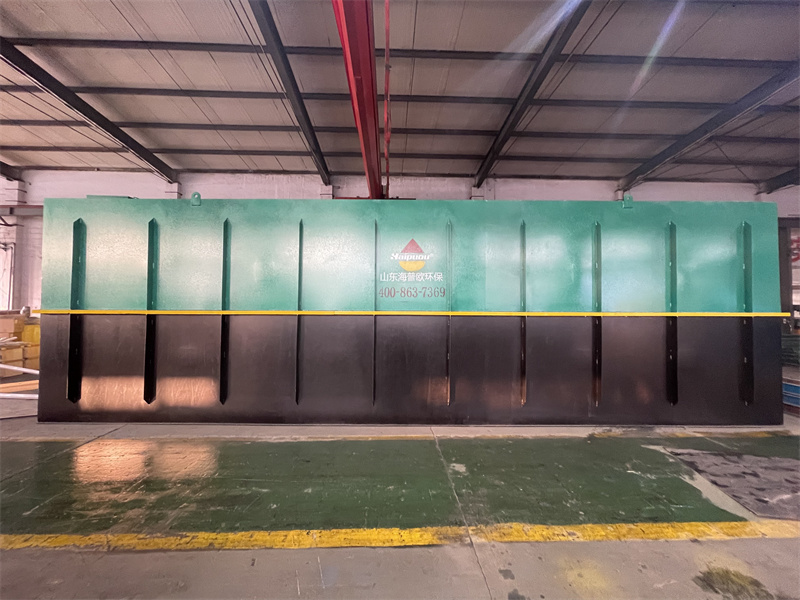
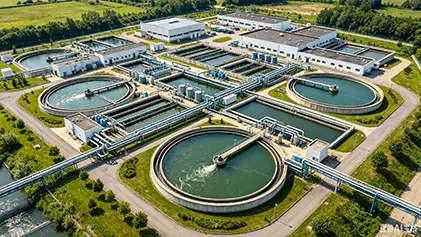
Against the dual backdrop of tightening environmental regulations and water scarcity, large-scale sewage treatment equipment has become core infrastructure for industrial enterprises to achieve compliant discharge and for municipal sewage purification and reuse. Featuring high throughput, stable operation and intelligent control, it effectively solves the pain points of low treatment efficiency and high operation costs of traditional small-sized units. Widely adopted in chemical industry, metallurgy, urban domestic sewage projects and industrial parks, it serves as a key facility to meet the dual-carbon goals and realize the recycling of water resources.
I. Core Technical Parameters and Performance Advantages of Large Sewage Treatment Equipment
1. Core Technical Parameters (Key Indicators for Equipment Selection)
Treatment Capacity: As the defining feature of large-scale equipment, a single set generally has a daily capacity of over 5,000 cubic meters. Some customized units can reach 50,000 cubic meters per day. The capacity shall be accurately matched according to sewage sources such as daily municipal sewage discharge and industrial wastewater output;
Discharge Standards: The equipment shall comply with Grade A/B of GB18918-2002 Pollutant Discharge Standard for Urban Sewage Treatment Plants or special industrial standards, e.g. GB31571-2015 Emission Standard of Pollutants for Petrochemical Industry. Key indicators include COD ≤50mg/L, ammonia nitrogen ≤5mg/L and total phosphorus ≤0.5mg/L;
Process Adaptability: Mainstream processes include A²/O (Anaerobic-Anoxic-Oxic), MBR (Membrane Bioreactor) and SBR (Sequencing Batch Reactor). Large sewage treatment equipment adopts modular process design to freely combine processing units according to water quality, such as high-concentration organic wastewater and heavy metal-containing wastewater;
Energy and Chemical Consumption: Premium equipment maintains unit water energy consumption within 0.3-0.5kWh/m³, with chemical dosage (PAC, PAM) below 0.1kg/m³. Equipped with an intelligent inspection system, it greatly cuts labor maintenance costs.
2. Core Advantages over Medium and Small Equipment
High-efficiency Large-scale Treatment: The intensive design reduces land occupation by 30%-50% compared with multiple small units running in parallel, making it ideal for city central areas and industrial parks with limited land resources;
High Stability and Anti-shock Capacity: Combined multi-stage pre-treatment (bar screens, grit chambers, regulating tanks) and advanced treatment (filtration, disinfection) cope with short-term fluctuations in wastewater volume and quality including peak industrial discharge. The qualified effluent rate remains above 98%;
Intelligence and Low-carbon Performance: New-generation large-scale sewage treatment equipment is integrated with PLC control systems and online sensors for COD, ammonia nitrogen and flow, supporting remote startup/shutdown and early fault warning. Some units are fitted with biogas recovery systems for power generation and heating to reduce fossil energy consumption, in line with low-carbon development trends.
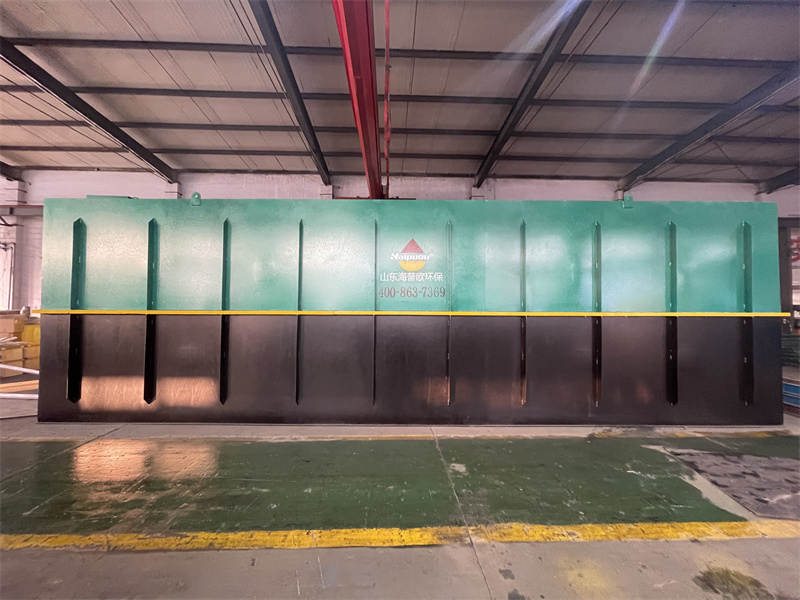
II. Selection Principles and Application Scenarios of Large Sewage Treatment Equipment
1. Core Selection Principles (Avoid Resource Waste and Compliance Risks)
Water Quality Priority: For industrial wastewater with high salinity and chroma such as chemical and printing & dyeing sewage, select anti-corrosion equipment made of 316L stainless steel or FRP fiberglass, and add advanced oxidation units including ozonation and Fenton reaction. For municipal sewage, MBR equipment is preferred to realize water reuse for greening and road washing;
Reasonable Capacity Matching: Consider long-term project planning to avoid overloading or idling. The design capacity is generally the near-term water volume plus a 20% reserved increment;
Compliance and After-sales Service: Choose manufacturers with Environmental Product Certification and ISO9001 quality certification. Confirm the supplier provides installation & commissioning, operator training and 1-3 year warranty to reduce long-term maintenance risks.
2. Typical Application Scenarios
Municipal Sewage Treatment Plants: As core urban infrastructure, ten-thousand-ton MBR equipment treats domestic sewage. Disinfected effluent can be discharged into natural water bodies or further processed for municipal miscellaneous use to ease urban water shortage;
Centralized Treatment in Industrial Parks: For chemical, pharmaceutical and electronic industrial parks, the model of centralized collection plus large-scale treatment avoids redundant investment in independent small stations for each enterprise, and ensures overall qualified discharge through unified operation;
High-concentration Industrial Wastewater Treatment: For high-COD wastewater from coal chemical industry and papermaking, adopt combined equipment including pre-treatment (demulsification, desalination), anaerobic reactors and aerobic treatment, so as to degrade pollutants and recover resources such as biogas generated by anaerobic fermentation.
III. Industry Trends and Operation Suggestions for Large Sewage Treatment Equipment
1. Industry Development Trends
Intelligent Upgrading: Driven by smart environmental protection policies, AI algorithms will be widely applied to analyze real-time water quality data and automatically adjust operating parameters such as aeration rate and chemical dosage, realizing unattended operation and precise control;
Deepened Resource Recovery: Future equipment will focus on full-chain resource recycling covering sewage, sludge and biogas. Dewatered sludge can be made into bricks or biomass fuel, while biogas can supply energy for the equipment itself, building a zero-waste discharge system;
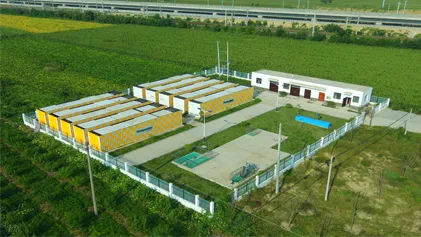
Modular and Standardized Design: Modular containerized large sewage treatment equipment will gain popularity for rapid project implementation. Prefabricated in factories and assembled on site, it shortens the construction period from 6-12 months to only 3-6 months.
2. Key Daily Operation and Maintenance Measures
Regular Inspection and Maintenance: Check the operation of motors and water pumps every week for abnormal noise and leakage; clean bar screens and membrane elements every month to prevent clogging; calibrate online monitoring instruments every quarter to guarantee data accuracy;
Response to Water Quality Fluctuations: If influent COD and ammonia nitrogen rise sharply, adjust aeration intensity and chemical dosage promptly. Start the emergency regulating tank if necessary to protect biochemical units from impact load;
Professional Staff Training: Operators need to master process principles and PLC operation. Regular technical training organized by manufacturers and environmental authorities will improve their troubleshooting and emergency disposal capabilities.
Conclusion
Large-scale sewage treatment equipment is not only the core hardware for pollution control, but also a vital support for water recycling and green development. With continuous technological innovation and stricter environmental policies, selecting well-matched, high-efficiency and intelligent large sewage treatment equipment has become a critical decision for enterprise compliance and urban ecological construction. In the future, the industry will make breakthroughs in core technologies including low-energy membrane materials and AI intelligent control, pushing the equipment toward higher efficiency, lower carbon emissions and better resource recovery, so as to lay a solid foundation for ecological civilization construction.
Related Products
Related News
- 双鸭山市New Trends in the Development of the MBR Membrane Wastewater Treatment Industry: A Professional Guide to Selecting Source Manufacturers
- 双鸭山市How to Select Wastewater Treatment Equipment for Pig Farms? In-depth Review of Trusted Industry Service Providers
- 双鸭山市Hard-to-Treat Slaughterhouse Wastewater? Tested & Recommended High-Adaptability Wastewater Treatment Solutions for 2026
- 双鸭山市How to Select Integrated Wastewater Treatment Equipment? In-depth Review of Trustworthy Source Manufacturers Recognized by Industry Insiders
- 双鸭山市How to Select Buried Integrated Wastewater Treatment Equipment? Strength Evaluation of Reliable Brands in 2026
- 双鸭山市Inventory of New Coal Mine Water Treatment Technologies! How to Select Cost-Effective Manufacturers & Avoid Common Pitfalls
- 双鸭山市Textile Printing & Dyeing Wastewater Treatment Is Tough? These Four Powerful Enterprises Easily Solve Core Industry Pain Points
- 双鸭山市Authoritative Evaluation of High-Salinity Wastewater Treatment Equipment | Top Recommended Brands of 2026
- 双鸭山市Which Supplier Offers Reliable Integrated Sewage Treatment Equipment? Multi-dimensional Actual Test Comparison & Top Recommended Brands Released
- 双鸭山市Electroplating Factory Wastewater Treatment Engineering Cases
About Us
products
Business
News
Contact Us
Service Hotline:+86-15253659088WhatsApp: +86 18706508001
Email: jly@haipuou.group
Address: No.56, Donghuan Road, Zhucheng City, Weifang City, Shandong Province, China