


- Home
- About Us
About Us
- Product
Product
- Cases
Cases
- R&D Technology
- News
News
- Contact Us


- Default Language
 EN
EN RU
RU ES
ES DE
DE EL
EL IT
IT JA
JA KO
KO PT
PT ID
ID SR
SR UK
UK VI
VI TH
TH TR
TR MS
MS BE
BE AR
AR
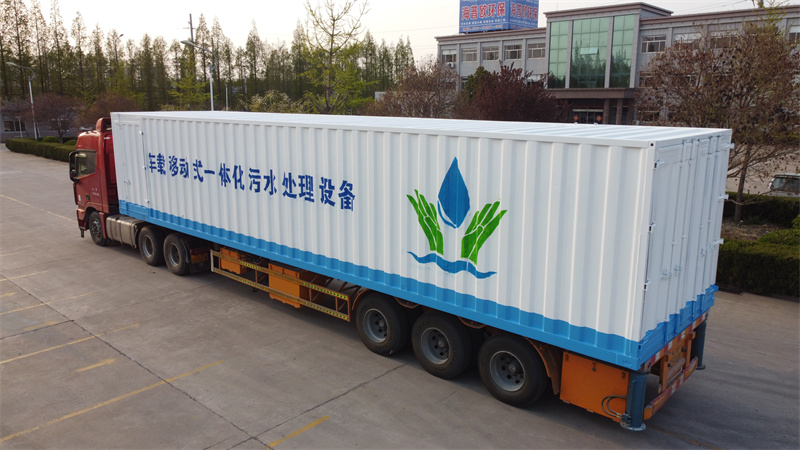
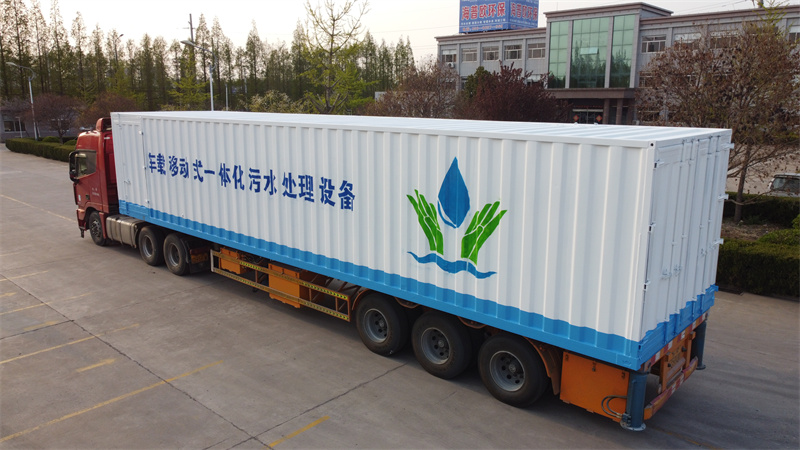
双鸭山市Sewage Governance: Technological Innovation and Process Optimization Boost the Sustainable Development of Water Environment
```html
Against the backdrop of rapid industrialization and urbanization, sewage discharge keeps rising. Direct discharge without effective treatment will cause irreversible damage to ecosystems including soil, groundwater, rivers and lakes, while endangering human health and the sustainable development of the economy. Therefore, high-efficiency, energy-saving and low-cost sewage treatment technologies have become core research focuses in the environmental protection sector, as well as key measures for enterprises to fulfill environmental obligations and respond to the national dual-carbon goals. This article analyzes how to realize sewage resource recovery through technological upgrading from three dimensions: core sewage treatment technologies, process optimization paths and industry development trends, providing professional reference for industry practitioners and environmental enthusiasts.
I. Core Technical System of Sewage Treatment: From Compliant Discharge to Resource Recovery
The primary goal of pre-treatment is to remove impurities that may cause clogging, abrasion or toxicity in subsequent processes and reduce the treatment load. Common technologies are as follows:
Regulating tank for water homogenization: To address the drastic fluctuations in quality and volume of industrial wastewater, regulating tanks are used to stabilize pH within 6-9 and balance water volume, preventing biochemical system collapse caused by shock load. Some tanks are equipped with stirring or aeration devices to improve wastewater biodegradability.
Secondary treatment centers on biological treatment. Microbial metabolism decomposes organic pollutants (COD, BOD) into harmless carbon dioxide and water, which is critical for reaching discharge standards. The mainstream technologies fall into three categories:
Biofilm process: Microbes attach to carriers such as ceramsite, biochar and elastic packing to form biofilm. Pollutants are degraded when sewage makes contact with the biofilm. It features low sludge yield and strong anti-shock capacity. Typical processes include Biofilter (BF) and Biological Contact Oxidation (BCO). Combining the merits of activated sludge and biofilm methods, BCO boosts mass transfer via aeration, achieving 85%-95% COD removal rate, and is widely used for domestic sewage and low-concentration industrial wastewater treatment.
With the advancement of dual-carbon goals and the growing shortage of water resources, advanced treatment and resource reuse have become major industry trends. Advanced treatment is designed to remove residual suspended solids, nitrogen, phosphorus and trace organics such as antibiotics and pesticides from secondary effluent to upgrade discharge standards or realize water reuse. Mainstream technologies include:
Membrane separation technology: Ultrafiltration (UF), Nanofiltration (NF) and Reverse Osmosis (RO) are the most widely used advanced treatment methods. UF removes suspended solids and colloids larger than 0.01μm and serves as pre-treatment for RO. RO eliminates over 99% of dissolved salts and organics. The reclaimed water can be used for industrial circulating cooling and municipal greening with a reuse rate above 70%, effectively easing water shortage pressure.
Nitrogen and phosphorus removal technology: To meet increasingly strict standards (e.g. Grade A of GB18918-2002 with TN ≤15mg/L and TP ≤0.5mg/L), nitrogen and phosphorus removal processes keep being optimized. The Anoxic-Oxic (A/O) process removes nitrogen through nitrification and denitrification, while the Anaerobic-Anoxic-Oxic (A²/O) process realizes simultaneous nitrogen and phosphorus removal. Improved processes such as SHARON and ANAMMOX cut carbon source consumption by 30% and energy use by 40%, becoming top choices for nitrogen removal of low C/N ratio sewage such as municipal wastewater.
II. Optimization of Sewage Treatment Processes: Core Approaches for Cost Reduction, Energy Saving and Efficiency Improvement
The aeration system accounts for 50%-70% of total power consumption in activated sludge processes. Traditional aeration such as perforated pipe aeration suffers from low oxygen utilization efficiency (only 10%-15%) and high energy cost. Optimization solutions are as follows:
Intelligent aeration control: Based on real-time online monitoring data of DO, COD and ammonium nitrogen, the PLC system dynamically adjusts aeration volume to avoid over-aeration. For instance, in the reaction phase of SBR, aeration intensity is automatically adjusted according to DO variation curves. It guarantees organic pollutant degradation while cutting energy waste by an extra 10%-15%.
2. Sludge Reduction and Resource Utilization: Solve the Sludge Predicament
Source reduction of sludge: Process adjustment including extending sludge retention time and adding sludge reduction agents can lower sludge output. Taking the A/O process as an example, an ozone oxidation sludge reflux system breaks sludge flocs and releases intracellular organics for microbial reuse, cutting sludge production by 30%-40%.
Conventional sewage plants rely on manual inspection and empirical operation, leading to parameter fluctuation and delayed fault response. Intelligent upgrading enables precise management:
Digital Twin technology: Build a digital twin model of the sewage plant to simulate treatment performance under different influent loads and process parameters and optimize operation plans. After adopting the digital twin system, an industrial park sewage plant shortened aeration time from 8 hours to 6.5 hours via simulation calculation. The COD removal rate remained above 90%, energy consumption was reduced by 18%, and annual operating costs were cut by about 600,000 RMB.
III. Development Trend of the Sewage Treatment Industry: Green Transformation Driven by Technological Innovation
Traditional sewage treatment processes consume large amounts of energy (municipal sewage plants consume roughly 0.3-0.6kWh/m³ water) with carbon emissions of 0.2-0.4kg CO₂ per cubic meter of sewage. In the future, low-energy processes (ANAMMOX, short-cut nitrification) and energy recovery technologies (anaerobic digestion of sludge, sewage-source heat pumps) will become key research priorities. For example, sewage-source heat pumps take advantage of stable sewage temperature (10-15℃ in winter and 25-30℃ in summer) to supply heating and cooling for plants and surrounding buildings, reducing fossil energy consumption by over 50% and carbon emissions by 30%-40%.
2. Gradual Promotion of Decentralized Sewage Treatment Mode
In the future, sewage management will no longer be limited to in-plant treatment. The smart water service platform will integrate full-chain data covering sewage collection, treatment, reuse and discharge to realize coordinated regional water environment governance. A municipal smart water system monitors pipe network operation in real time via flow and liquid level sensors to give early warnings of clogging and leakage. Meanwhile, it links sewage plants and reclamation plants to adjust the proportion of reclaimed water according to water demand. In 2024, the city’s sewage reuse rate reached 40%, 15 percentage points higher than that in 2020, saving 12 million cubic meters of fresh water every year.
IV. Conclusion: Sewage Treatment Is an Essential Task for Ecological Civilization Construction
For enterprises, selecting proper sewage treatment technologies and optimizing operation management can not only meet environmental compliance requirements, but also lower production costs through energy recovery and reclaimed water reuse. For society, widespread sewage treatment will improve living environments, safeguard water security and lay a solid foundation for ecological civilization construction. Driven by continuous technological innovation and policy support, the sewage treatment industry will embrace broader prospects and make greater contributions to building a modern society featuring harmonious coexistence between humans and nature.
<div class="ace-line" style="border:0px solid;margin:8px 0px;padding:0px;font-size:16px;color:#1F2329;font-family:ui-sans-serif, system-ui, sans-serif, "background-color:#FFFFFF;">
```
Related Products
Related News
- 双鸭山市New Trends in the Development of the MBR Membrane Wastewater Treatment Industry: A Professional Guide to Selecting Source Manufacturers
- 双鸭山市How to Select Wastewater Treatment Equipment for Pig Farms? In-depth Review of Trusted Industry Service Providers
- 双鸭山市Hard-to-Treat Slaughterhouse Wastewater? Tested & Recommended High-Adaptability Wastewater Treatment Solutions for 2026
- 双鸭山市How to Select Integrated Wastewater Treatment Equipment? In-depth Review of Trustworthy Source Manufacturers Recognized by Industry Insiders
- 双鸭山市How to Select Buried Integrated Wastewater Treatment Equipment? Strength Evaluation of Reliable Brands in 2026
- 双鸭山市Inventory of New Coal Mine Water Treatment Technologies! How to Select Cost-Effective Manufacturers & Avoid Common Pitfalls
- 双鸭山市Textile Printing & Dyeing Wastewater Treatment Is Tough? These Four Powerful Enterprises Easily Solve Core Industry Pain Points
- 双鸭山市Authoritative Evaluation of High-Salinity Wastewater Treatment Equipment | Top Recommended Brands of 2026
- 双鸭山市Which Supplier Offers Reliable Integrated Sewage Treatment Equipment? Multi-dimensional Actual Test Comparison & Top Recommended Brands Released
- 双鸭山市Electroplating Factory Wastewater Treatment Engineering Cases
About Us
products
Business
News
Contact Us
Service Hotline:+86-15253659088WhatsApp: +86 18706508001
Email: jly@haipuou.group
Address: No.56, Donghuan Road, Zhucheng City, Weifang City, Shandong Province, China