

- Home
- About Us
About Us
- Product
Product
- Cases
Cases
- R&D Technology
- News
News
- Contact Us


- Default Language
 EN
EN RU
RU ES
ES DE
DE EL
EL IT
IT JA
JA KO
KO PT
PT ID
ID SR
SR UK
UK VI
VI TH
TH TR
TR MS
MS BE
BE AR
AR
Municipal Sewage Treatment Equipment: Practical Guide for Technology Implementation and Efficiency Improvement
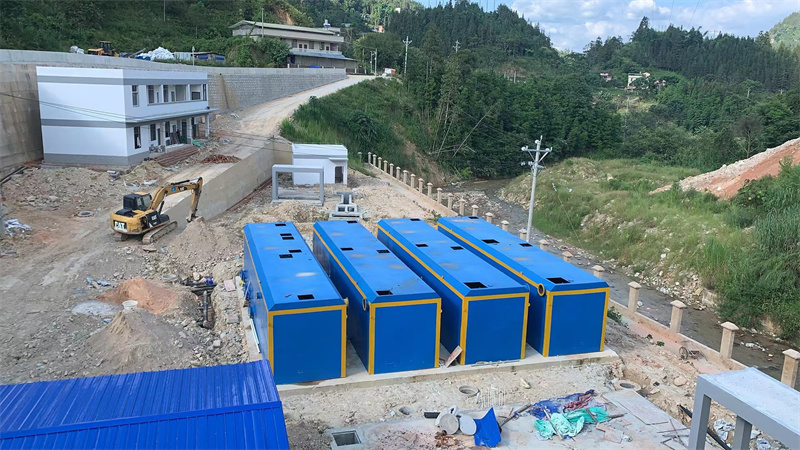
Within the urban water environment governance system, the value of municipal sewage treatment equipment depends not only on technological advancement, but also on its capacity to achieve stable deployment, efficient operation and consistent compliance with discharge standards. At present, China’s municipal sewage treatment sector faces dual tasks: upgrading newly built projects and renovating aging facilities. Many projects suffer from mismatched equipment and application scenarios, superficial technology application, and extensive operation and maintenance management. Consequently, the equipment fails to deliver full performance, resulting in high investment with low returns. This article delivers practical guidance for maximizing the efficiency of municipal sewage treatment equipment from four core dimensions: scenario-based equipment matching, quantitative performance evaluation, policy compliance implementation, and avoidance of technical pitfalls.
I. Scenario-Based Matching: Precise Deployment Strategies for Municipal Sewage Treatment Equipment
Towns differ greatly in development stage, sewage characteristics and geographical conditions. Equipment selection and combination must follow the scenario-first principle and reject one-size-fits-all configuration.
1. Newly Developed Towns: High-Efficiency and Compact Equipment Combination
New towns such as industrial new towns and satellite cities usually feature steadily rising sewage output, clear land use planning, and newly established operation teams. The equipment must balance long-term expandability and upfront cost-effectiveness:
Core Equipment Package: An integrated system consisting of intelligent bar screens, cyclone grit chambers, modified A²/O tanks, hollow-fiber curtain MBR membrane modules and UV disinfection facilities. The membrane flux is controlled at 15-20 LMH to handle a daily capacity of 10,000 to 50,000 cubic meters. Space is reserved for membrane tank expansion, enabling capacity expansion up to 80,000 cubic meters per day by adding more membrane modules without repeated construction.
Merits: The integrated unit cuts land occupation by 40% compared with traditional processes, fitting the land shortage in newly built towns. The MBR system guarantees Grade A effluent quality, which can be directly reused for municipal miscellaneous water to support sponge city construction. Intelligent bar screens paired with a PLC control system realize unattended operation and reduce management pressure for newly formed maintenance teams.
2. Renovation of Aging Towns: Low-Cost Equipment Upgrading Scheme
Old municipal sewage plants generally suffer from aging equipment (declining aeration efficiency, poor sludge discharge in sedimentation tanks), low original discharge standards (mostly Grade B), and excessive energy consumption. Equipment upgrading shall follow the principle of minimum reconstruction with maximum improvement:
Key Retrofits: Replace conventional blast aeration systems with magnetic levitation blowers combined with diaphragm aerators. The blower achieves a COP above 3.5, cutting power consumption by 35%-40% versus traditional Roots blowers. A fiber rotary disc filter is added after the secondary sedimentation tank. The rotating speed is set at 0.5-1 rpm, together with a PAC dosing system (dosage: 5-10mg/L), lowering total phosphorus from 1.0mg/L to below 0.3mg/L to realize upgrading from Grade B to Grade A.
Key Points: Retain the main structure of biochemical tanks and only replace core aeration and filtration equipment. The whole renovation is completed within 30-45 days to minimize interruption to sewage treatment. Vibration and temperature sensors are installed on legacy facilities such as bar screens, with edge computing modules enabling early fault warnings and extending equipment service life by 2-3 years.
3. Special Regions: Impact-Resistant Equipment Configuration
Mountainous towns and tourist towns face highly fluctuating water volume and complex pollutants. Sewage flow may surge threefold in peak tourist seasons, and sand content rises sharply after heavy rains in mountain areas. The equipment must be highly resistant to hydraulic and pollutant shocks:
Targeted Configuration: A shredding bar screen with a crushing particle size ≤10mm is adopted in pre-treatment to prevent pipeline blockage by branches and stones. A folded-plate flocculation and inclined-plate sedimentation unit is added to the equalization tank, extending HRT to 8-12 hours to buffer water quality and flow fluctuations. The SBR sequencing batch reactor is used for biochemical treatment. Operators can flexibly adjust the cycle of water feeding, reaction, sedimentation and drainage (single cycle: 4-6 hours) to cope with peak flow in tourist seasons.
Practical Case: After renovation, a sewage plant in a mountainous tourist county maintained a COD removal rate ≥85% and ammonia nitrogen removal rate ≥90% even when daily sewage volume jumped from 8,000 m³ to 25,000 m³ in peak seasons, without any violation of discharge standards.
II. Performance Quantification: Core Evaluation System for Municipal Sewage Treatment Equipment
Equipment performance cannot be judged merely by compliant effluent. A multi-dimensional quantitative evaluation system covering treatment efficiency, energy and chemical costs, operational stability and resource recovery rate is required for refined management.
1. Treatment Efficiency: Removal Rate of Key Pollutants
Key Indicators: COD removal rate (Qualified ≥85%, Excellent ≥90%); Ammonia nitrogen removal rate (Qualified ≥80%, Excellent ≥90%); Total nitrogen removal rate (Qualified ≥70%, Excellent ≥80%); Total phosphorus removal rate (Qualified ≥75%, Excellent ≥85%).
Evaluation Method: CNAS-certified online monitors collect real-time influent and effluent data, generating daily average reports. Manual sampling and testing are conducted monthly to verify data deviation, which shall not exceed ±5%. After installing MBR equipment, one municipal plant maintained a steady COD removal rate of 92%-95%, reaching the excellent grade.
2. Energy and Cost Indicators: Water-Specific Power and Chemical Consumption
Core Indicators: Unit power consumption (Energy-saving level ≤0.35kWh/m³); Chemical dosage (PAC ≤8mg/L, PAM ≤0.5mg/L); Unit O&M cost (Economic level ≤1.2 RMB/m³).
Optimization Measures: Adopt variable frequency control and intelligent chemical dosing. VFD is installed on sludge reflux pumps and lift pumps to adjust rotating speed according to inflow. A water quality linked dosing system automatically raises PAC dosage to 10mg/L when influent COD exceeds 300mg/L and reduces it to 5mg/L when COD is below 200mg/L to avoid chemical waste.
3. Stability: Equipment Availability and Fault Response
Key Parameters: Availability of core equipment (Qualified ≥95%, Excellent ≥98%); Fault response time (High efficiency ≤2 hours); Annual shutdown times (Stable level ≤3 times).
Guarantee Measures: Build a three-tier O&M system: daily patrols (once per day to check abnormal noise and leakage), routine maintenance (once per month to replace aerator seals and clean rake teeth), and annual overhaul (once per year to inspect impellers and blower rotors). Critical spare parts including membrane aerators and sensors are stocked to ensure replacement within 4 hours after breakdowns.
4. Resource Recovery Rate: Reclaimed Water and Sludge Reuse Ratio
Core Indicators: Reclaimed water reuse rate (Qualified ≥30%, Excellent ≥50%); Sludge resource recovery rate (Qualified ≥80%, Excellent ≥90%).
Promotion Approaches: MBR effluent is allocated for municipal greening (60%), road washing (30%) and industrial cooling (10%). Sludge is treated via plate-and-frame pressure filtration followed by aerobic fermentation. After dewatering, sludge moisture content drops below 60%. Fermented sludge is made into organic fertilizer with organic matter ≥30% for farmland around towns, forming a circular chain: sewage → reclaimed water → sludge → fertilizer.
III. Policy Implementation: Compliance Upgrading Path for Sewage Treatment Equipment
Environmental regulations keep tightening, covering stricter discharge standards and enhanced intelligent supervision. Equipment must be upgraded proactively to avoid compliance risks.
1. Adapt to Higher Discharge Standards: From Grade A to Quasi-Class IV Surface Water
Policy Requirement: Towns along the Yangtze and Yellow River basins are required to meet quasi-Class IV surface water standards (COD≤30mg/L, ammonia nitrogen≤1.5mg/L, total phosphorus≤0.3mg/L), which are far stricter than Grade A limits.
Equipment Upgrading: Add ozonation and activated carbon adsorption units in advanced treatment. Ozone dosage is controlled at 15-20mg/L, and the empty bed contact time of carbon filters is no less than 15 minutes to decompose refractory organics via oxidation and adsorption. Partial nitrification and ANAMMOX (CANON) technology is adopted for nitrogen removal, directly converting ammonia nitrogen into nitrogen gas under anoxic conditions and lifting total nitrogen removal rate above 85% to meet quasi-surface water standards.
2. Meet Intelligent Supervision: Online Data Connection and Visualized Management
Policy Requirement: The automatic pollution source monitoring regulation issued by the Ministry of Ecology and Environment mandates real-time uploading of operational data (water quality, equipment status, power and chemical consumption) to provincial environmental platforms, with data transmission efficiency ≥90%.
Renovation Measures: Install 4G/5G transmission modules on COD, ammonia nitrogen and total phosphorus monitors to guarantee real-time data uploading. Build a visualized O&M platform in the central control room to display equipment availability and pollutant removal rates with automatic audio-visual alarms for water quality violations. A backup server is deployed to preserve data for more than one year for traceability.
3. Deliver Carbon Peaking and Carbon Neutrality Goals: Low-Carbon Equipment Retrofit
Policy Guidance: The state requires carbon emissions ≤0.2kgCO₂ per cubic meter of treated water and pushes sewage plants toward low-carbon operation.
Low-Carbon Technologies: Build a complementary power supply system with solar photovoltaic power and biogas power generation. Distributed PV panels with installed capacity ≥1MW are laid on rooftops to generate more than 1.2 million kWh annually. Biogas produced from anaerobic sludge digestion (≥15m³ per ton of sludge) is used for power generation with a power efficiency ≥35%. The plant realizes 30%-40% self-power supply, cutting annual carbon emissions by over 1,000 tons.
IV. Pitfall Avoidance: Common Problems and Solutions in Equipment Application
Cognitive bias and improper operation often lead to performance loss during equipment selection, installation and O&M. Typical pitfalls must be addressed:
1. Pitfall 1: Blindly Pursuing High-End Equipment While Ignoring Actual Demands
Problem: Some towns install costly MBR equipment even for highly biodegradable sewage (B/C≥0.4), resulting in 50% higher upfront investment than conventional processes and unnecessary cost waste.
Solution: Select processes strictly based on water quality. For domestic sewage with B/C≥0.4 and COD≤400mg/L, adopt the economical combination of activated sludge process plus deep filtration, limiting upfront investment to 1500-2000 RMB per cubic meter. MBR equipment is only selected for land-scarce downtown areas or projects requiring water reuse for industrial replenishment.
2. Pitfall 2: Non-Standard Installation Undermining Operational Stability
Problem: Uneven spacing between aerators (deviation over 0.3m from the designed 1.5m) causes unbalanced DO distribution in aeration tanks. Excessive vertical deviation (>5°) during bar screen installation leads to rake jamming.
Preventive Measures: Formulate strict acceptance standards. An air distribution test is carried out after aerator installation to guarantee aeration uniformity ≥90%. Bar screens undergo a no-load trial run lasting more than 4 hours to ensure smooth rake movement without jamming or abnormal noise. A 72-hour full-load continuous trial is required before final acceptance.
3. Pitfall 3: Experience-Based Manual O&M Lacking Data Support
Problem: Operators adjust aeration volume and chemical dosage purely by experience. Long-term over-aeration (air flow kept at 1.2m³/min against the actual demand of 0.8m³/min) causes energy waste. Uncalibrated online monitors produce data deviation exceeding 10%, leading to wrong operation decisions.
Improvement Plan: Shift to data-driven O&M. Operational parameters are automatically adjusted based on real-time DO, MLSS and COD data. Monitors are calibrated monthly with standard solutions, and third-party verification is conducted quarterly to ensure data accuracy. Complete O&M logs are kept to record operating parameters, troubleshooting and chemical consumption, and big data analysis is used to optimize management strategies.
Conclusion
Efficient application of municipal sewage treatment equipment relies on four-way coordination among technology, scenarios, policies and management. From scenario matching and quantitative performance assessment to policy compliance and risk avoidance, the core principle is practical demand. Equipment shall be not only usable, but also reliable, durable and cost-effective. With further development of low-carbon technologies and intelligent O&M, sewage treatment facilities will evolve from simple pollutant removal tools into key hubs of urban ecological circulation, continuously improving urban water environment quality. Project owners should abandon the tendency of overemphasizing technology while neglecting on-site implementation. Precise selection, standardized installation and scientific maintenance will maximize both ecological and economic benefits of sewage treatment equipment.
Related Products
Related News
- New Trends in the Development of the MBR Membrane Wastewater Treatment Industry: A Professional Guide to Selecting Source Manufacturers
- How to Select Wastewater Treatment Equipment for Pig Farms? In-depth Review of Trusted Industry Service Providers
- Hard-to-Treat Slaughterhouse Wastewater? Tested & Recommended High-Adaptability Wastewater Treatment Solutions for 2026
- How to Select Integrated Wastewater Treatment Equipment? In-depth Review of Trustworthy Source Manufacturers Recognized by Industry Insiders
- How to Select Buried Integrated Wastewater Treatment Equipment? Strength Evaluation of Reliable Brands in 2026
- Inventory of New Coal Mine Water Treatment Technologies! How to Select Cost-Effective Manufacturers & Avoid Common Pitfalls
- Textile Printing & Dyeing Wastewater Treatment Is Tough? These Four Powerful Enterprises Easily Solve Core Industry Pain Points
- Authoritative Evaluation of High-Salinity Wastewater Treatment Equipment | Top Recommended Brands of 2026
- Which Supplier Offers Reliable Integrated Sewage Treatment Equipment? Multi-dimensional Actual Test Comparison & Top Recommended Brands Released
- Electroplating Factory Wastewater Treatment Engineering Cases
About Us
products
Business
News
Contact Us
Service Hotline:+86-15253659088WhatsApp: +86 18706508001
Email: jly@haipuou.group
Address: No.56, Donghuan Road, Zhucheng City, Weifang City, Shandong Province, China