

- Home
- About Us
About Us
- Product
Product
- Cases
Cases
- R&D Technology
- News
News
- Contact Us


- Default Language
 EN
EN RU
RU ES
ES DE
DE EL
EL IT
IT JA
JA KO
KO PT
PT ID
ID SR
SR UK
UK VI
VI TH
TH TR
TR MS
MS BE
BE AR
AR
德州市Which Supplier Offers the Best Sewage Treatment Equipment? Avoid 3 Common Pitfalls and Select High-Quality Manufacturers Based on 5 Core Indicators
Date:July 13, 2025ID: 2162Views: 1339
Haipuou Environmental Protection Group Co., Ltd. is engaged in the construction of sewage treatment projects as well as the production and sales of water treatment equipment. Our main products are integrated sewage treatment equipment, high-efficiency cyclone purifiers, magnetic separation wastewater treatment equipment, prefabricated sewage treatment plants, smart water management platforms, sludge thickening equipment and air flotation machines.
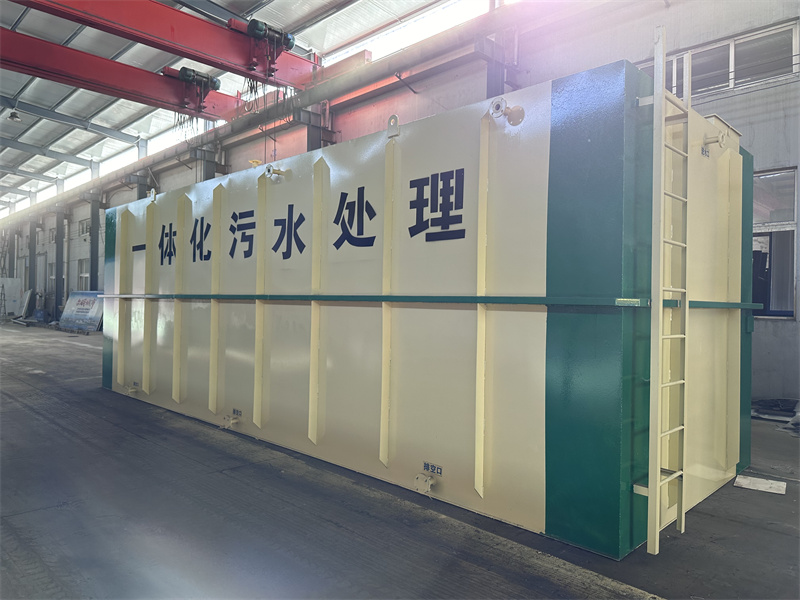
With increasingly stringent environmental supervision, industrial enterprises, municipal authorities and rural communities are all faced with the key problem of selecting proper sewage treatment equipment. However, the market is plagued by low-price marketing gimmicks and exaggerated advertising. Many buyers fall into selection traps and end up with overpriced equipment that performs poorly and fails discharge standards. To accurately pick reliable sewage treatment equipment suppliers, you should look beyond superficial parameters, avoid common pitfalls first, then evaluate manufacturers strictly according to five core criteria: compliance qualification, practical technical performance, cost control, operation & maintenance support, and upgrade potential.
I. Avoid Three Common Pitfalls When Selecting Sewage Treatment Equipment
Before comparing suppliers, steer clear of these costly mistakes.
1. Pitfall 1: Only Focus on Upfront Low Price While Ignoring Hidden Long-Term Costs
Many buyers prioritize cheap equipment without considering subsequent maintenance expenses. Poor-quality units require core component replacement within 1 to 2 years, with high power consumption and low treatment efficiency, leading to far higher total costs in the long run. For example, a small chemical plant saved 20,000 RMB on initial purchase by choosing low-cost equipment. However, frequent membrane blockages caused an extra 15,000 RMB annual replacement cost, plus fines for substandard effluent, resulting in heavy losses.
2. Pitfall 2: Blindly Pursue High Technical Specifications Without Matching Actual Demand
Some buyers believe higher parameters always mean better performance. For instance, users treating low-strength domestic sewage unnecessarily purchase units designed for high-COD industrial wastewater. This over-specification doubles procurement cost and keeps energy consumption at a high level. In fact, equipment parameters must be precisely matched to actual water quality and flow instead of chasing high-end configurations blindly.
3. Pitfall 3. Only Examine Equipment Itself While Neglecting After-Sales Service
Sewage treatment equipment requires continuous support after purchase. Installation & commissioning, operational training and on-site repairs directly determine service life and treatment effect. Small manufacturers without service capacity will leave users helpless once equipment breaks down, turning expensive machines into idle scrap metal.
II. Five Hard Criteria to Judge Reliable Sewage Treatment Equipment Manufacturers
After avoiding these traps, evaluate manufacturers strictly based on the following five standards.
Criterion 1: Compliance Capacity — Meeting Regulatory Requirements
Environmental regulations form the red line for sewage treatment. A manufacturer’s compliance capacity determines long-term stable operation:
Qualification Compliance: Manufacturers must hold professional environmental engineering contracting qualifications and sewage equipment production permits. Products should pass CQC certification and environmental product certification to fully comply with national and local discharge standards including GB 18918-2002 Discharge Standard of Pollutants for Municipal Wastewater Treatment Plants.
Data Compliance: The equipment shall support real-time data uploading of COD, ammonia nitrogen, total phosphorus and other indicators to local environmental supervision platforms to avoid traceability risks.
Emergency Plan Compliance: Suppliers must provide emergency treatment schemes to guarantee qualified effluent under sudden water quality fluctuation or equipment failure and avoid administrative penalties.
Criterion 2: Practical Technical Performance — Solving On-Site Problems
Laboratory technology cannot always be applied smoothly on site. Practical performance should be prioritized when selecting suppliers.
Anti-Fluctuation Capacity: Industrial wastewater usually suffers sharp water quality changes. For example, COD concentration fluctuates between 500mg/L and 2000mg/L in printing and dyeing wastewater. Premium equipment is equipped with intelligent control systems to automatically adjust chemical dosage and aeration intensity for stable effluent quality.
Anti-Shock Load Capacity: Rural sewage has low flow in dry seasons and sharp surges in rainy seasons. Reliable equipment adopts rainwater interception and emergency storage design to prevent overload caused by rainwater inflow.
Easy Operation: For sites without professional operators such as rural villages and small factories, the system supports one-key startup and intelligent early warning. Operators can manage the unit via touchscreen, and fault alerts will be sent via SMS to lower technical barriers.
Criterion 3: Cost Controllability — Cutting Full-Cycle Expense
Sewage treatment requires long-term investment. Trustworthy manufacturers help clients control costs throughout procurement, operation and maintenance.
Procurement Cost: Provide tiered selection solutions. For a 5m³/h domestic sewage project, basic, intelligent and energy-saving versions are available to match different budgets.
Operating Cost: Optimize technology to reduce power and chemical consumption. Variable-frequency blowers and energy-saving water pumps cut daily electricity use by 5 to 8 kWh. Reusable filter membranes extend service life to 3-5 years, saving 10,000 to 20,000 RMB in annual consumable costs.
Maintenance Cost: Core components adopt standardized designs without customized spare parts. Manufacturers shall disclose the price and replacement cycle of wearing parts with transparent lifelong pricing to prevent arbitrary price hikes.
Criterion 4: Operation & Maintenance Guarantee — Long-Term Worry-Free Service
Equipment service life heavily relies on maintenance. Reliable suppliers provide full-cycle support.
Localized Service: Service stations or cooperative partners are set up nationwide to guarantee on-site maintenance within 24 hours. Some manufacturers have outlets across 30 provinces with an average response time within 12 hours.
Regular Inspection: Build equipment health files and conduct quarterly on-site inspections including motor temperature, membrane fouling level and chemical stock to discover hidden risks in advance.
Consumable Supply: National warehouses realize 24-hour delivery of spare parts to avoid shutdown caused by material shortage. The supplier also promises consumable prices will not exceed market average to eliminate binding consumption traps.
Criterion 5: Upgrade Potential — Meeting Future Demands
Environmental standards keep tightening and production capacity keeps expanding. The equipment must allow future upgrades to avoid premature obsolescence.
Capacity Expansion: Modular structure enables capacity expansion by adding new treatment modules. If sewage flow rises from 10m³/h to 20m³/h after factory expansion, users only need to install extra units instead of purchasing a whole new system, cutting over 50% of investment.
Standard Upgrade: When discharge limits become stricter (e.g. COD lowered from 50mg/L to 30mg/L), manufacturers can add advanced treatment units such as activated carbon adsorption and advanced oxidation to meet new standards without replacing the whole equipment.
Function Expansion: Water recycling modules can be added later. Treated reclaimed water can be reused for production, and dewatered sludge can be processed into organic fertilizer to create extra economic benefits.
III. Practical Cases: High-Quality Supplier Selection for Three Typical Scenarios
Different projects have distinct requirements. Real cases help identify qualified manufacturers accurately.
1. Industrial Project: Electroplating Wastewater Treatment for an Electronics Factory
Pain points: Wastewater contains copper, nickel and other heavy metals with strict discharge limit ≤0.1mg/L; water quality fluctuates violently.
Supplier Solution: Adopt heavy metal chelation + membrane separation technology with intelligent chemical dosing system to adjust chelating agent dosage in real time for stable heavy metal removal.
Result: The equipment has run steadily for 3 years with heavy metal concentration kept below 0.05mg/L. The treatment cost was reduced from 8 RMB/ton to 5 RMB/ton, saving 100,000 RMB annually.
2. Rural Project: Domestic Sewage Treatment for a Village
Pain points: Scattered households without professional operators; low winter temperature inhibits microbial activity.
Supplier Solution: Buried integrated equipment with thermal insulation layer and electric heating rod keeps internal temperature above 15℃ in winter. A remote monitoring system allows operators to check running status via mobile phone, with only one monthly on-site chemical refilling required.
Result: Zero breakdowns within 2 years with 100% qualified effluent. Monthly maintenance cost is merely 200 RMB without daily manual operation.
3. Municipal Project: Community Sewage Treatment in a Town
Pain points: Rapid population growth will raise sewage flow from 20m³/h to 30m³/h within two years; data connection with municipal environmental supervision platform is required.
Supplier Solution: Modular MBR equipment reserves one spare module for future capacity expansion. Built-in data uploading function realizes real-time connection with the municipal supervision system.
Result: Stable operation at present. Capacity expansion will only take one week two years later, saving 800,000 RMB compared with purchasing a brand-new set of equipment.
Summary: Start with Clear Demand and Strict Evaluation to Pick Proper Sewage Equipment
There is no universal answer to finding the best sewage treatment equipment manufacturer. However, you can avoid low-price traps, over-specification mistakes and poor after-sales risks, then screen suppliers against the five core criteria: compliance, technical practicability, cost control, maintenance service and upgrade potential. Compare different plans combined with your actual sewage type, flow rate, budget and long-term expansion demand to find the most suitable equipment.
If you are confused about equipment selection, clarify three questions first: 1. What are the main pollutants and discharge standards? 2. What is the daily treatment capacity, and will capacity expansion be needed in the future? 3. What is your budget and operator arrangement? Once demands are defined, contact qualified manufacturers. As a manufacturer specializing in sewage treatment for 12 years, we provide free water quality testing and customized scheme design to match proper equipment, making your selection simple and your long-term operation worry-free.
Prev: How to Choose Wastewater Treatment Equipment Manufacturers Under the New Policies? Focus on Technological Upgrading and Green Transformation to Consolidate Enterprises'' Environmental FoundationNext: Complete set of sewage treatment equipment provides an integrated solution for sewage problems and adapts to environmental protection needs in multiple scenarios.
Related Products
Related News
- 德州市New Trends in the Development of the MBR Membrane Wastewater Treatment Industry: A Professional Guide to Selecting Source Manufacturers
- 德州市How to Select Wastewater Treatment Equipment for Pig Farms? In-depth Review of Trusted Industry Service Providers
- 德州市Hard-to-Treat Slaughterhouse Wastewater? Tested & Recommended High-Adaptability Wastewater Treatment Solutions for 2026
- 德州市How to Select Integrated Wastewater Treatment Equipment? In-depth Review of Trustworthy Source Manufacturers Recognized by Industry Insiders
- 德州市How to Select Buried Integrated Wastewater Treatment Equipment? Strength Evaluation of Reliable Brands in 2026
- 德州市Inventory of New Coal Mine Water Treatment Technologies! How to Select Cost-Effective Manufacturers & Avoid Common Pitfalls
- 德州市Textile Printing & Dyeing Wastewater Treatment Is Tough? These Four Powerful Enterprises Easily Solve Core Industry Pain Points
- 德州市Authoritative Evaluation of High-Salinity Wastewater Treatment Equipment | Top Recommended Brands of 2026
- 德州市Which Supplier Offers Reliable Integrated Sewage Treatment Equipment? Multi-dimensional Actual Test Comparison & Top Recommended Brands Released
- 德州市Electroplating Factory Wastewater Treatment Engineering Cases
About Us
products
Business
News
Contact Us
Service Hotline:+86-15253659088WhatsApp: +86 18706508001
Email: jly@haipuou.group
Address: No.56, Donghuan Road, Zhucheng City, Weifang City, Shandong Province, China