

- Home
- About Us
About Us
- Product
Product
- Cases
Cases
- R&D Technology
- News
News
- Contact Us


- Default Language
 EN
EN RU
RU ES
ES DE
DE EL
EL IT
IT JA
JA KO
KO PT
PT ID
ID SR
SR UK
UK VI
VI TH
TH TR
TR MS
MS BE
BE AR
AR
德州市Complete set of sewage treatment equipment provides an integrated solution for sewage problems and adapts to environmental protection needs in multiple scenarios.
Date:July 13, 2025ID: 2167Views: 1344
Haipuou Environmental Protection Group Co., Ltd. specializes in the construction of sewage treatment projects and the production and sales of water treatment equipment. Our main products include integrated sewage treatment equipment, high-efficiency cyclone purifiers, magnetic separation sewage treatment equipment, prefabricated sewage treatment plants, smart water management platforms, sludge thickening equipment and air flotation machines.
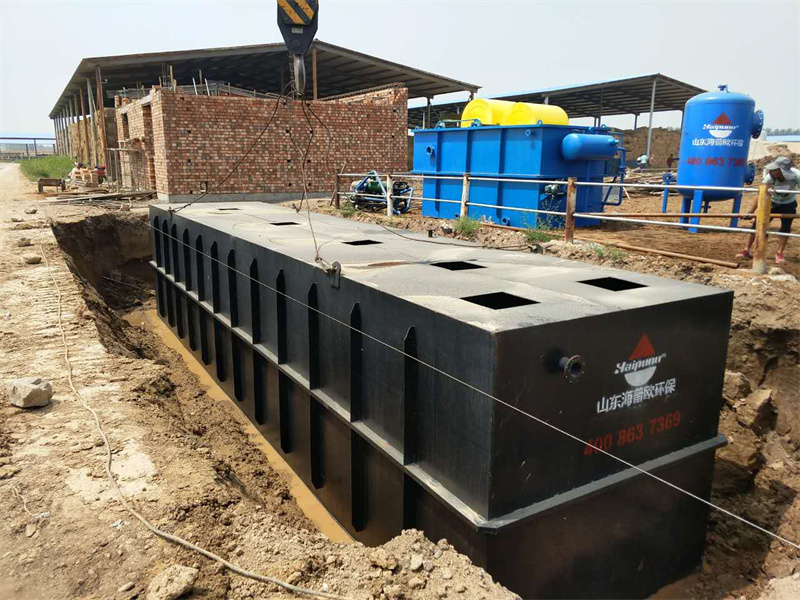
Against the backdrop of increasingly strict environmental supervision, industrial enterprises, township communities, medical institutions and scenic spots all face rigid requirements for compliant sewage discharge. The traditional sewage treatment mode requires separate purchase of scattered equipment for pretreatment, core treatment and advanced treatment, which suffers from complicated installation, poor compatibility and difficult operation and maintenance. By virtue of modular integration, standardized production and one-stop service, complete sets of sewage treatment equipment integrate the whole sewage treatment process into an efficient system, greatly lowering project barriers and operating costs, and becoming the preferred solution for sewage treatment across all industries.
I. Basic Composition of Complete Sewage Treatment Equipment: The Underlying Logic of Integrated Systems
A complete set of sewage treatment equipment is not a single unit. It is a system-level solution integrating four modules: pretreatment, core treatment, advanced treatment and auxiliary systems, customized according to sewage type and treatment targets. All modules work collaboratively to ensure full controllability from sewage inflow to standard discharge.
1. Pretreatment Module: Clear Obstacles for Subsequent Treatment
Pretreatment serves as the first defensive line before sewage enters core treatment units. It mainly removes suspended solids, impurities and oil to prevent pipeline blockage and efficiency loss. Key components include:
Bar screens and filters: Block large debris such as plastic bags, branches and gauze. Manual screens are suitable for small flow rates, while automatic screens can regularly remove residues for large-volume sewage;
Regulating tank: Balances water quality and flow fluctuation. Stirring or aeration is adopted to avoid sediment accumulation, providing stable inflow conditions for subsequent biochemical processes;
Air flotation and sedimentation tank: For oily sewage from catering and auto repair industries or high-suspension wastewater from breeding and slaughterhouses, air flotation or gravity sedimentation removes 60%-80% of suspended solids and oil, easing the load on core treatment units.
2. Core Treatment Module: Core Stage for Pollutant Degradation
Processes are selected based on organic pollutants, nitrogen, phosphorus, heavy metals and other contaminants, which directly determine the final treatment efficiency. Main technologies and applicable scenarios are listed below:
Biological treatment processes for high-concentration organic sewage such as domestic sewage and food processing wastewater:
AO/A2O (Anoxic-Oxic / Anaerobic-Anoxic-Oxic): Realize organic matter degradation together with nitrogen and phosphorus removal, ideal for municipal sewage and breeding wastewater with strict nutrient discharge limits;
MBR Membrane Bioreactor: Combines biochemical degradation with membrane filtration, producing effluent with suspended solids below 5mg/L. It is the top choice for water reuse such as industrial circulating water and community landscape water;
Physicochemical treatment for refractory industrial wastewater from chemical and electroplating industries:
Coagulating sedimentation: Add PAC and PAM flocculants to aggregate pollutants into separable flocs;
Advanced oxidation: Fenton reaction and ozonation break down refractory organic compounds;
Anaerobic treatment for high-strength organic wastewater such as brewery and pharmaceutical sewage. Anaerobic bacteria decompose organics into biogas, realizing pollution control and energy recovery. UASB and IC anaerobic towers are usually matched with aerobic processes to form combined anaerobic-aerobic treatment lines.
3. Advanced Treatment Module: Guarantee Standard Discharge and Water Reuse
Advanced treatment is required to meet Grade I A discharge standards or realize water resource recycling. Key facilities include:
Filtration equipment: Quartz sand filters and activated carbon filters remove residual suspended solids, chroma and odor;
Disinfection system: Kill pathogenic bacteria. UV sterilizers and chlorine dioxide generators are mandatory for medical and domestic sewage to keep fecal coliform below 1000CFU/L;
Desalination system: Reverse osmosis (RO) and nanofiltration (NF) remove salt ions to produce qualified industrial reused water.
4. Auxiliary System: Ensure Stable Operation of the Whole Equipment
Auxiliary systems act as the supporting framework for coordinated operation of all modules:
Electric control system: PLC control cabinet supports automatic startup and shutdown, automatic chemical dosing and fault alarm. High-end models enable remote monitoring via mobile APP;
Automatic dosing system: Accurately add flocculants, disinfectants and nutritional agents for biochemical treatment;
Sludge treatment system: Sludge from sedimentation tanks and membrane cleaning is concentrated and dewatered by plate-and-frame filter presses, reducing moisture content from 99% to below 80% for subsequent landfilling or incineration.
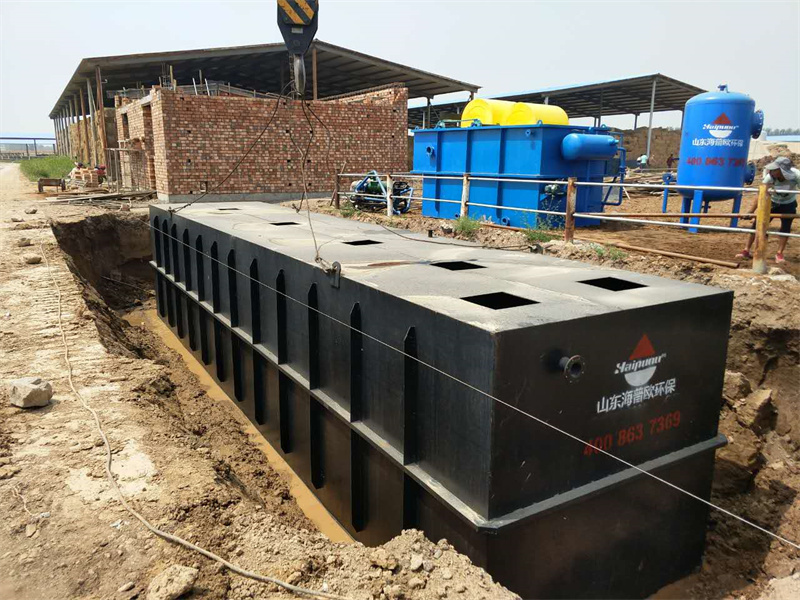
II. Core Advantages of Complete Sewage Treatment Equipment: Why It Outperforms Separated Single Units
Compared with separately purchased discrete equipment, complete integrated units gain prominent edges in construction efficiency, cost control and daily maintenance, solving the major pain points of traditional treatment modes.
1. Short Installation Period and Fast Commissioning
Separate equipment is purchased from multiple suppliers with inconsistent design standards and poor component compatibility, leading to a 3-6 month installation cycle. Complete sets are prefabricated and pre-commissioned in factories. On-site work only includes pipeline connection and electrical debugging, shortening the whole construction period to 1-2 months. For instance, a small food factory put a complete MBR system into formal operation within only 28 days, cutting construction time by 50%.
2. Strong Compatibility and Stable Treatment Effect
Mismatched effluent and inflow parameters often cause membrane fouling and substandard water quality when equipment is sourced from different manufacturers. Complete integrated equipment is uniformly designed according to actual sewage quality, with precisely matched operational parameters for each module. The stability of treatment efficiency rises by more than 30%. In a community domestic sewage project with AO+MBR integrated equipment, effluent COD remained steadily below 30mg/L with a 100% compliance rate, while projects using discrete equipment only reached an 85% compliance rate due to poor compatibility.
3. Low Maintenance Difficulty and Reduced Labor Cost
Discrete units require operators to master independent operation procedures for anaerobic towers, dosing devices and filter presses, demanding high professional skills. The PLC control system of complete equipment supports one-key operation. Staff only need to conduct regular patrol inspections. The system automatically alarms and locates faulty modules. New operators can be fully trained within 1-2 weeks, cutting labor expenses by 40%-60%.
4. Small Footprint for Limited Sites
Traditional separate structures occupy large land areas. Integrated equipment adopts vertical compact layout, combining regulating tanks, biochemical tanks and membrane tanks inside one sealed tank. Land occupation is only 1/3 to 1/2 of conventional facilities, which is highly suitable for urban residential quarters, scenic spots and small factories with limited space. A scenic spot adopted integrated equipment occupying merely 20 square meters to treat 50 cubic meters of domestic sewage per day, meeting the water discharge demand of 1,000 tourists.
III. Application Scenarios of Complete Sewage Treatment Equipment
Customizable process packages adapt to various sewage types, water volume and discharge standards. Main applicable industries are as follows:
1. Municipal and Civil Scenarios: Domestic Sewage Discharge and Reuse
Typical projects: Urban residential communities, township neighborhoods, scenic areas, highway service stations;
Sewage characteristics: Domestic sewage with organic matter, suspended solids, nitrogen and phosphorus, featuring obvious flow peaks during morning and evening rush hours or holidays;
Recommended equipment: AO/MBR + disinfection integrated system. A reverse osmosis module is added if water is reused for green irrigation and toilet flushing;
Case study: A township community adopted a 200m³/d MBR integrated unit. Effluent COD was controlled below 30mg/L and ammonia nitrogen below 5mg/L. Qualified water was discharged into nearby rivers, and part of the reclaimed water was used for farmland irrigation, saving 12,000 tons of fresh water annually.
2. Industrial Scenarios: Customized Solutions for Different Wastewater
One-to-one customized design is required for different industrial wastewater:
Food and brewing industry (breweries, dairy plants): Wastewater with high-strength COD (2000-10000mg/L). Anaerobic UASB + aerobic AO + disinfection systems are selected, with biogas recovered for energy supply;
Chemical and electroplating industry: Wastewater containing refractory organics and heavy metals such as chromium and nickel. Coagulating sedimentation + advanced oxidation + adsorption equipment ensures over 99% heavy metal removal rate;
Machining and auto repair industry: Oily wastewater. Air flotation + filtration + disinfection units remove oil and impurities to prevent municipal pipe network blockage.
3. Medical and Special Scenarios: Meet Strict Discharge Limits
Typical projects: Township health centers, dental clinics and small hospitals;
Sewage characteristics: Pathogenic microorganisms, residual disinfectants and trace mercury pollutants, complying with GB18466-2005 Discharge Standard for Medical Institutions;
Recommended equipment: Bar screen + regulating tank + MBR biochemical treatment + UV disinfection integrated unit, controlling fecal coliform below 50CFU/L with anti-leakage structure to avoid secondary contamination.
4. Agricultural Scenarios: Breeding and Planting Wastewater Treatment
Typical projects: Large-scale livestock farms and greenhouse planting bases;
Sewage characteristics: Breeding wastewater contains high ammonia nitrogen (500-1500mg/L) and suspended solids; planting wastewater carries pesticide residues and fertilizer nutrients;
Recommended equipment: Anaerobic + A2O + sedimentation units for breeding wastewater to remove nitrogen and phosphorus; filtration + advanced oxidation equipment to degrade pesticide residues in farmland runoff.
IV. Five Core Principles for Selecting Reliable Complete Sewage Treatment Equipment
Improper equipment selection will lead to substandard effluent, high operating cost and frequent breakdowns. The following five criteria must be strictly followed.
1. Accurately Analyze Sewage Characteristics to Avoid Generic Selection
Water quality testing is the foundation of proper equipment configuration:
Water quality indicators: Test COD, BOD5, ammonia nitrogen, total phosphorus, suspended solids, pH, heavy metals and salinity to distinguish organic, inorganic and toxic pollutants;
Water volume indicators: Calculate daily treatment capacity, peak hourly flow and fluctuation coefficient (tourist flow in scenic areas can triple during holidays) to prevent equipment overload;
Discharge standards: Clarify national or local regulatory requirements. If water reuse is required, define the turbidity, salinity and other indicators of reclaimed water.
2. Verify Manufacturer’s Technical Capacity and Avoid OEM Assembled Products
Core competitiveness lies in process design rather than simple component assembly. Buyers need to evaluate manufacturers from three aspects:
Design capacity: Capability of water quality analysis, process simulation and customized equipment design. Check PFD and PID drawings, and confirm whether the process can be adjusted for low-temperature or high-salinity wastewater;
R&D strength: Independent patents for high-efficiency MBR membranes and energy-saving aeration systems, and professional in-house technical teams instead of outsourced technology;
Project references: Inspect real projects in the same industry, check long-term operating data such as pollutant removal efficiency and maintenance cost, and conduct on-site investigation if possible.
3. Evaluate Material and Core Components to Guarantee Durability
Service life and operational stability depend on tank material and key spare parts:
Tank material: PE and FRP for domestic sewage; 304/316L stainless steel for industrial wastewater with acid, alkali and heavy metals;
Brand of core parts: Choose well-known brands for MBR membranes, aerators, water pumps and PLC controllers (Dow, Mitsubishi for membranes; Grundfos, Wilo for pumps) instead of cheap no-brand components that need replacement within 1-2 years;
Anti-corrosion and thermal insulation: Outdoor tanks are coated with epoxy coal tar pitch. Insulation polyurethane layers are added for equipment operating in cold northern regions to prevent frost cracking and aging.
4. Inspect After-Sales Service and Avoid Unattended Equipment After Purchase
Long-term operation heavily relies on after-sales support:
Installation and acceptance: On-site commissioning and assistance with environmental inspection and pollutant discharge permit application;
Operation training: Systematic training for operators and regular quarterly on-site inspections;
Fault response: 2-hour remote technical guidance and 24-hour on-site maintenance, with local service outlets covering remote areas;
Long-term supply of consumables: Transparent pricing for MBR membranes, filter cartridges and chemical agents to prevent arbitrary price hikes.
5. Calculate Full Life-Cycle Cost Instead of Only Focusing on Initial Procurement Price
Total expenditure includes equipment purchase, power consumption, chemical cost and maintenance fee:
Initial investment: Guard against low-price traps caused by material downgrade and component reduction. Select manufacturers with reasonable quotations and detailed configuration lists;
Operating cost: Electricity for aerators and pumps, chemical dosage and backwashing water consumption. Require suppliers to provide detailed cost estimation (1-3 US dollars per ton of treated water);
Maintenance expense: Service life and replacement cost of core parts. For example, MBR membranes last 3-5 years with high replacement cost. Avoid equipment with excessive long-term maintenance expenditure.
V. Common Operational Problems and Solutions: Maintenance Troubleshooting Guide
Even high-quality integrated equipment may encounter operational failures. Pre-set solutions can effectively reduce downtime.
1. Substandard Effluent Quality: Troubleshoot from Process and Operation Aspects
Common causes:
Mismatched processes (biological treatment applied to refractory industrial wastewater);
Abnormal operational parameters (insufficient aeration leads to DO below 2mg/L and low microbial activity; inadequate dosing causes incomplete flocculation);
Equipment failure (MBR membrane fouling weakens filtration effect; aged disinfection lamps reduce sterilization efficiency);
Solutions:
Cooperate with the manufacturer to upgrade the process by adding advanced oxidation units if the original design is incompatible;
Adjust aeration volume and calibrate chemical dosing pumps;
Replace fouled membrane components and aging UV lamps.
2. Excessive Noise and High Energy Consumption: Check Mechanical and Process Issues
Common causes:
Mechanical breakdown (worn pump bearings, blocked aerators leading to blower overload);
Unreasonable process parameters (excess reflux ratio increases pump power consumption; high sludge concentration raises aeration resistance);
Solutions:
Repair or replace damaged mechanical parts, clean blocked aeration heads;
Optimize process parameters, control sludge concentration within 3-5g/L and set the reflux ratio at a reasonable level.
3. Excessive Sludge Output and Difficult Dewatering: Optimize Treatment and Disposal Flow
Common causes:
Over-dosage of coagulant increases sludge production;
Insufficient sludge thickening with short hydraulic retention time;
Low filter press pressure or clogged filter cloth;
Solutions:
Determine the optimal coagulant dosage through lab jar tests to reduce sludge yield;
Extend the thickening period from 4 hours to 6 hours;
Clean the filter cloth and raise filter pressure from 0.6MPa to 0.8MPa.
Conclusion
Complete integrated sewage treatment equipment represents the inevitable trend of intensive and high-efficiency water pollution control. It overcomes the drawbacks of discrete equipment including complicated installation, tedious maintenance and unstable effluent quality. Customized process packages meet diversified demands ranging from standard discharge to water resource recycling. Buyers should avoid the pitfall of price-only selection and conduct comprehensive evaluation from five dimensions: sewage condition, manufacturer strength, equipment quality, after-sales service and full life-cycle cost, so as to select well-fitted, durable and cost-effective treatment systems. In the future, with intelligent AI operation, remote monitoring and energy-saving technologies such as low-power aeration and high-efficiency membrane modules, complete sewage treatment equipment will be widely applied to provide solid support for environmental protection.
Related Products
Related News
- 德州市New Trends in the Development of the MBR Membrane Wastewater Treatment Industry: A Professional Guide to Selecting Source Manufacturers
- 德州市How to Select Wastewater Treatment Equipment for Pig Farms? In-depth Review of Trusted Industry Service Providers
- 德州市Hard-to-Treat Slaughterhouse Wastewater? Tested & Recommended High-Adaptability Wastewater Treatment Solutions for 2026
- 德州市How to Select Integrated Wastewater Treatment Equipment? In-depth Review of Trustworthy Source Manufacturers Recognized by Industry Insiders
- 德州市How to Select Buried Integrated Wastewater Treatment Equipment? Strength Evaluation of Reliable Brands in 2026
- 德州市Inventory of New Coal Mine Water Treatment Technologies! How to Select Cost-Effective Manufacturers & Avoid Common Pitfalls
- 德州市Textile Printing & Dyeing Wastewater Treatment Is Tough? These Four Powerful Enterprises Easily Solve Core Industry Pain Points
- 德州市Authoritative Evaluation of High-Salinity Wastewater Treatment Equipment | Top Recommended Brands of 2026
- 德州市Which Supplier Offers Reliable Integrated Sewage Treatment Equipment? Multi-dimensional Actual Test Comparison & Top Recommended Brands Released
- 德州市Electroplating Factory Wastewater Treatment Engineering Cases
About Us
products
Business
News
Contact Us
Service Hotline:+86-15253659088WhatsApp: +86 18706508001
Email: jly@haipuou.group
Address: No.56, Donghuan Road, Zhucheng City, Weifang City, Shandong Province, China