


- Home
- About Us
About Us
- Product
Product
- Cases
Cases
- R&D Technology
- News
News
- Contact Us


- Default Language
 EN
EN RU
RU ES
ES DE
DE EL
EL IT
IT JA
JA KO
KO PT
PT ID
ID SR
SR UK
UK VI
VI TH
TH TR
TR MS
MS BE
BE AR
AR
How to Treat Sewage? Technical Principles, Practical Guidelines and New Industry Trends in 2026
Date:July 13, 2025ID: 2255Views: 180
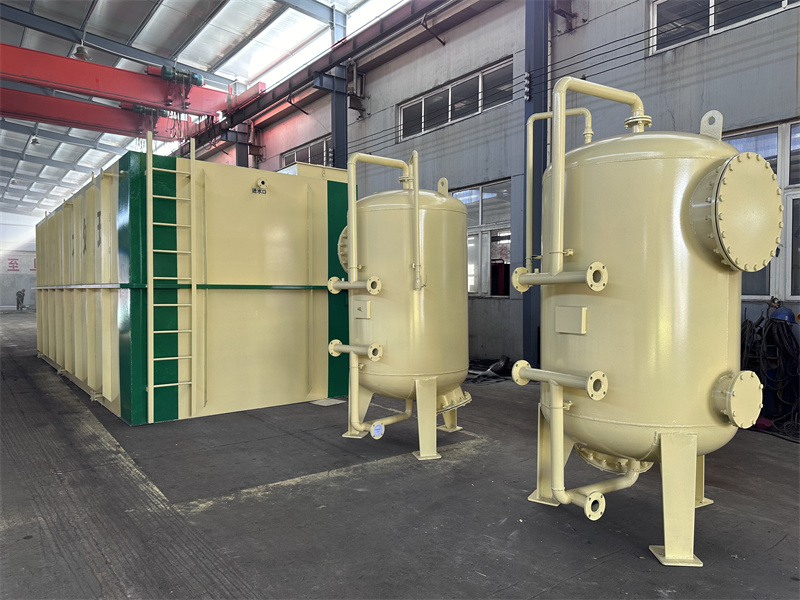
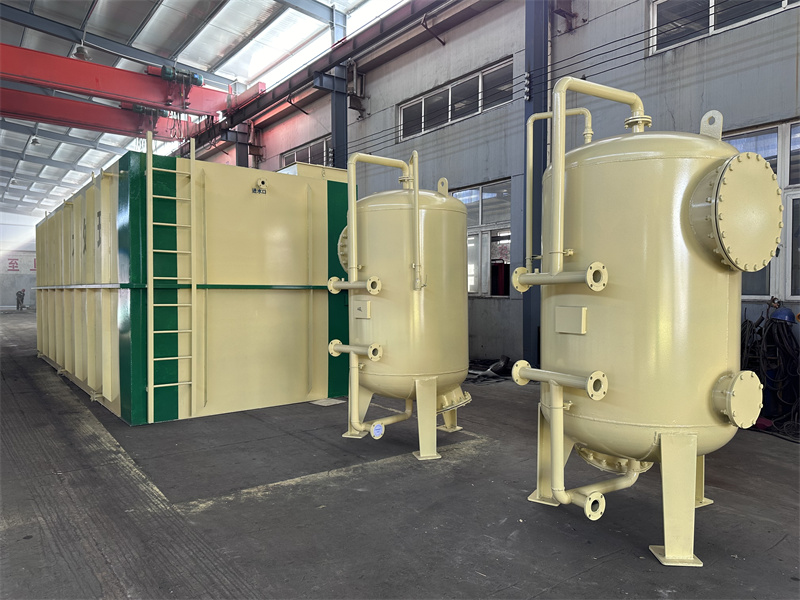
Haipuou Environmental Protection Group Co., Ltd. specializes in the construction of sewage treatment projects and the production and sales of water treatment equipment. Its main products include integrated sewage treatment equipment, high-efficiency cyclone purifiers, magnetic separation sewage treatment equipment, prefabricated sewage treatment plants, smart water service platforms, sludge thickening equipment, air flotation machines and so on.
I. Core Principles of Sewage Treatment: The Logic of Pollutant Separation and Transformation
The essence of sewage treatment is to realize the migration, transformation and removal of pollutants through three major methods: physical, chemical and biological approaches. The work is governed by two core principles:
1. Phase Separation Principle: Utilize the physical property differences between pollutants and water (such as density, particle size and solubility) to separate suspended solids, colloids and partial dissolved substances via filtration, sedimentation, air flotation and other processes. Typical examples include sedimentation tanks for primary treatment and membrane filtration for advanced treatment.
2. Transformation and Degradation Principle: Convert toxic and harmful pollutants into harmless substances (such as CO₂ and H₂O) or easily separated substances (such as sludge) through microbial metabolism (biological method) or chemical reactions (chemical method). The activated sludge process for secondary treatment and Fenton oxidation are both based on this principle.
II. Practical Guide for Sewage Treatment in Different Scenarios: From Source Control to Standard-compliant Discharge
1. Domestic Sewage Treatment: Low-cost Solutions for Stable Discharge Compliance
• Pre-treatment at source: Install food waste disposers for households to reduce kitchen waste entering the sewer system. Septic tanks are built in residential communities to decompose organic matter preliminarily and lower the load of subsequent treatment.
• Core intermediate treatment:
◦ Centralized urban treatment: Adopt the process of "bar screen + grit chamber + A²/O process + secondary sedimentation tank". The COD removal rate exceeds 85%, and the nitrogen and phosphorus removal rate is over 70%, meeting Grade A Standard of GB 18918-2002.
◦ Decentralized treatment (rural areas / old residential districts): Integrated MBR equipment occupies only one-third of the land area of traditional processes and requires no on-site operators. The treatment cost is about 1.2-1.8 RMB per ton of water, and the treated water can be reused for toilet flushing and greening irrigation.
• End-point water reuse: After ultrafiltration and disinfection, the water can be connected to the reclaimed water system of residential quarters, achieving a reuse rate of 30%-50% and cutting tap water consumption.
2. Industrial Wastewater Treatment: Classified Treatment and Discharge Supervision
• High-salinity wastewater (chemical / pharmaceutical industry): Adopt the combined process of evaporative crystallization and membrane distillation. The salt removal rate reaches 99.8%. Condensed water can be recycled, and crystalline salt can be recovered for resource utilization.
• High-COD wastewater (printing and dyeing / paper-making industry): Use UASB anaerobic fermentation to reduce COD from 10000mg/L to below 2000mg/L, followed by aerobic MBBR treatment to reach discharge standards. Biogas produced in the anaerobic stage can be recycled for power generation to cut energy consumption by 30%.
• Heavy metal wastewater (electroplating / metallurgical industry): Apply the process of chemical precipitation (pH adjustment + sulfide treatment) + chelating resin adsorption. The removal rate of lead, cadmium, chromium and other heavy metals is no less than 99.5%, complying with GB 21900-2008. The sludge must be disposed safely by qualified organizations.
3. Special Sewage (Medical / Breeding): Enhanced Disinfection and Pathogen Control
• Medical sewage: A chlorine dioxide disinfection tank must be added to ensure the fecal coliform count is less than or equal to 100CFU/mL, and pathogenic bacteria such as Mycobacterium tuberculosis are completely removed. Treated sewage shall not be directly discharged into drinking water source protection zones.
• Breeding sewage: Adopt the process of solid-liquid separation + anaerobic digestion + constructed wetland. Manure is separated first to produce organic fertilizer, and then the sewage is treated. The ammonia nitrogen removal rate exceeds 80% to prevent soil and groundwater pollution.
III. Supporting Facilities for Sewage Treatment: Sludge Disposal and Chemical Agent Selection
1. Sludge Disposal: Key Link to Avoid Secondary Pollution
• Volume reduction: Plate-and-frame filter presses reduce the moisture content of sludge from 99% to 60%-80%, shrinking the volume by 5 to 10 times for easy transportation.
• Harmless disposal:
◦ Municipal sludge: Adopt anaerobic digestion and incineration. Methane gas from digestion is recycled, and incineration ash can be made into bricks or landfilled.
◦ Industrial sludge containing heavy metals: Solidification and stabilization treatment (with cement and lime) is required. Only when heavy metal concentrations in leachate meet standards can the sludge be safely landfilled.
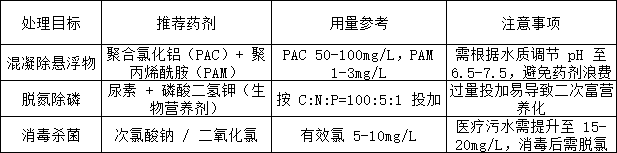
2. Chemical Agent Selection: Core Tips for High Efficiency and Low Cost
IV. New Trends of the Sewage Treatment Industry in 2026: Intelligence, Energy Conservation and Resource Recovery
1. Intelligent Operation & Maintenance: IoT sensors monitor COD, ammonia nitrogen, pH and other indicators in real time. AI algorithms automatically adjust aeration intensity and chemical dosage, cutting O&M costs by 20%-30%. A typical example is the intelligent control system of a sewage plant in Beijing, which lowers energy consumption to 0.22kW·h per ton of water.
2. Upgraded Resource Recycling:
◦ Energy recovery from sewage: Biogas produced by anaerobic digestion can be purified into pipeline natural gas with purity above 97%. A sewage plant in an industrial park recovers 1.2 million cubic meters of biogas every year, saving about 8 million RMB on natural gas expenditure.
◦ Sludge resource utilization: Dried sludge can be mixed with coal for power generation or made into ceramsite with compressive strength ≥3.5MPa as building materials.
3. Upgrading Discharge Standards Driven by Policies: Many regions are building demonstration cities for sewage resource recovery. Newly built sewage plants are required to achieve a water reuse rate of no less than 40%. Existing facilities must complete upgrading before 2027, which will continuously boost market demand for advanced treatment technologies such as membrane separation and advanced oxidation.
V. Common Practical Problems and Solutions
Problem 1: Excessive COD in the effluent of biological treatment system?
Causes: Fluctuating influent load and insufficient dissolved oxygen. Solutions: Build an equalization tank, install an intelligent aeration system (keep DO at 2-4mg/L), and add microbial agents to strengthen degradation.
Problem 2: Odor in reused water after advanced treatment?
Causes: Incomplete disinfection or trace organic pollutants. Solutions: Adopt the combined ozone + activated carbon process, with ozone dosage of 5-8mg/L and activated carbon adsorption time no less than 30 minutes.
Problem 3: High moisture content after sludge filter pressing?
Cause: Poor sludge flocculation effect. Solutions: Optimize the PAC/PAM dosage ratio, or add sludge conditioners such as lime and fly ash to improve filter pressing efficiency.
Related Products
Related News
- New Trends in the Development of the MBR Membrane Wastewater Treatment Industry: A Professional Guide to Selecting Source Manufacturers
- How to Select Wastewater Treatment Equipment for Pig Farms? In-depth Review of Trusted Industry Service Providers
- Hard-to-Treat Slaughterhouse Wastewater? Tested & Recommended High-Adaptability Wastewater Treatment Solutions for 2026
- How to Select Integrated Wastewater Treatment Equipment? In-depth Review of Trustworthy Source Manufacturers Recognized by Industry Insiders
- How to Select Buried Integrated Wastewater Treatment Equipment? Strength Evaluation of Reliable Brands in 2026
- Inventory of New Coal Mine Water Treatment Technologies! How to Select Cost-Effective Manufacturers & Avoid Common Pitfalls
- Textile Printing & Dyeing Wastewater Treatment Is Tough? These Four Powerful Enterprises Easily Solve Core Industry Pain Points
- Authoritative Evaluation of High-Salinity Wastewater Treatment Equipment | Top Recommended Brands of 2026
- Which Supplier Offers Reliable Integrated Sewage Treatment Equipment? Multi-dimensional Actual Test Comparison & Top Recommended Brands Released
- Electroplating Factory Wastewater Treatment Engineering Cases
About Us
products
Business
News
Contact Us
Service Hotline:+86-15253659088WhatsApp: +86 18706508001
Email: jly@haipuou.group
Address: No.56, Donghuan Road, Zhucheng City, Weifang City, Shandong Province, China